
Pet sitter checklist
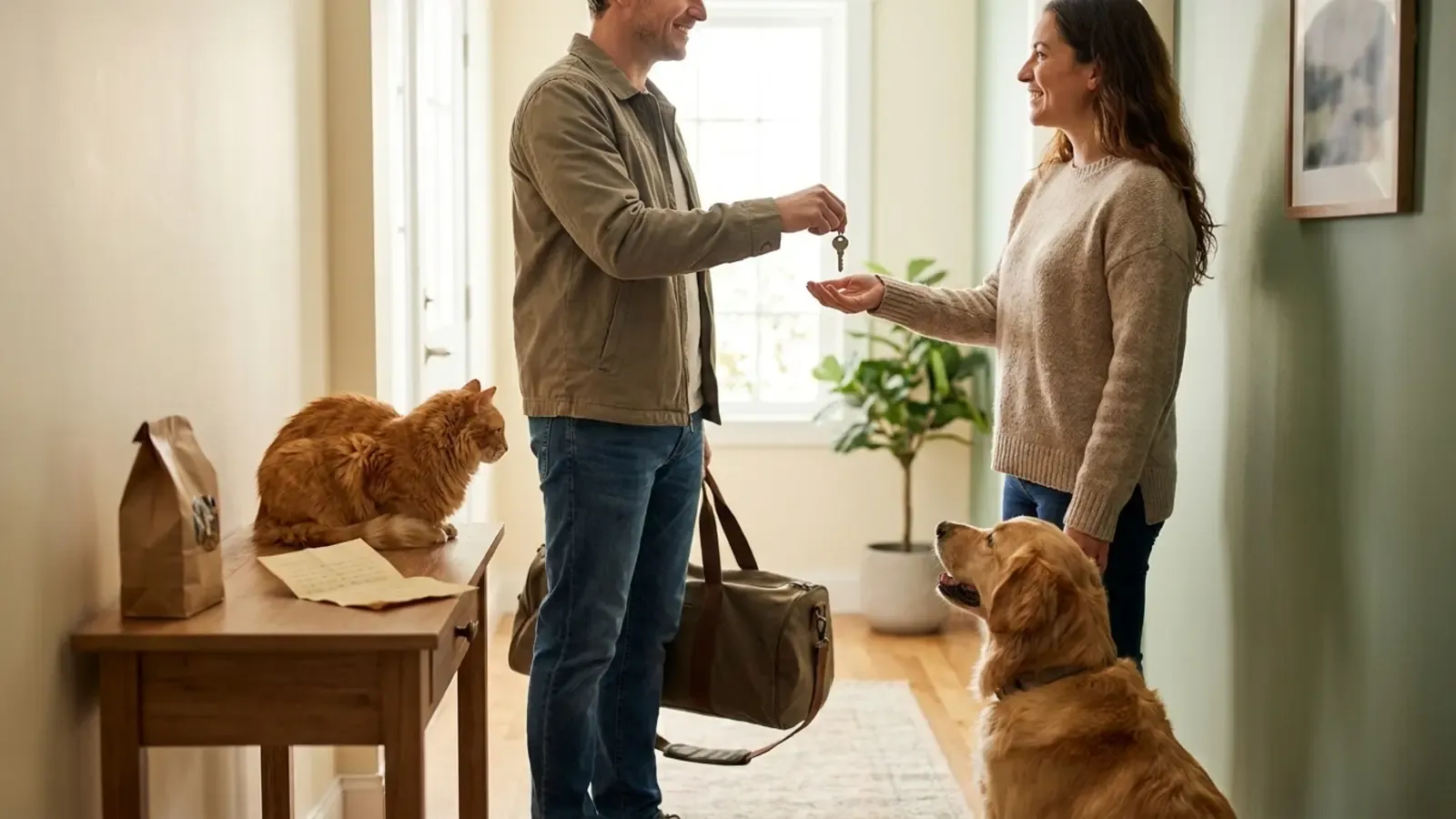
Before a pet sitter takes over, leave them how to reach you and a backup person, your vet and the nearest 24-hour emergency clinic, a written daily routine with exact food amounts, clear medicine instructions, signed permission for vet treatment, enough food and supplies for the whole trip plus a few days, and the house information they need. Then meet them with your pet before you go and walk through it together. The checklist below covers everything; copy it, fill it in and leave it somewhere obvious.
The essentials at a glance
| Category | What to leave |
|---|---|
| You | Phone number, itinerary, when you’re hard to reach |
| Backup | A trusted friend or relative who knows your pet and can make decisions |
| Vet | Practice name, phone, address, out-of-hours number |
| Emergency | Nearest 24-hour emergency vet, animal poison helpline number |
| Consent | Signed authorisation for treatment, spending limit, insurance details |
| Routine | Wake-up, meals, walks, litter, play, bedtime, with times |
| Food | Exact amount per meal, where it is, treats allowed, what not to feed |
| Medicines | Name, dose, times, how to give it, where it’s kept |
| Health | Age, weight, conditions, allergies, microchip number |
| Behaviour | Fears, hiding places, how they get on with strangers, dogs, cats, kids |
| House | Keys, alarm code, Wi-Fi, where supplies are, bins, heating, a neighbour |
1. How to reach you, and who to call if they can’t
The ASPCA suggests giving your sitter your itinerary as well as your number, so they know when you are flying or out of signal. Also leave:
- A backup contact who knows your pet, can make decisions if you can’t be reached, and could take your pet if needed
- What counts as “call me now” versus what can wait for a message
2. Vet and emergency contacts
- Your regular vet: practice name, phone, address and their out-of-hours arrangements
- The nearest 24-hour emergency vet, with the address. Check opening hours before you go; not every clinic is open around the clock
- An animal poison helpline for your country
- Your pet’s insurance details and policy number, if you have it
3. Consent for treatment
If your pet becomes ill and nobody can reach you, the vet may need someone to say yes to treatment. The AVMA suggests naming a trusted person who can make emergency decisions, and deciding in advance which things need your direct approval, such as major surgery, and any spending limit. Many sitters and practices have their own emergency care authorisation form.
Your note might say:
I, [your name], authorise [sitter’s name] to seek veterinary treatment for [pet’s name] at [practice] or any emergency clinic while I am away from [date] to [date]. Please contact me on [number] before any treatment costing more than [amount]. If I can’t be reached, please contact [backup name] on [number]. Signed, [signature and date].
Tell your vet practice you are going away and who the sitter is. Some will put a note on your pet’s record or ask for a card to be kept on file.
4. The daily routine
Pets cope best when life stays as normal as possible, and the RSPCA advises leaving details of your pet’s usual routine. Write it hour by hour.
Daily routine template
| Time | Dog | Cat |
|---|---|---|
| Morning | Toilet, walk (how long, lead or off), breakfast | Breakfast, fresh water, scoop litter |
| Midday | Toilet break or second walk | Play, check on them |
| Evening | Walk, dinner, play | Dinner, fresh water, scoop litter, play |
| Bedtime | Last toilet trip, where they sleep | Where they sleep, doors to close |
Include the small things that matter to your pet: the words you use, the toy they bring you, where they like to be stroked, the door they like left open.
For cats: PDSA and Battersea recommend a visit at least twice a day, even with an automatic feeder. Note your cat’s favourite hiding spots, as the ASPCA suggests, so the sitter can check they are well without hunting the house.
For dogs: say how long they can be left alone, whether they can go off lead and where, and any dogs or places to avoid.
5. Food and water
- Exact amount per meal, in cups or grams, and which scoop to use
- Where the food is, and enough for the whole trip plus a few spare days in case you are delayed
- Treats allowed and how many
- What not to feed, including any foods your pet is allergic to and common toxic foods (see foods toxic to dogs and foods toxic to cats)
- How to tell if they’re off their food, and when to call: for example, a cat who hasn’t eaten for a day, or a dog who refuses two meals
6. Medicines
Medicine instructions need to be impossible to misread. The ASPCA suggests listing each medicine with its dose and schedule, and going through it in person before you leave.
| Medicine | Dose | When | How to give it | Where it’s kept |
|---|---|---|---|---|
| (name) | (e.g. 1 tablet) | (e.g. 8am and 8pm) | (e.g. in a piece of cheese) | (e.g. top kitchen cupboard) |
- Pre-sort doses into a labelled pill organiser if you can
- Ask the sitter to write down each dose with the time
- Leave enough for the whole trip plus extra
- Say what to do if a dose is missed or vomited up: usually call the vet rather than doubling the next one
- Keep flea, tick and worming treatments up to date before you leave, as the RSPCA advises, so nothing falls due while you’re away
7. Health and behaviour
- Age, weight and microchip number
- Medical conditions and what “normal” looks like for your pet
- Signs that mean “call the vet”: not eating, vomiting or diarrhoea more than once, straining in the litter tray, lethargy, limping, breathing difficulty
- Fears (thunder, fireworks, the hoover), escape tendencies, how they react to visitors or other animals
- A recent photo, in case your pet goes missing
8. House information
- Keys, including a spare with a neighbour
- Alarm code and how to set it
- Wi-Fi password
- Where the lead, harness, poo bags, litter, cleaning products, towels and first aid kit are
- Which doors and windows must stay shut (especially for cats and escape artists)
- Bin day, heating, any quirks of the house
- A neighbour’s number
Before you go
- Meet the sitter with your pet beforehand. The RSPCA recommends introductory sessions so your pet gets to know them.
- Check them out. For a professional, the RSPCA suggests checking references and insurance (and in the UK, a DBS certificate).
- Do a trial run, such as a short visit while you are out for an afternoon.
- Walk through the house and the routine together.
- Stock up on food, litter, medicine and poo bags.
- Agree on updates: a daily message or photo is reassuring for you and keeps the sitter on track.
Writing all this down once is worth it, and much of it carries over to the next trip. If you use PetTrackr, you can invite your sitter to your pet instead: they see the daily plan, medicines and vet details on their own phone, and you can see each task ticked off while you’re away.
Printable checklist
- My phone number and itinerary
- Backup contact
- Vet details and out-of-hours number
- Nearest 24-hour emergency vet
- Animal poison helpline number
- Signed consent for treatment, with spending limit
- Insurance details
- Daily routine with times
- Food amounts and enough food, plus spare
- Medicine table and enough medicine, plus spare
- Health notes, microchip number, recent photo
- Behaviour notes and hiding spots
- Keys, alarm code, Wi-Fi
- Where supplies are kept
- Sitter has met my pet
- Vet told I’m away
PetTrackr helps you keep track. It is not veterinary advice: if your pet seems unwell, call your vet.
 How much exercise does a dog need?
 How often to bathe a dog
 How often to clean a litter box