
Foods toxic to dogs
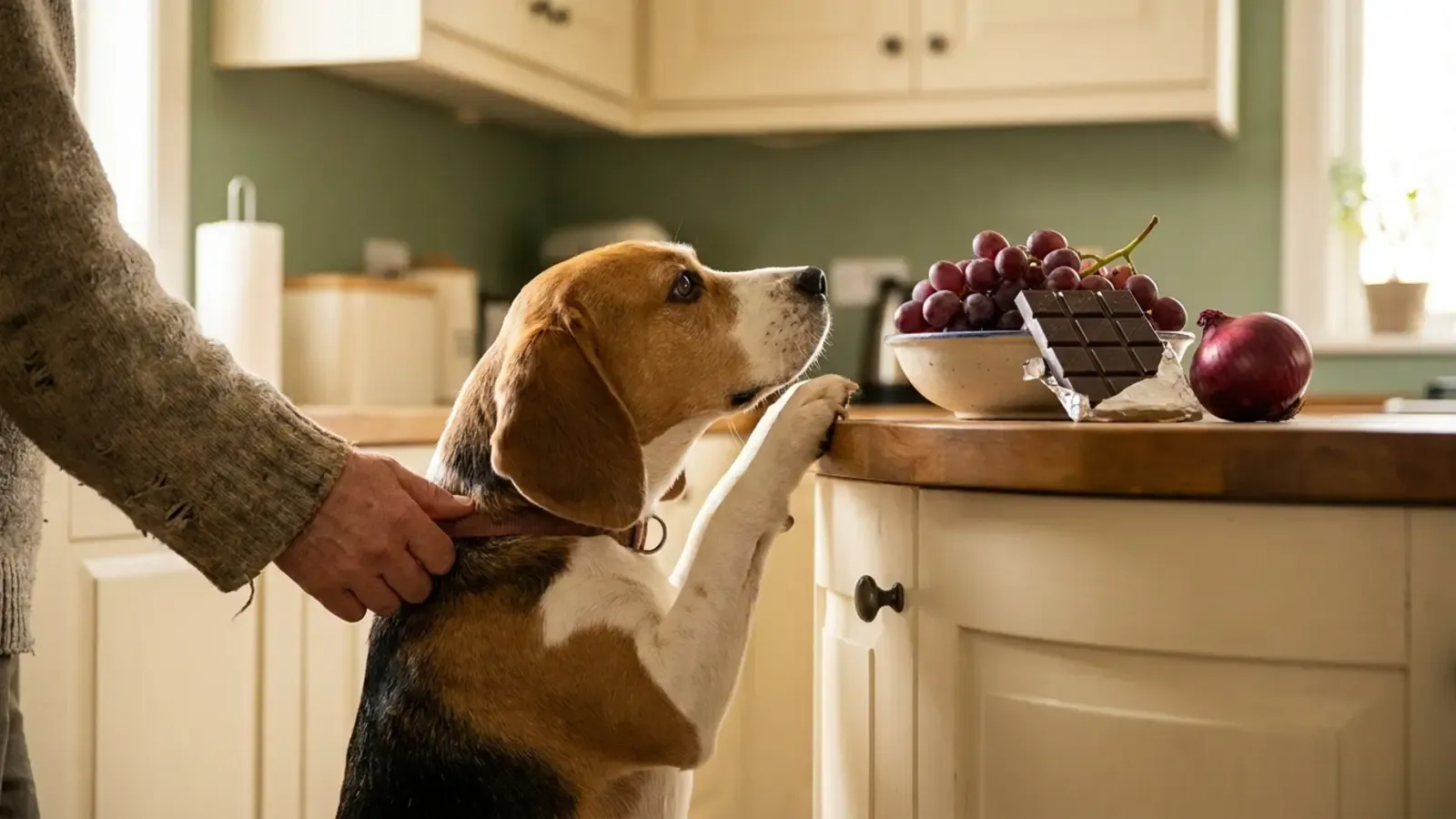
The most dangerous foods for dogs are xylitol (in sugar-free gum and sweets), grapes and raisins, chocolate, caffeine, onions and garlic, macadamia nuts, alcohol and raw bread dough. If your dog has eaten any of them, call your vet or a pet poison helpline now, even if they seem fine: several of these take hours to show signs, and treatment works best early. Don’t try to make your dog sick at home unless a vet tells you to.
If your dog has just eaten something toxic
- Move your dog away from the food and pick up what is left.
- Call your vet or, out of hours, an emergency vet clinic. If you can’t reach one, call a pet poison line:
- US: ASPCA Animal Poison Control, (888) 426-4435, or Pet Poison Helpline, (855) 764-7661. Both are open 24 hours and may charge a consultation fee.
- UK: Animal PoisonLine, 01202 509000, a 24-hour line for owners run by the Veterinary Poisons Information Service (fee per case).
- Elsewhere, call your nearest vet or emergency clinic.
- Have the facts ready: what your dog ate, roughly how much, when, and your dog’s weight. Keep the wrapper or packaging; ingredient lists matter, especially for sweets, baked goods and peanut butter.
- Don’t induce vomiting at home unless a vet tells you to. It isn’t safe for every substance, and home methods can do harm of their own. If it is needed, your vet can do it safely.
- Don’t wait for symptoms. Grapes, chocolate and onions can all look harmless for hours.
The list: what’s toxic, why, and how serious
| Food | What it does | How serious |
|---|---|---|
| Xylitol (sugar-free gum, mints, sweets, some peanut butters, toothpaste, baked goods; also called birch sugar) | Sudden drop in blood sugar within 30 minutes to 2 hours: vomiting, weakness, wobbliness, seizures. Can damage the liver | Emergency |
| Grapes, raisins, currants, sultanas (including in cakes, buns and trail mix) | Sudden kidney failure. Signs (vomiting, lethargy, peeing less) appear within 12–24 hours. No known safe amount | Emergency |
| Chocolate and cocoa | Theobromine and caffeine: vomiting, diarrhoea, restlessness, racing heart, tremors, seizures. Signs can take up to 12 hours. Baking chocolate and cocoa powder are worst, white chocolate least | Serious; can be fatal |
| Caffeine (coffee, coffee grounds, tea bags, energy drinks, caffeine pills) | Restlessness, vomiting, panting, racing heart, tremors | Serious; caffeine pills especially |
| Onions, garlic, leeks, chives, shallots (raw, cooked, dried, powdered; also in gravy, soups and baby food) | Damage red blood cells, causing anaemia: weakness, pale gums, fast breathing. Can take a day to several days to show | Serious, depending on amount |
| Macadamia nuts | Weakness (often the back legs), wobbliness, tremors, vomiting, high temperature, usually within 12 hours | Serious, but most dogs recover in 1–3 days with care |
| Alcohol (drinks, hand sanitiser, fermenting dough) | Wobbliness, vomiting, drowsiness, low body temperature and blood sugar, breathing problems | Serious; can be fatal |
| Raw yeast dough | Rises in the stomach, causing painful bloating and possibly a twisted stomach, and makes alcohol as it ferments | Emergency |
| Salt in large amounts (salt dough ornaments, homemade play dough, very salty snacks) | Raised blood sodium: vomiting, thirst, wobbliness, tremors, seizures | Serious |
| Fatty foods (bacon, sausages, gravy, turkey skin, fat trimmings, butter) | Stomach upset and pancreatitis, a painful inflammation that can need hospital care | Mild to serious |
| Cooked bones | Splinter and can cut or block the gut | Serious |
| Corn cobs, fruit stones, avocado pits | Can lodge in the gut and need surgery | Serious |
| Other nuts (almonds, pecans, walnuts) | High in fat: vomiting, diarrhoea, possible pancreatitis. Can also cause blockages | Usually mild |
| Avocado flesh | Mainly dangerous to birds, rabbits and horses. In dogs, mostly stomach upset; the pit is the bigger risk | Usually mild |
| Milk and dairy | Many dogs can’t digest lactose well: diarrhoea, gas | Mild |
| Raw meat, raw eggs, raw fish | Can carry Salmonella and E. coli, which can also make people in the household ill | Mild to serious |
| Citrus peel, stems and seeds | Irritation and stomach upset; the fruit itself in small amounts is usually only mildly upsetting | Mild |
The ASPCA and Pet Poison Helpline lists behind this table cover the common foods. Plenty of other household things are toxic too, including human medicines, rat bait, slug pellets, antifreeze and some plants and bulbs. Keep them out of reach and treat any of them as a reason to call.
The worst offenders in more detail
Xylitol
Xylitol is the sweetener most likely to catch owners out, because it hides in products that look harmless: sugar-free gum, mints, chewable vitamins, some brands of peanut butter and nut butters, toothpaste and “sugar-free” baked goods. In dogs it triggers a large release of insulin, and blood sugar crashes, sometimes within half an hour. The Merck Veterinary Manual notes some dogs also develop severe liver injury. Check labels for xylitol or birch sugar before sharing anything sweet.
Grapes and raisins
Why grapes poison some dogs and not others isn’t fully understood, and there is no amount known to be safe. Pet Poison Helpline treats any ingestion as potentially toxic. Raisins hide in hot cross buns, fruit cake, mince pies, cereal bars and trail mix. Kidney damage is easiest to prevent in the first hours, so call your vet even if your dog ate just a few.
Chocolate
The darker and more bitter the chocolate, the more dangerous: baking chocolate and cocoa powder are worst, then dark chocolate, milk chocolate and finally white chocolate. Size matters too: a bar that would only upset a large dog can be serious for a small one. Your vet or a poison line can tell you whether the amount your dog ate is a concern, so have the wrapper handy. Cocoa shell garden mulch is also a risk.
Onions and garlic
The onion family damages red blood cells, and the effect is cumulative, so a big meal of onion-heavy leftovers or small amounts eaten repeatedly can both cause anaemia. Powdered onion and garlic are concentrated, which makes gravy granules, stock cubes, seasoned meats and some baby foods surprisingly risky. Signs may not show for a day or several days.
What’s safe instead?
Plenty of human foods are fine as an occasional treat in small amounts: plain cooked chicken or turkey without skin or bones, carrot, green beans, cucumber, plain cooked pumpkin, and some fruits such as apple slices (no core or seeds) and blueberries. Our guide on what fruits dogs can eat covers fruit in more detail, and treats should stay under about 10% of the day’s calories: see how many treats a dog can have.
Preventing it
- Keep bags, handbags and coat pockets off the floor: gum and sweets are a common source of xylitol.
- Put fruit bowls, chocolate and baking at the back of high counters, and never leave food on a coffee table.
- Use a lidded bin or keep it behind a closed door.
- Tell guests and children not to share food, especially at parties and holidays, when chocolate, raisins, bones and fatty leftovers are everywhere.
- Watch for signs after a surprise raid: vomiting, diarrhoea, restlessness, wobbliness, trembling or unusual tiredness. If your dog is vomiting repeatedly, our guide to when dog vomiting is a worry explains what to watch for, but if a toxin could be involved, call first and read later.
PetTrackr helps you keep track. It is not veterinary advice: if your pet seems unwell, call your vet.
 How many calories does my dog need?
 How much to feed a puppy
 How to help your dog lose weight