
How much exercise does a dog need?
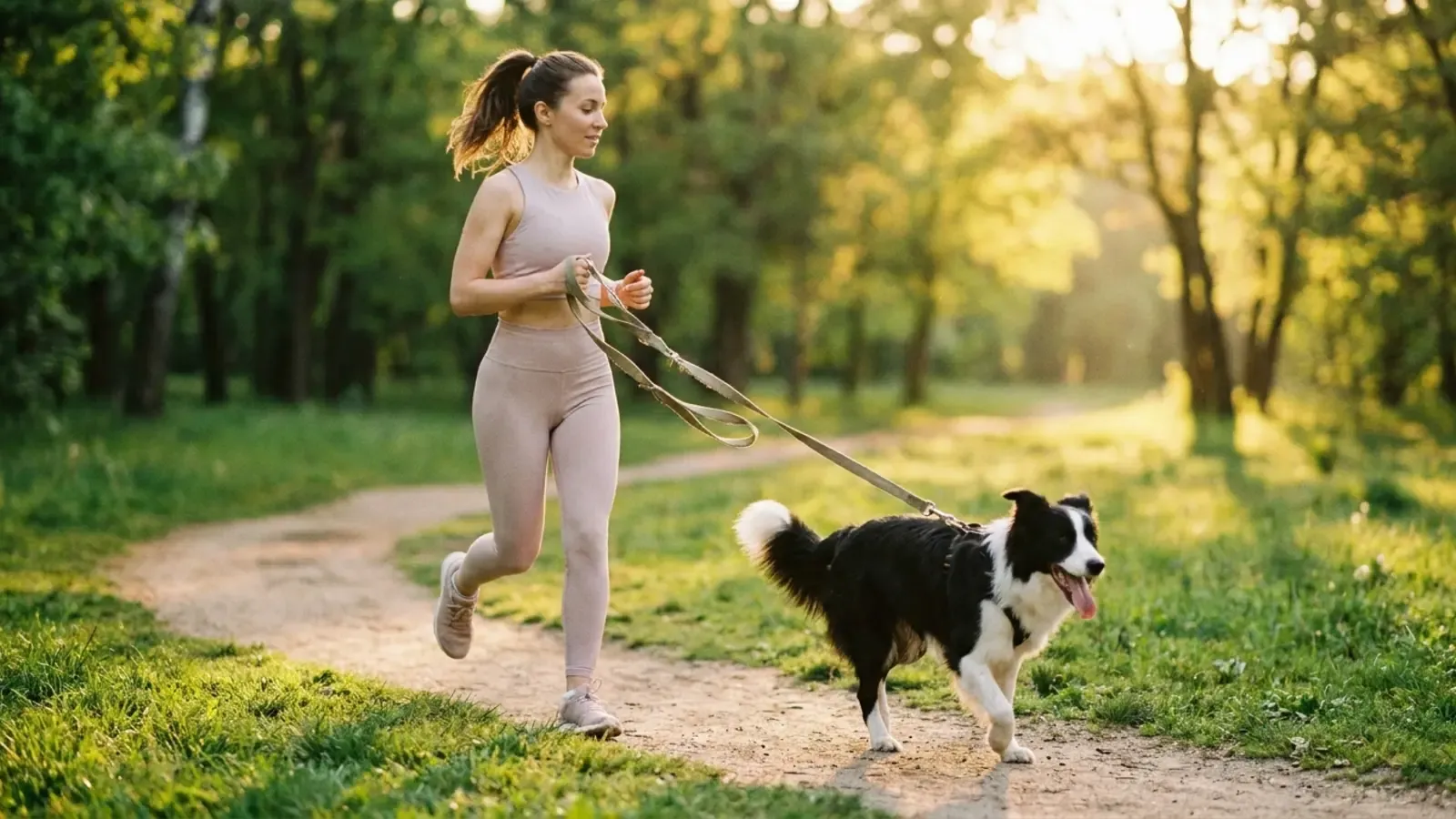
Most healthy adult dogs need between 30 minutes and 2 hours of exercise a day, depending on their breed, age and health. Small companion breeds are often happy with around 30 minutes to an hour; active breeds such as Labradors, spaniels and collies typically need 2 hours or more, plus things to think about. Puppies need short, gentle sessions and lots of free play; senior dogs usually need shorter, more frequent walks at their own pace.
Exercise by breed type
Breed matters more than size. A Greyhound needs surprisingly little, while a small Jack Russell can outlast most people. These ranges are based on PDSA breed guidance for healthy adult dogs; your own dog may need more or less.
| Breed type | Examples | Exercise a day (healthy adult) |
|---|---|---|
| Toy and small companion | Chihuahua, Pomeranian, Cavalier King Charles, Shih Tzu | About 30 minutes to 1 hour |
| Small but busy | Jack Russell, Border Terrier, Miniature Schnauzer | About 1 hour or more |
| Medium, moderate energy | Beagle (often more), Cocker Spaniel, Staffordshire Bull Terrier | About 1 to 2 hours |
| Sporting and working | Labrador, Springer Spaniel, Border Collie, German Shepherd | 2 hours or more, with mental work |
| Large and giant | Mastiff, Newfoundland, Great Dane | About 1 hour, at a steady pace |
| Sighthounds | Greyhound, Whippet | Less than you might think: short sprints plus walks |
| Flat-faced (brachycephalic) | Pug, French Bulldog, Bulldog | Short, frequent, gentle sessions; avoid heat |
PDSA notes that most dogs need at least one to two walks a day, and that working breeds need considerably more than one to two hours.
Exercise is more than walking
The time doesn’t all have to be marching along a pavement. Good exercise includes:
- Walks at your dog’s pace, with time to sniff. Sniffing is tiring, enriching and important to dogs.
- Off-lead running in safe places, once their recall is reliable.
- Play: tug, fetch in moderation, chasing a flirt pole.
- Brain work: training, scent games, food puzzles. Ten minutes of training can tire some dogs as much as a long walk.
- Swimming, which is easy on joints.
A dog who gets enough physical exercise but nothing to think about can still be restless and bored, especially working breeds.
How much exercise does a puppy need?
Puppies need exercise, but their bones and joints are still developing, so the emphasis is on short, gentle sessions and free play on soft ground, not long structured walks or repetitive high-impact activity.
The five-minute rule, and its limits
You will often read the five-minute rule: five minutes of structured exercise (such as a lead walk) per month of age, up to twice a day, until fully grown. The UK Kennel Club and PDSA both give it as a guide, so a 4-month-old puppy would get about 20 minutes per walk.
It is a reasonable starting point, but be clear about what it is: a popular rule of thumb, not evidence-based. It isn’t based on scientific studies, and it doesn’t account for breed, size or the individual puppy. Some vets think it is too restrictive for many dogs; others are glad it stops owners taking young puppies on long hikes.
What the research does suggest is that the type of exercise matters. A Norwegian study of large-breed puppies found that daily exercise in parks on soft, gently undulating ground in the first three months was linked to a lower risk of hip dysplasia, while climbing stairs daily at that age was linked to a higher risk.
A sensible approach for puppies:
- Short lead walks, roughly in line with the five-minute guide, building up gradually
- Plenty of self-paced free play on grass, where they can stop and rest when they choose
- Lots of naps: puppies sleep a great deal and need it
- Avoid long runs or jogging alongside a bike, repeated jumping from heights, lots of stairs, and endless ball-throwing with sharp turns and skids, as the Kennel Club advises
- Larger and giant breeds grow for longer, so ask your vet when it is safe to start running or longer hikes
Your vet can advise on your puppy’s breed as they grow.
Exercise for adult dogs
Once your dog is fully grown (around a year for small breeds, up to 18 months or more for giant breeds), build up to the amount their breed needs. A few tips:
- Split it up. Two or three outings usually suit dogs better than one long one.
- Build fitness gradually, like you would for yourself, especially after a lazy winter.
- Mix it up: different routes, some sniffing, some play, some training.
- Adjust for weight. An overweight dog benefits from more activity, but start gently and talk to your vet. Exercise works alongside portion control: see how many calories your dog needs.
Exercise for senior dogs
PDSA notes that older dogs often slow down but still need to stay active to keep their muscles, joints and weight healthy. For senior dogs:
- Shorter, more frequent walks, with your dog setting the pace
- Gentle, low-impact activity: sniffing walks, swimming, gentle play
- Watch for stiffness after exercise, which can be a sign of arthritis
- Keep their brain busy with easy training and puzzle toys
If your older dog is suddenly reluctant to walk, slower, stiff or limping, see your vet. It is often pain, which can usually be helped.
Signs your dog isn’t getting enough exercise
- Restlessness, pacing or difficulty settling in the evening
- Destructive chewing or digging
- Excessive barking or attention-seeking
- Pulling hard on the lead and zooming as soon as they get out
- Weight gain
These can have other causes too, including anxiety (see separation anxiety in dogs), but under-exercise is a common one.
Signs of too much exercise
- Lagging behind, lying down or refusing to go on
- Heavy panting that doesn’t settle quickly
- Limping, stiffness or reluctance to get up the next day
- Sore, worn or cut paw pads
- Being unusually irritable or unable to settle because they are overtired
Stop and let your dog rest if they are struggling. Ask your vet if signs don’t settle or you see limping.
Hot weather is dangerous
Dogs overheat much more easily than people. In warm weather, walk in the cooler early morning or evening, as PDSA advises, carry water, and test pavements with the back of your hand. Flat-faced breeds, overweight dogs, seniors and thick-coated dogs are at highest risk.
Heatstroke is an emergency. If your dog is panting heavily, drooling, weak, wobbly, confused, vomiting or collapses, move them somewhere cool, start cooling them with cool (not icy) water, and call your vet or nearest emergency clinic immediately.
Keeping track
It is easy to think your dog had a big week when it was really two long walks and five short ones. If you want to see the real picture, PetTrackr gives your dog a weekly active-time goal worked out from their breed and age, and fills it in as you log walks, runs and play.
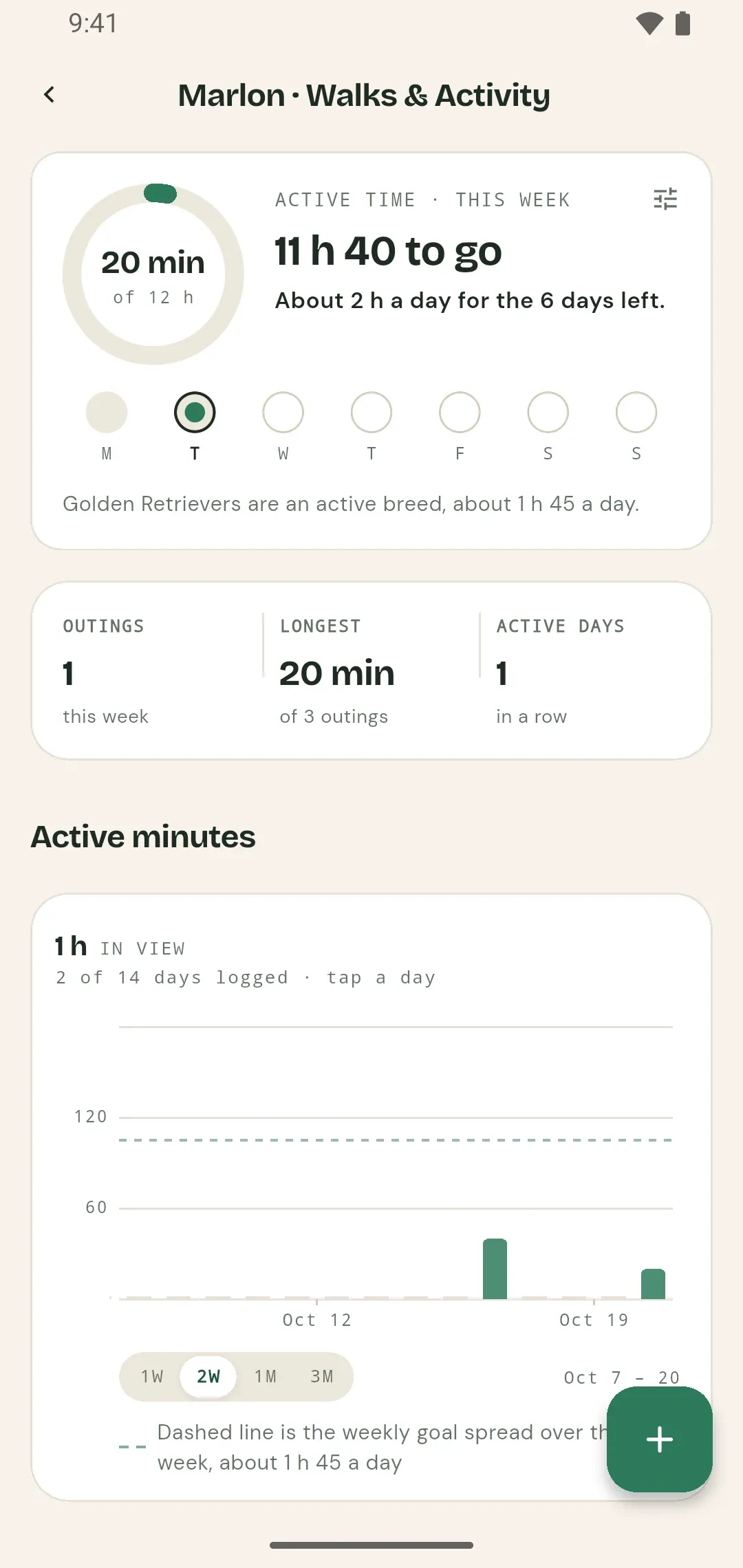
Weekly works better than daily for most people: dogs have rest days, and owners have busy Tuesdays.
PetTrackr helps you keep track. It is not veterinary advice: if your pet seems unwell, call your vet.
 How often to bathe a dog
 How to brush a dog’s teeth
 How to remove a tick from a dog