
How often to bathe a dog
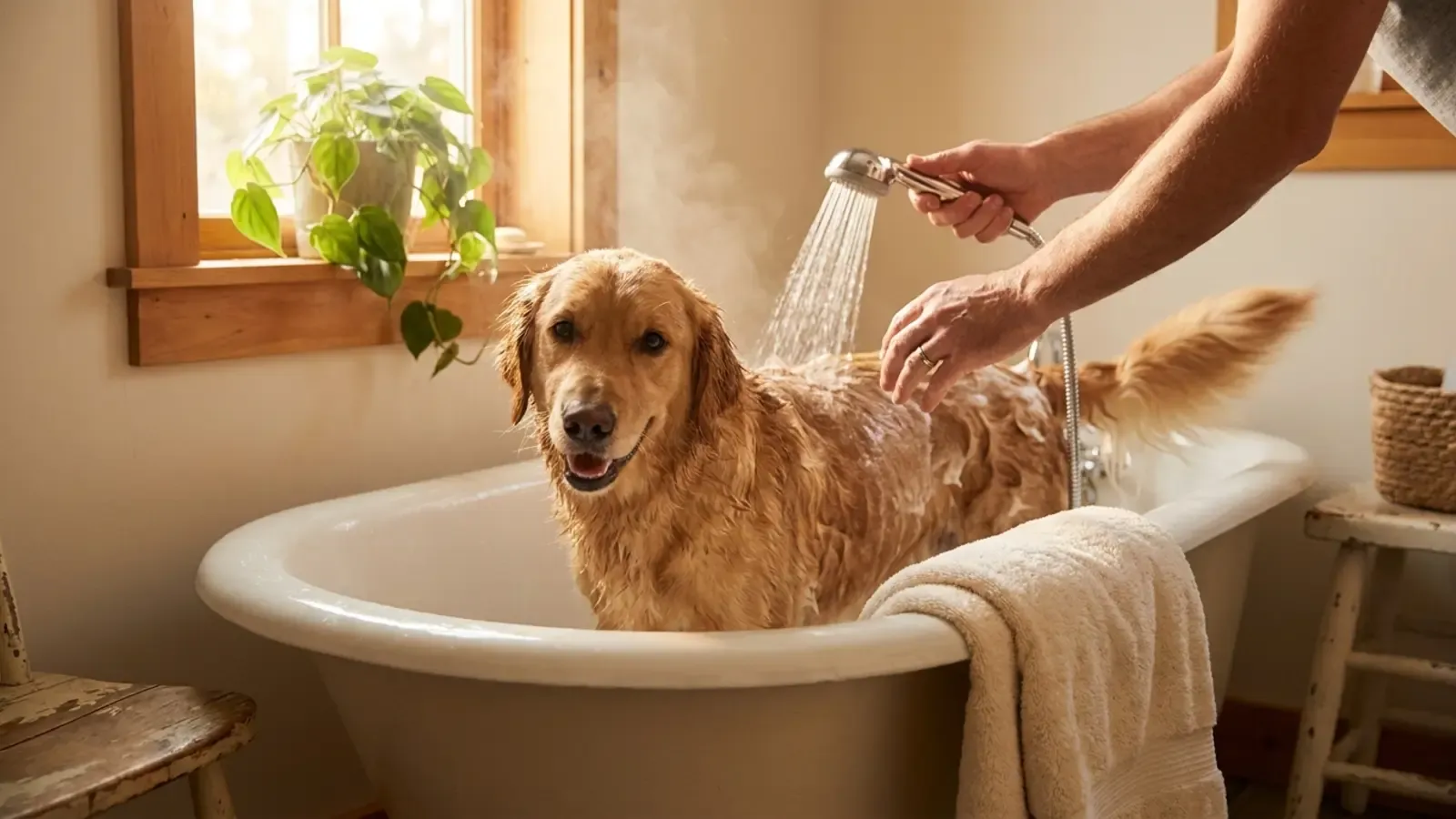
Most healthy dogs only need a bath every one to three months, plus whenever they roll in something or start to smell. How often depends on the coat: oily-coated and hairless breeds may need a bath as often as weekly, while short coats and thick double coats need it less. Bathing too often can strip the skin’s natural oils and leave it dry and itchy, so when in doubt, brush more and bathe less.
How often to bathe a dog, by coat type
Vets and breed experts agree on the principle, if not on exact numbers: bathe when your dog needs it, and not much more. The American Kennel Club notes that most experts recommend bathing as infrequently as possible, to protect the natural oils in the skin and coat.
| Coat type | Examples | Typical bath interval |
|---|---|---|
| Short, smooth | Beagle, Boxer, Weimaraner | Every 2–3 months, or when dirty |
| Oily coat | Basset Hound, some spaniels | As often as weekly, according to the AKC |
| Water-repellent coat | Golden Retriever, Labrador | Less often, to keep the coat’s natural oils |
| Thick double coat | Husky, Malamute, German Shepherd | A few times a year, often at seasonal sheds, with lots of brushing |
| Long, silky or curly, non-shedding | Poodle, Shih Tzu, Bichon, doodles | About every 6–8 weeks, according to VCA, often with grooming |
| Wiry | Terriers, Schnauzer | Every 1–3 months; regular brushing or hand-stripping |
| Hairless | Chinese Crested, Xoloitzcuintli | Often weekly; their skin collects oil and needs sun protection |
These are starting points. Your own dog’s skin and smell will tell you more than any table.
Lifestyle matters as much as coat
- Outdoor, muddy or swimming dogs may need more frequent rinses. A plain-water rinse after a muddy walk or a swim in the sea or a pond often does the job without shampoo.
- Mostly indoor, low-shedding dogs may go months between baths.
- Dogs with allergies or skin conditions may need medicated baths on a schedule your vet sets. VCA notes medicated shampoos usually need to sit on the coat for 5–10 minutes before rinsing to work.
- Dogs who sleep on your bed might be bathed a little more often for your sake, but use a gentle shampoo.
- Puppies only need a bath when they are dirty. Use a gentle puppy shampoo and keep them warm afterwards.
- Senior dogs may find bath time harder on stiff joints. Shorter baths, a non-slip mat and help in and out of the tub make it easier.
Signs your dog needs a bath
- A noticeable smell that brushing doesn’t fix
- Visible dirt, mud or sticky patches
- A greasy-feeling coat
- They rolled in something (you will know)
A dog who smells bad again soon after a bath, or has red, flaky or greasy skin, ear odour or constant scratching, may have a skin or ear problem rather than a dirty coat. That is a reason to see your vet, not to bathe more often; see dog itching and scratching.
Brushing: the part that matters more
Regular brushing removes loose fur, dirt and dandruff, spreads natural oils and stops mats forming. For many dogs it does more for coat health than bathing. How often depends on the coat: a few times a week for most long or double coats, weekly for short coats. Always brush out tangles before a bath, as VCA advises: water tightens mats.
How to bathe a dog, step by step
- Brush first to remove loose hair and tangles.
- Get everything ready: dog shampoo, a jug or handheld shower, several towels, treats, and a non-slip mat for the tub or shower.
- Check the water. Comfortably warm, never hot, as the AKC advises. Test it on your wrist, as you would a baby’s bath.
- Protect the ears. A loose cotton ball in each ear can help keep water out; remember to take them out afterwards. Never push anything into the ear canal.
- Wet your dog thoroughly from the neck back, right down to the skin. Thick coats take longer than you think.
- Lather with dog shampoo, working it into the skin. Wash the belly, legs, paws and under the tail. On long coats, lather in the direction the fur grows to reduce tangles.
- Clean the face carefully with a damp cloth rather than pouring water or shampoo over the head, to keep it out of the eyes and ears.
- Rinse, then rinse again. Leftover shampoo is a common cause of itchy skin after a bath. Keep going until the water runs clear and the coat doesn’t feel slippery.
- Towel dry and let them shake (stand back). If you use a hairdryer, use a cool or low setting and keep it moving, at least a foot away from the skin, as the AKC advises.
- Keep them warm until they are fully dry, especially puppies, seniors and thick-coated dogs.
- Reward. A treat or a game helps your dog learn that bath time ends well.
Choosing a shampoo
- Use a shampoo made for dogs. VCA advises against human shampoo, including baby shampoo, which it says is too harsh for dogs’ skin.
- For routine baths, choose a gentle, unperfumed or hypoallergenic one.
- Use medicated shampoo only as directed by your vet.
- Check flea products’ labels. Some flea treatments need a gap before or after bathing to work, and some dog products are dangerous to cats. Ask your vet if you are unsure.
Making bath time less stressful
- Start young, with short, happy baths.
- Use a non-slip mat so your dog feels steady.
- Keep the water shallow and the mood calm.
- Lick mats smeared with something tasty can keep a dog busy in the tub.
- If your dog panics, a professional groomer or your vet’s team can help, and a quick rinse may be enough until you have built up their confidence.
Quick summary
- Most dogs: every 1–3 months, or when dirty
- Oily coats and hairless breeds: more often
- Double coats: rarely, but brush often
- Warm water, dog shampoo, rinse thoroughly
- Brush more, bathe less
- Bath day is a good day to check their nails: see how to trim dog nails
PetTrackr helps you keep track. It is not veterinary advice: if your pet seems unwell, call your vet.
 How much exercise does a dog need?
 How to remove a tick from a dog
 Pet medical records to keep