New puppy checklist
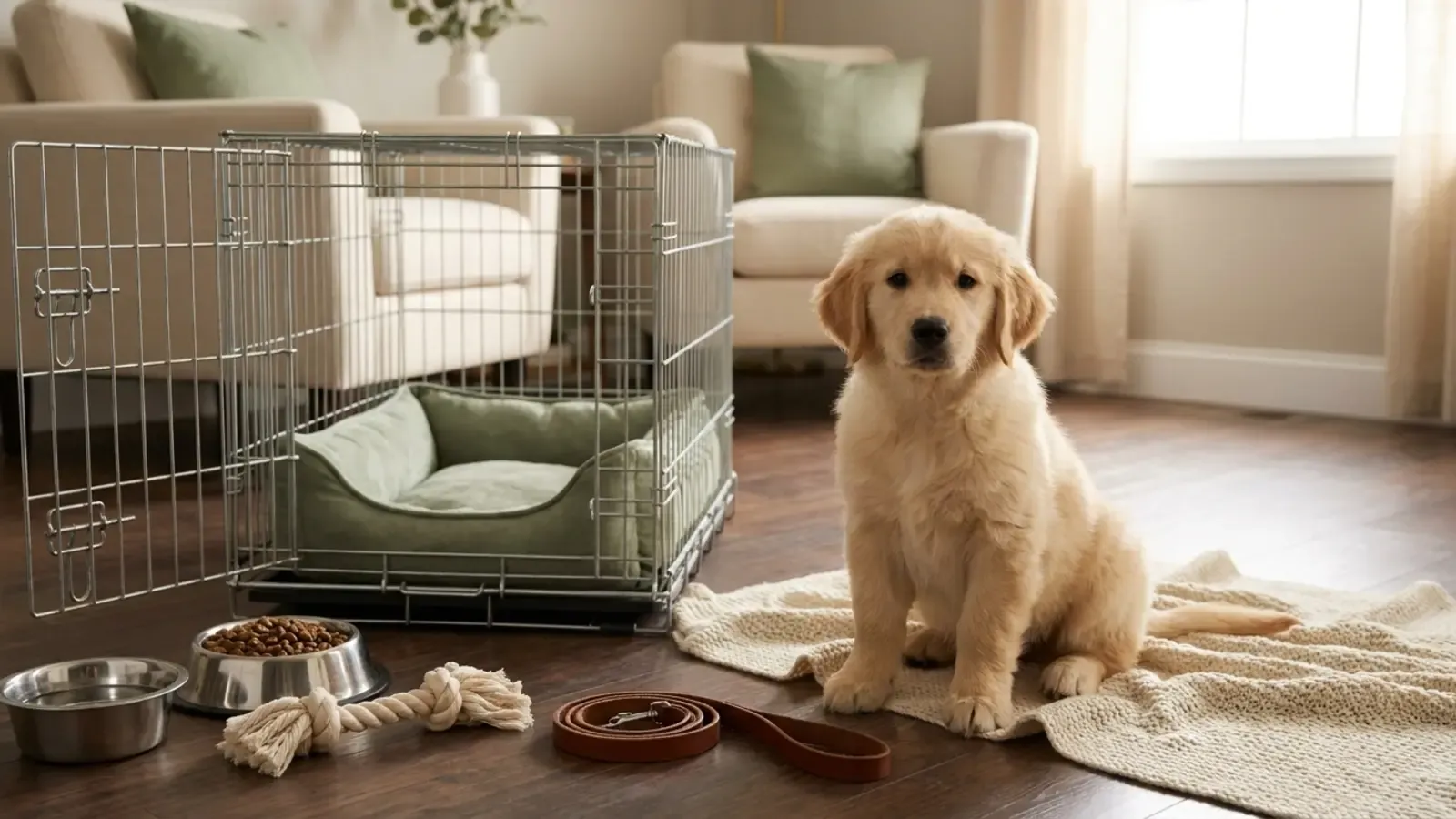
Before your puppy comes home you need a crate, a bed, bowls, the food they already eat, a collar or harness with an ID tag, a lead, chew toys and a cleaner made for pet accidents. In the first week, the jobs that matter most are a vet check within a few days, a steady routine of meals, sleep and toilet trips, and gentle, safe introductions to the world.
Here is the whole list, split into what to buy, how to get the house ready, and what to do day by day.
What to buy before your puppy comes home
The essentials
| Item | What to look for |
|---|---|
| Crate | Big enough to stand, turn and lie flat, no bigger. An adult-size crate with a divider grows with them |
| Bed and blankets | Cheap and washable at first: puppies chew. Blankets without holes or loose threads |
| Food | The same food the breeder or shelter used, labelled complete for growth or all life stages. Large and giant breeds need a large-breed puppy food |
| Food and water bowls | Washable, heavy or non-tip |
| Collar or harness | A collar you can slide two fingers under, with an ID tag carrying your phone number. You’ll replace it as they grow |
| Lead | A standard fixed lead. Retractable leads make training harder |
| Chew toys | Several, in different textures, firm but with a little give. Rotate them so they stay interesting |
| Enzymatic cleaner | Breaks down urine smell so your puppy isn’t drawn back to the same spot |
| Poo bags | Plenty. You’ll use more than you think |
| Small treats | Soft, pea-sized training treats for rewarding toilet trips and good behaviour |
Useful from the start
- Puppy gates or a pen to close off rooms and give your puppy a safe area when you can’t watch them
- Puppy pads or a washable crate liner, for overnight or if you live high up
- A secure car crate, carrier or dog seat belt: puppies should be restrained in a moving car
- Brush or comb suited to the coat, nail clippers, and a dog toothbrush with dog toothpaste (never human toothpaste)
- Puzzle feeders or lick mats to slow eating and keep busy minds busy
- A food storage bin with a lid your puppy can’t open
What can wait
Expensive beds, a wardrobe of collars and a basket of novelty toys. Your puppy will chew the bed, outgrow the collars and prefer a cardboard box. Buy these once you know their size and habits.
Puppy-proof your home
Get down to puppy height and look around. Anything they can reach, they will try to chew.
- Cables and chargers: tuck them away or cover them
- Medicines, vitamins and cleaning products: up high or locked away, including handbags on the floor
- Food: chocolate, grapes and raisins, onions, xylitol (in some sugar-free gum and peanut butter) and more are dangerous to dogs. See foods toxic to dogs
- Bins: lids that close, or behind a cupboard door
- Shoes, socks, hair ties, children’s toys: small things get swallowed
- Houseplants and garden plants: check them against the ASPCA’s toxic plant list
- Stairs, balconies and ponds: gate them
- The garden: check fences for gaps, and store slug pellets, antifreeze and fertilisers out of reach
If your puppy eats something it shouldn’t, call your vet or an animal poison line straight away. Don’t try to make them sick at home.
Before the day itself
- Choose a vet and book a check-up for the first two or three days
- Ask the breeder or shelter for vaccination and worming records, the microchip number, the food they eat and how much, and their routine
- Ask for a blanket or toy that smells of their mother and litter, to put in the crate
- Agree house rules with everyone at home: is the sofa allowed, who feeds, which word means “go to the toilet”
- Set up the crate somewhere quiet but near people, and a second sleeping spot by your bed for the first nights
Day one
- Go straight to the toilet spot when you get home and wait. Praise and reward the moment they go
- Keep it calm. One room, a few people, no visitors queueing to meet them
- Feed the same food at the times they’re used to. If you want to change food, wait until they’ve settled, then mix it in gradually over a week or so
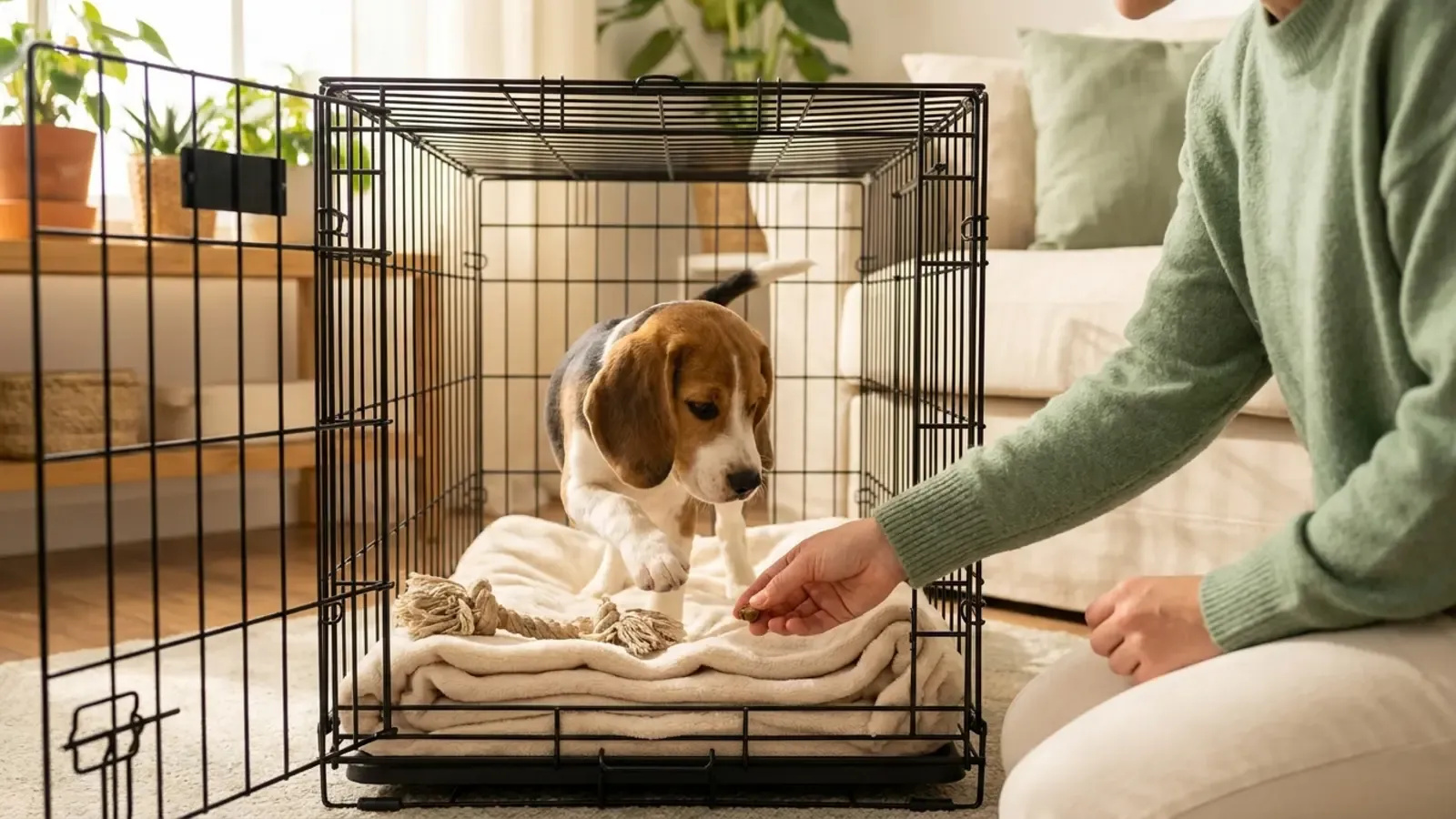
- Show them the crate with a treat or a chew inside and the door open. Let them walk in by choice (more in how to crate train a puppy)
- Toilet trips often: after waking, after eating or drinking, after play, and every hour or two while awake
- Bedtime: a last toilet trip, then the crate by your bed. Expect some crying. A hand near the crate helps; a quiet trip outside if they wake needing to go, then straight back to bed
The first week
| Day | Focus |
|---|---|
| 1–2 | Routine: meals, naps, toilet trips at the same times. Lots of sleep |
| 2–3 | Vet check: vaccines, worming, health check, microchip if not done |
| 3–4 | Short, gentle handling every day: paws, ears, mouth, a soft brush |
| 4–5 | Start their name, sit, and short spells alone in the crate or pen |
| 5–7 | Safe socialisation: new sounds, surfaces, calm visitors, car trips in your arms |
Routine
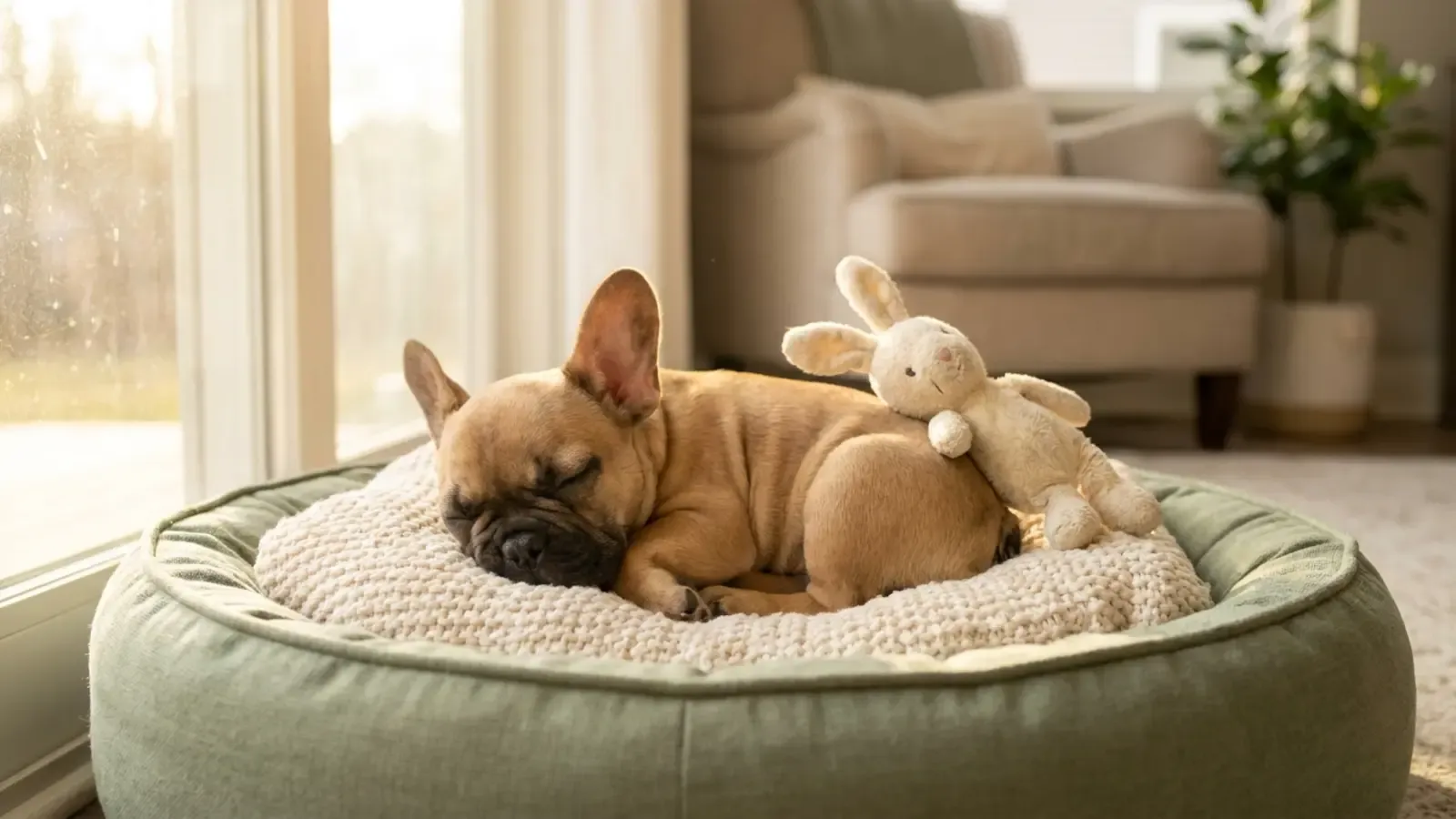
A puppy’s day is mostly sleep, food and toilet trips. Young puppies sleep around 18 to 20 hours a day (see how much puppies sleep), and most eat three or four small meals. Ask your breeder or vet how much, or start with how much to feed a puppy.
Toilet training
Start on the first day and be consistent. VCA recommends a trip out after every meal or big drink, immediately after every nap, every half hour during busy play, and every one to two hours while awake. Many puppies still need a trip in the night until about 5 months. The full method is in how to potty train a puppy.
Time alone
Build it slowly, a few minutes at a time, from day one. A puppy left alone for no more than about 3 hours can usually be crated; longer than that, they need a toilet break, so arrange a friend, family member or sitter.
Socialisation
The first three months of life are when puppies accept new things most easily. The American Veterinary Society of Animal Behavior recommends socialising puppies before their vaccinations are complete, carefully: carry them to see the world, invite calm vaccinated dogs to your home, and join a puppy class. Puppies can usually start a class at 7 to 8 weeks, at least 7 days after their first vaccines and after their first worming. Keep them off the ground in places unknown dogs use until the vaccine series is finished (see the puppy vaccination schedule).
Paperwork and ID
- Microchip: make sure your puppy is chipped and the database shows your details, not the breeder’s. In England, dogs must be microchipped by 8 weeks of age; rules vary elsewhere
- ID tag with your phone number on the collar, as many places require by law
- Vaccination card: keep it safe, and note the next due date
- Pet insurance: if you want it, compare policies early, since conditions found later may be excluded
- Registration and licence: some councils and states require a dog licence
The first week is a lot of small jobs at set times, and they’re easier when the whole household knows whose turn it is. PetTrackr puts meals, toilet trips and vet dates on one daily plan, lets you assign each to a person, and reminds them on their own phone.
Printable checklist
Before they arrive
- Crate, bed, blankets
- Food (same as breeder’s), bowls, storage bin
- Collar or harness, ID tag, lead
- Chew toys, training treats
- Enzymatic cleaner, poo bags, puppy pads
- Gates or pen
- Car crate or restraint
- Brush, nail clippers, dog toothbrush and toothpaste
- House puppy-proofed
- Vet chosen, first appointment booked
Collect from the breeder or shelter
- Vaccination and worming records
- Microchip number and transfer paperwork
- Food brand, amounts and meal times
- A blanket that smells of home
First week
- Vet check
- Microchip registered to you
- Toilet routine started from day one
- Crate introduced gently
- Daily handling of paws, ears and mouth
- Puppy class booked
- Next vaccine date noted
PetTrackr helps you keep track. It is not veterinary advice: if your pet seems unwell, call your vet.
 How much do puppies sleep?
 How to crate train a puppy
 Puppy teething