Puppy teething
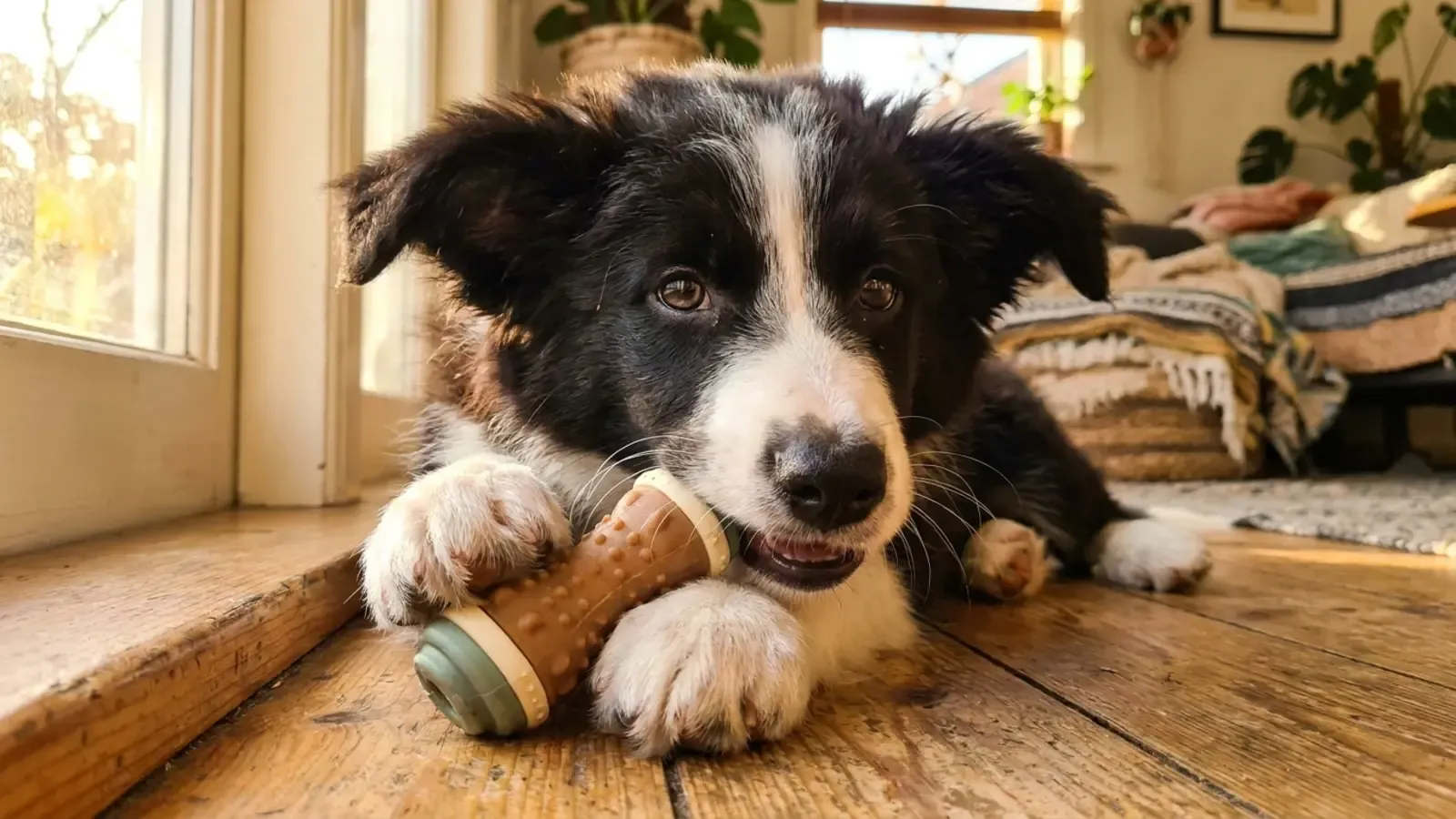
Puppies teethe twice. Their 28 baby teeth come through from about 3 weeks of age, and from around 3 to 4 months those fall out as 42 adult teeth push through, a process that is usually finished by 6 to 7 months. The second phase is the chewy one: sore gums, mouthing everything, and the odd spot of blood on a toy. Give them safe things to chew, and check their mouth each week for baby teeth that refuse to fall out.
The puppy teething timeline
| Age | What is happening |
|---|---|
| 3–6 weeks | Baby (deciduous) teeth come through: incisors and canines first, then premolars. Puppies have no baby molars |
| 6–8 weeks | All 28 baby teeth are in. Very sharp, needle-like teeth |
| 12–16 weeks | Baby incisors loosen and fall out as the adult incisors come through |
| About 4–6 months | Adult canines (the fangs) come through, around 5 months |
| 4–7 months | Adult premolars and molars come through at the back |
| 6–7 months | All 42 adult teeth are usually in, and the baby teeth gone |
Exact timing varies between breeds and individuals. Very small breeds often lose baby teeth and gain adult teeth a little later, and are more likely to have baby teeth that stay put.
Signs your puppy is teething
- Chewing everything: furniture, shoes, hands, skirting boards, cables
- More mouthing and nipping than usual
- Small spots of blood on toys or chews
- Finding a tiny tooth on the floor, though most are swallowed
- Gaps in the front teeth, or two teeth in the same place for a short time
- Red, puffy gums where a tooth is coming through
- Eating a little more slowly, or preferring soft food for a day or two
- Drooling a bit more than usual
A teething puppy should still be eating, drinking, playing and sleeping normally. Don’t put a high temperature, vomiting, diarrhoea or a puppy who stops eating down to teething: call your vet.
Safe chews for a teething puppy
Chewing soothes sore gums. The aim is to point it at the right things.
Good choices
- Rubber chew toys with a bit of give, in a size too big to swallow
- Toys you can freeze: some rubber toys can be filled with wet food or soaked kibble and frozen. The cold soothes the gums
- A clean, wet flannel, twisted and frozen, for supervised chewing
- Soft puzzle toys and lick mats to keep them busy
- Several toys, rotated, so a couple are new each day
The bend test. Veterinary dentists often put it simply: don’t let your dog chew anything that won’t bend. If you can’t dent it with a fingernail, it is hard enough to break a tooth.
Avoid
| Avoid | Why |
|---|---|
| Bones (cooked or raw), antlers, hooves | Can fracture teeth. Cooked bones can splinter |
| Very hard nylon chews | Too hard for new teeth |
| Anything small enough to swallow whole | Choking and blockage risk |
| Toys that are falling apart | Swallowed pieces can block the gut |
| Rawhide and similar chews | VCA cautions they can cause choking and blockages |
No toy is completely safe, so supervise chewing, and replace toys as soon as pieces start coming off.
Managing the mouthing
Teething makes a puppy bitier, but biting hands is a habit to stop early, not wait out.
- When teeth touch skin, stop the game: go still, take your hand away, and turn away for a few seconds
- Offer a toy instead, and praise them for chewing it
- Don’t play with hands, and don’t let children wind the puppy up with rough games
- Tidy away shoes, socks, cables and children’s toys
- Plenty of rest. An overtired puppy bites more (see how much puppies sleep)
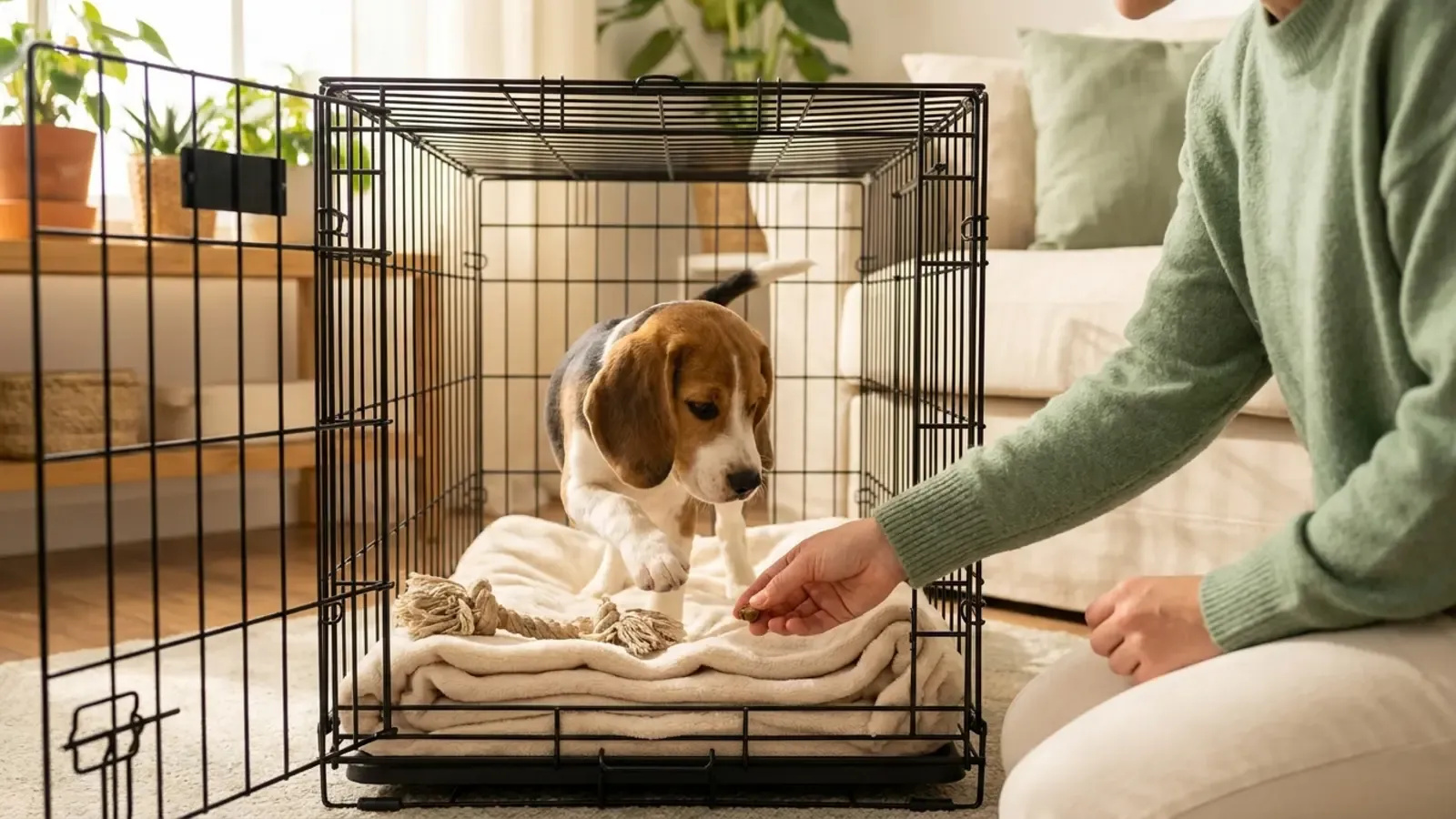
- Use a pen or crate with a chew when you can’t supervise
More in how to stop a puppy biting.
Retained baby teeth
Sometimes a baby tooth doesn’t fall out, and the adult tooth comes in beside it, giving a double row. These are called retained or persistent deciduous teeth.
- Which teeth: most often the upper canines, then the lower canines, then the incisors
- Which dogs: especially common in small breeds and flat-faced breeds such as Pugs, Bulldogs, Boston Terriers and Boxers. It often runs in families
- Why it matters: the crowding traps food and leads to gum disease early, and a stuck baby tooth can push the adult tooth out of place. A lower canine forced inwards can dig into the roof of the mouth, which is painful
What to do: look in your puppy’s mouth once a week until they are 7 to 8 months old. If you see two teeth where there should be one, or the bite looks wrong, see your vet promptly. VCA advises removing a persistent baby tooth as soon as it is noticed, which needs a general anaesthetic. Some vets do it during a spay or neuter if the timing fits. Don’t try to wiggle it out yourself.
Start caring for teeth now
The adult teeth have to last a lifetime, and the habits start now.
- Handle the mouth daily: lift the lips, touch the teeth, with a treat after
- Start brushing with a soft puppy brush and dog toothpaste only: human toothpaste isn’t safe for dogs. Gums may be sore while teething, so keep it gentle and brief
- Ask your vet to check the bite at your puppy’s vaccine visits
See how to brush a dog’s teeth for the step-by-step.
When to see your vet
- A baby tooth still there once the adult tooth has come through
- Teeth that look crooked, a bite that doesn’t meet, or teeth hitting the gums or palate
- A broken or discoloured tooth
- Swelling of the face or jaw
- Bleeding that doesn’t stop, or bad breath that smells of infection
- Not eating for more than a day
- Chewing that seems frantic or destructive despite plenty of toys and exercise
PetTrackr helps you keep track. It is not veterinary advice: if your pet seems unwell, call your vet.
 How much do puppies sleep?
 How to crate train a puppy
 How to potty train a puppy