
Puppy vaccination schedule
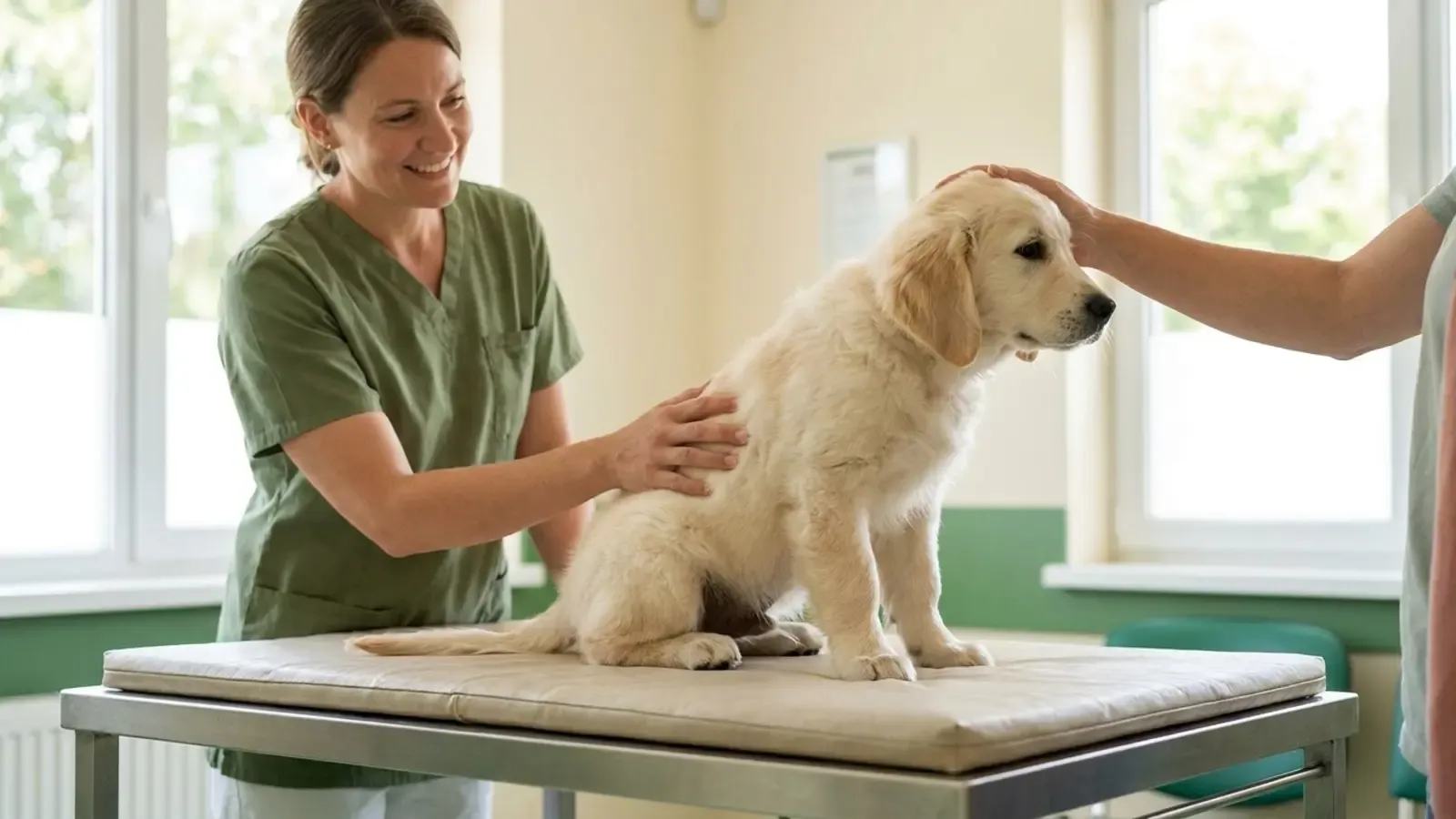
A new puppy comes with a lot to remember, and vaccines are the part with real deadlines. Here is the schedule most vets follow, what each vaccine protects against, and why the boosters matter as much as the first shots.
Your vet will tailor this to your puppy, your area and local rabies law, so treat it as a map for the conversation, not a replacement for it.
Why puppies need a series of shots
Puppies are born with some protection borrowed from their mother’s milk. It fades over the first months, but while it lasts it can also block a vaccine from working. Nobody can tell exactly when it wears off for a particular puppy, so vets give a series of doses a few weeks apart, with the last one at 16 weeks or older. That way, at least one dose lands after the mother’s protection has gone.
Core vaccines: every puppy
DHPP (sometimes written DA2PP or DAPP) is one injection covering four diseases:
- Distemper, a serious virus affecting the lungs, gut and nervous system
- Adenovirus (hepatitis), which attacks the liver
- Parvovirus, highly contagious and often fatal in young puppies
- Parainfluenza, one of the causes of kennel cough
Rabies is core wherever the disease exists, and required by law in many countries and states.
Leptospirosis is now treated as core in many regions: AAHA’s guidelines recommend it for every dog in North America, and WSAVA recommends it wherever the disease is found. It is a bacterial infection spread through water, wet grass and wildlife urine, it can damage the kidneys and liver, and it can pass to people. City dogs catch it too, from rats.
Lifestyle vaccines: depending on where you live
These are recommended for some dogs and not others. Ask your vet based on where you live and what your dog does.
- Bordetella (kennel cough): for dogs that board, go to daycare, groomers or training classes.
- Canine influenza: where outbreaks occur, for social dogs.
- Lyme disease: in areas with ticks that carry it.
The schedule, week by week
| Age | Vaccines |
|---|---|
| 6–8 weeks | DHPP, first dose |
| 10–12 weeks | DHPP, second dose. Leptospirosis, first dose. Bordetella, if recommended |
| 12–16 weeks | Rabies, timing set by local law. Second leptospirosis dose |
| 14–16 weeks or later | DHPP, final puppy dose (at 16 weeks or older) |
| 6 months | DHPP booster, recommended by WSAVA to catch any puppy the series missed |
| 1 year | Rabies booster. DHPP booster if not given at 6 months. Yearly leptospirosis |
| Every 3 years after | DHPP. Rabies every 1 or 3 years, depending on the vaccine and the law |
Leptospirosis protection is shorter-lived, so it is usually given every year.
Until the series is finished
Your puppy isn’t fully protected until about two weeks after the final dose. Until then:
- Carry them, or keep them to your own garden and to homes with healthy, vaccinated dogs
- Avoid dog parks, pet shop floors and places unknown dogs use
- Do go to puppy classes that require vaccinations; early socialisation matters too, and good classes manage the risk
Keeping track
The hardest part of vaccines isn’t the first year, it’s remembering the booster three years from now. Ask your vet for the date of each shot and when it’s next due, and keep the certificate somewhere you’ll find it. In PetTrackr, each vaccine keeps its own due date and the app reminds you before it lapses.
PetTrackr helps you keep track. It is not veterinary advice: if your pet seems unwell, call your vet.
 Adult dog vaccination schedule
 Deworming schedule for puppies and kittens
 Flea and tick prevention for dogs