
Your puppy’s first vet visit
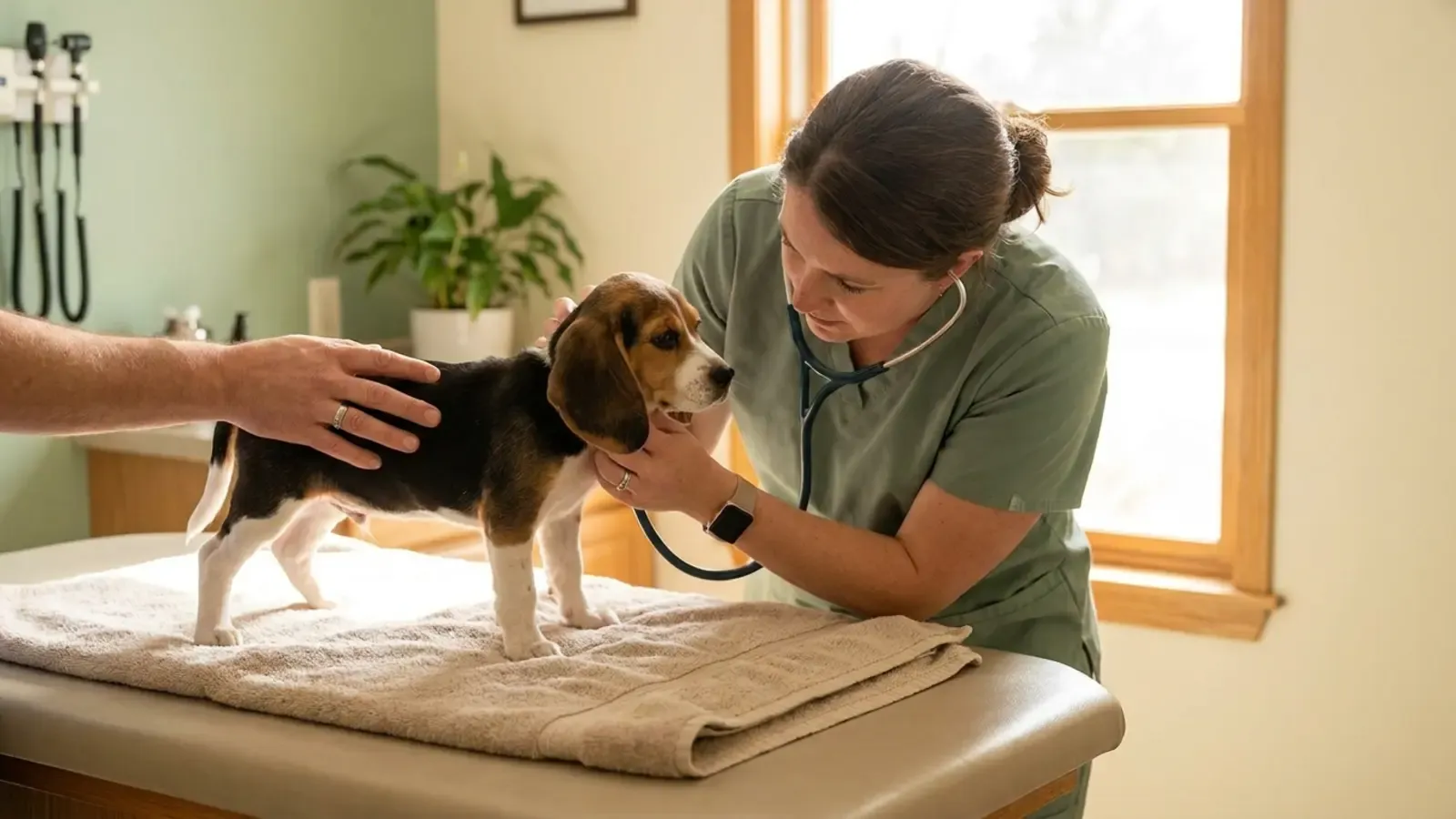
Book your puppy’s first vet visit for the first few days after they come home. The vet will weigh them, check them from nose to tail, test a stool sample for worms, and usually give a vaccine and a worming treatment. Bring a fresh stool sample, every record from the breeder or shelter, and your questions.
It is also the visit that sets up the next few months, so it is worth arriving prepared. Here is what happens, what to bring, and what to ask.
When to book it
- Within two or three days of bringing your puppy home. Many breeder contracts ask for a vet check within three days, so that any problem is found while it can still be raised with the breeder.
- Sooner for a rescue puppy, whose vaccine and health history may be incomplete.
- Straight away, not at the booked date, if your puppy has diarrhoea, vomiting, a cough, runny eyes or nose, or won’t eat.
Most vets start seeing puppies from 6 to 8 weeks of age, which is also when the vaccine series usually begins. If you can, visit the practice before the puppy arrives: ask about their puppy packages, opening hours and what to do out of hours.
What to bring
| Bring | Why |
|---|---|
| Fresh stool sample | Tested for intestinal worms and other parasites. Collect it that morning in a clean bag or pot |
| Breeder or shelter records | Dates and names of every vaccine and worming treatment, so nothing is repeated or missed |
| Microchip number | So the vet can scan it and check the details are yours |
| Name of the food and amounts | For feeding advice and a growth check |
| A list of questions | It is easy to forget them in the room |
| Small soft treats | To make the exam a good experience |
| Carrier, crate or lead | Keep them in your arms or a carrier in the waiting room |
| A towel or blanket | Something familiar to stand on |
If you can’t get a stool sample, go anyway. The clinic can collect one or give you a pot for later.
What happens at the exam
A first puppy exam is calm and hands-on. The vet will usually:
- Weigh your puppy, the starting point for food amounts and medicine doses
- Take their temperature
- Listen to the heart and lungs for murmurs or crackles
- Look at the eyes, ears, nose and mouth: baby teeth, bite, gums, ear mites
- Feel the belly and lymph nodes, and check for an umbilical hernia
- Check skin and coat for fleas, mites or ringworm
- Look at the legs, joints and walk
- Check the genitals, including whether both testicles have come down in a male puppy
Vaccines
Most puppies get a dose of the core DHPP vaccine (distemper, adenovirus, parvovirus, parainfluenza), repeated every 3 to 4 weeks until the final dose at 16 weeks or older. Rabies is usually given at 12 to 16 weeks, depending on local law. Your vet will talk about lifestyle vaccines such as leptospirosis or kennel cough based on where you live and what your dog will do. The full plan is in the puppy vaccination schedule.
Worms and parasites
Most puppies carry roundworms, often passed on from their mother before or soon after birth. Your vet will give a worming treatment, look at the stool test, and set a schedule, since worming has to be repeated to catch larvae as they mature (see the deworming schedule for puppies and kittens).
They will also recommend flea and, where needed, tick and heartworm prevention. Only use products labelled for puppies of that age and weight: many adult dog products are not safe for very young puppies.
Microchip
If your puppy isn’t chipped, it can be done in seconds at this visit with a needle under the skin. If they are, the vet will scan it. Either way, make sure the database lists your name and number.
Questions to ask your vet
Vaccines and parasites
- Which vaccines does my puppy need, and when is the next one due?
- Which non-core vaccines make sense where we live?
- When is it safe to walk in public places and meet other dogs?
- Which flea, tick, worm and heartworm products should we use, and how often?
Food and growth
- How much should my puppy eat, and how many meals a day?
- Is this food right for their breed and expected adult size?
- Is their weight on track?
Behaviour and training
- When can we start puppy classes?
- How do we handle biting and mouthing? (See how to stop a puppy biting.)
- Any tips for toilet training and the crate?
Longer term
- When should we talk about spaying or neutering? (See when to spay or neuter.)
- Is pet insurance worth it for this breed?
- What should we do in an emergency out of hours?
Making the visit a good experience
The first vet visit shapes how your dog feels about vets for years.
- Practise at home: touch paws, lift ears, look in the mouth, with a treat each time
- Do a short car trip or two beforehand, so the car isn’t new as well
- Keep them off the floor in the waiting room, in your arms or a carrier, until vaccines are complete
- Bring treats and ask the team to give some too
- Stay calm and chatty. Puppies take their cue from you
- Ask about a happy visit: some practices welcome a quick drop-in just for treats and a weigh-in
After the visit
| What you see | What to do |
|---|---|
| Sleepy, a bit quiet, small appetite for a day | Normal. Let them rest. Should settle within 24 to 48 hours |
| A small, tender lump where the vaccine went in | Common. Mention it at the next visit if it is still there in a few weeks or getting bigger |
| Mild signs still there after 24 hours | Call your vet |
| Swelling of the face or eyes, hives, repeated vomiting or diarrhoea, trouble breathing, collapse | Emergency. Call your vet or an emergency clinic now |
If you are worried about a reaction, ask whether you can wait at the clinic for 30 minutes after the injection.
Keep the paperwork
Before you leave, ask for:
- A vaccination card or certificate with the next due date on it
- The name and date of the worming treatment and the next one due
- Your puppy’s weight
- The date of the next appointment
Puppies collect a surprising amount of paperwork in the first year: three or four vaccine visits, worming every few weeks, a microchip, maybe neutering. PetTrackr keeps each vaccine with its next due date, stores certificates and vet visit notes, and reminds you before anything is due.
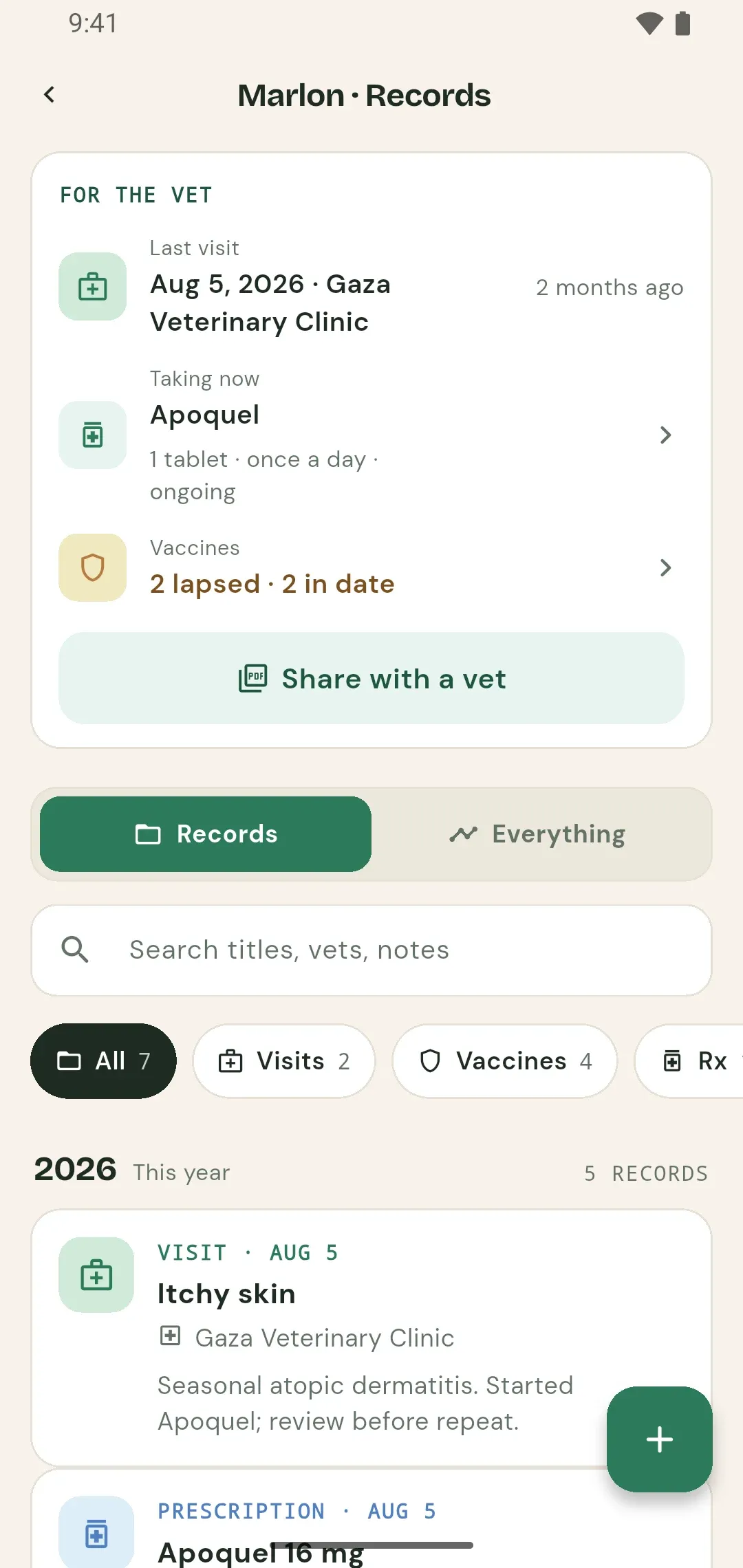
PetTrackr helps you keep track. It is not veterinary advice: if your pet seems unwell, call your vet.
 How much do puppies sleep?
 How to crate train a puppy
 How to potty train a puppy