
How much do puppies sleep?
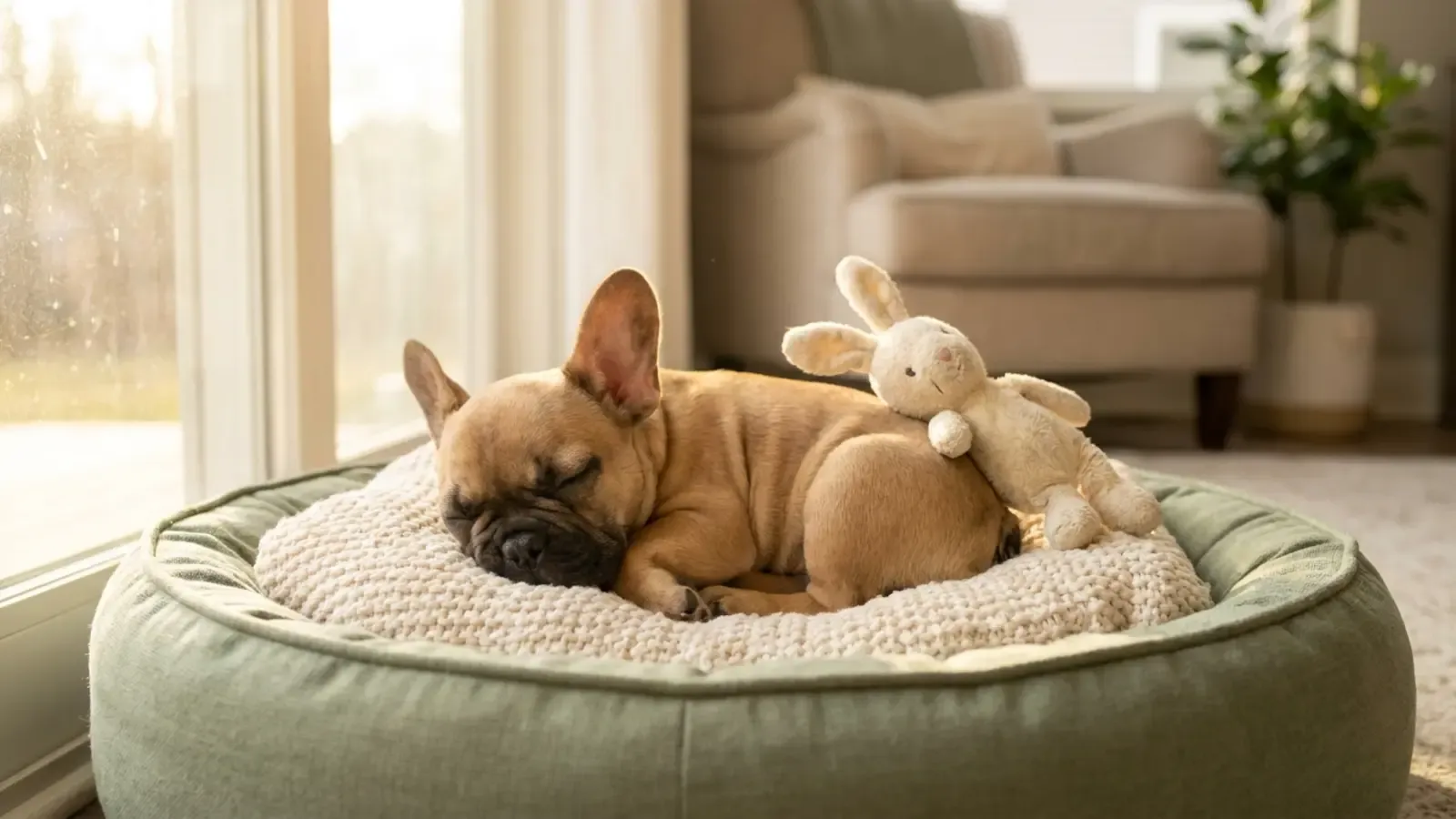
Young puppies sleep around 18 to 20 hours a day: a long night plus a nap every hour or so, each lasting from about 30 minutes to two hours. That is normal. Sleep is when a puppy’s brain, muscles and immune system do much of their growing, and an overtired puppy is a bitey, wild one.
Puppies sleep a little less each month, moving toward an adult dog’s roughly 12 to 14 hours by about their first birthday. Here is what to expect, a sample day, and the signs that sleepiness means something else.
Puppy sleep by age
There is no precise chart, and individual puppies vary, but the pattern is the same for nearly all of them.
| Age | Typical total | What the day looks like |
|---|---|---|
| 8–12 weeks | About 18–20 hours | Short bursts of play, then a nap. Often naps every hour or so |
| 3–6 months | Still most of the day | Longer awake spells, naps after walks, training and meals. Nights get longer |
| 6–12 months | Gradually less | Fewer, longer naps. Adolescent energy, but still plenty of rest |
| Adult dog | Roughly 12–14 hours | A full night plus daytime dozing |
Some breeds are sleepier than others, and a puppy who had a big morning will sleep more in the afternoon. Watch for what is normal for your puppy: a change matters more than the number.
A sample day for an 8- to 12-week-old puppy
A puppy’s day is a loop: wake, toilet, eat or play, toilet, sleep.
| Time | Activity |
|---|---|
| 6:30 | Wake up, straight outside for the toilet |
| 6:45 | Breakfast, then outside again |
| 7:00–7:45 | Play, gentle handling, a two-minute training game |
| 7:45–9:30 | Nap |
| 9:30–10:30 | Toilet, play, explore, toilet |
| 10:30–12:00 | Nap |
| 12:00–12:45 | Toilet, lunch, toilet, quiet play |
| 12:45–14:30 | Nap |
| 14:30–15:30 | Toilet, short outing in your arms or the garden, play |
| 15:30–17:00 | Nap |
| 17:00–18:00 | Toilet, dinner, toilet, play |
| 18:00–19:30 | Nap |
| 19:30–21:00 | Calm play, chew toy, cuddles, toilet |
| 21:30 | Last toilet trip, then bed in the crate |
| Night | One or two quiet toilet trips if they wake: no play, straight back to bed |
AKC describes a similar shape: about eight hours at night plus several daytime naps of two to three hours, or more naps of shorter length. Expect an awake spell of only about an hour at this age before your puppy needs to rest again.
Help your puppy nap
Many puppies don’t take themselves to bed. They get more excitable as they get tired, which is when the biting, zoomies and whining start.
- Plan quiet time after activity. After play or a training session, a toilet trip, then the crate or bed
- Use a regular nap spot: a crate, a pen or a bed in a quiet corner, not on your lap every time, so they learn to settle alone
- Make it cosy: a soft blanket without loose threads, and a crate cover to make a wire crate darker and more den-like
- Offer a chew to help them wind down
- Keep the house calm at nap times: children and other pets give the puppy space
If your puppy gets wild in the evening, look at the clock: they have often been awake too long.
A settled night
- Same bedtime every night, after a last play, a calm wind-down and a toilet trip
- Crate by your bed for the first weeks: your puppy feels close to you, and you hear when they need to go
- Something that smells of home: a blanket or toy from their litter
- Food and water: AKC suggests stopping food and water a few hours before bed, as long as your puppy has had plenty to drink during the day
- Night toilet trips: quiet, dim and brief, then straight back into the crate. VCA notes puppies may need a trip out in the night until about 5 months old
- Expect some crying for the first few nights. A hand near the crate and a calm voice usually help
More on bladders and timings in how to potty train a puppy.
Twitching, whimpering and running in their sleep
Paddling legs, little yelps and twitching whiskers during sleep are normal in puppies and dogs, and usually happen in the dreaming stage of sleep. Let them sleep.
If it looks more like a seizure, the difference is usually that a sleeping dog wakes easily and is normal straight away. A dog having a seizure is often stiff, may drool or wet themselves, can’t be woken, and is confused afterwards. If you think your puppy has had a seizure, call your vet.
When to worry
Most sleepy puppies are just growing. Call your vet, the same day, if your puppy:
- Is hard to wake, weak or floppy when awake
- Sleeps more than usual and won’t eat, is vomiting or has diarrhoea, especially if they haven’t finished their vaccines (parvovirus is a real risk)
- Has pale gums, breathing trouble, or breathes very fast at rest
- Has a cough, runny eyes or a runny nose
- Is in pain when picked up, or limps
- Can’t settle at all, cries constantly, or seems uncomfortable lying down
Toy-breed puppies deserve special mention. Very small puppies, especially under about 3 months, can develop low blood sugar if they miss meals, get cold or are stressed. Signs include sudden sleepiness or weakness, trembling, wobbliness and, in severe cases, seizures or collapse. This is an emergency: contact your vet straight away.
Puppies change fast, and it is easy to lose track of whether they are sleeping more than last week. If you want to see the pattern rather than guess at it, PetTrackr logs nights and naps in a tap and shows how your puppy’s sleep is changing over time, alongside their walks and meals.
PetTrackr helps you keep track. It is not veterinary advice: if your pet seems unwell, call your vet.
 New puppy checklist
 Your puppy’s first vet visit
 Puppy teething