
Why does my dog eat grass?
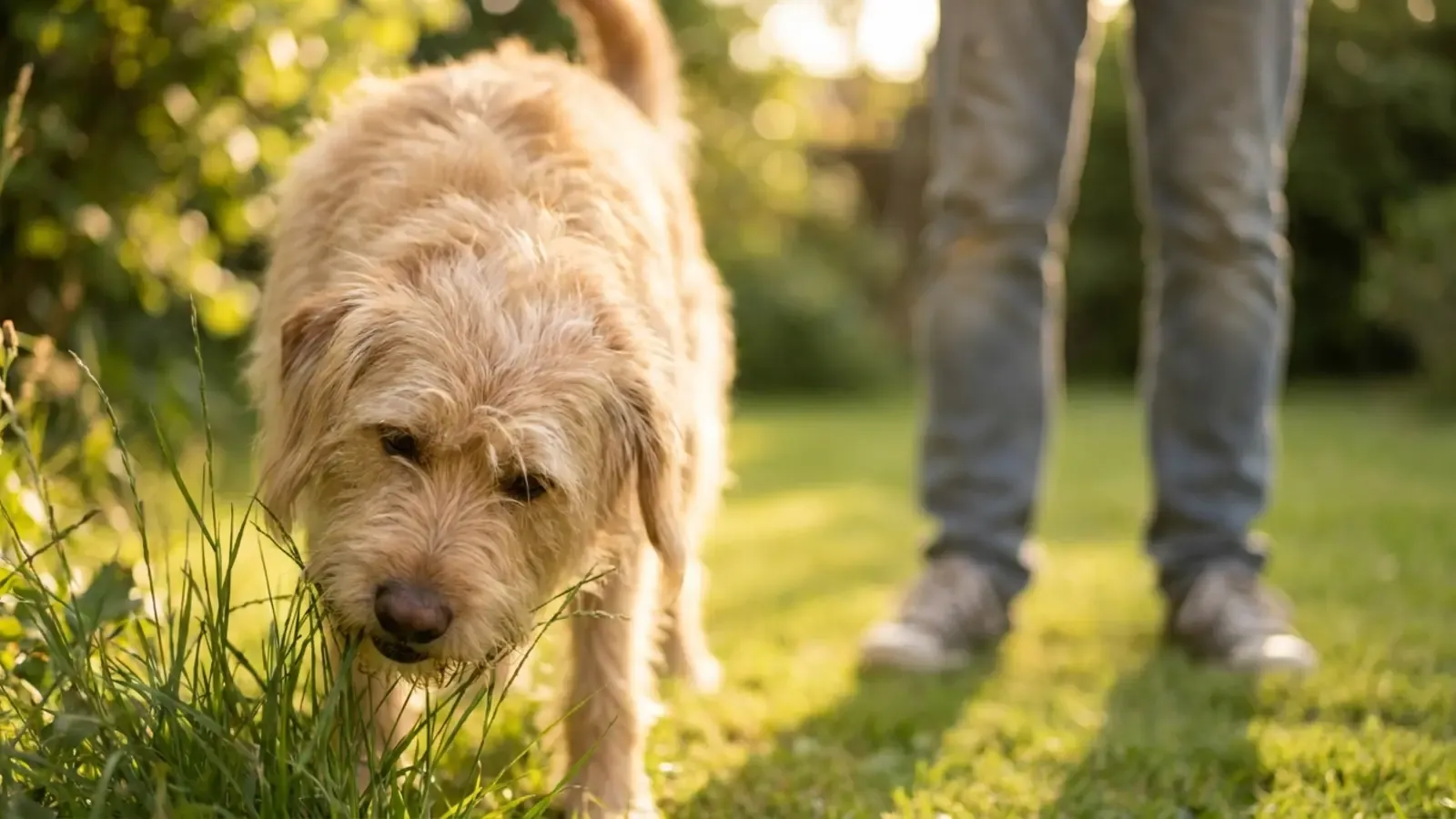
Most dogs eat grass simply because they like it. It is a very common, normal behaviour in healthy dogs, and it rarely means your dog is ill: fewer than one in four dogs vomit after eating grass, and only about one in ten seem unwell beforehand. The real risks are what is on the grass (weedkiller, pesticides, parasites) and what grows next to it.
So if your dog grazes on the lawn and then carries on with their day, you can usually relax. Here is what is behind it, and the signs that mean it is worth a call to your vet.
Why dogs eat grass
Nobody can say for sure, and vets often can’t give a single answer. These are the explanations with the most support:
- They enjoy it. Many dogs seem to like the taste and texture, especially fresh spring grass. Some are choosy about which blades they pick.
- Instinct. Dogs descend from scavengers. Wild wolves eat plant material too: studies of wolf droppings have found grass in a sizeable share of them.
- Fibre. Grass adds roughage, and some vets think a dog on a low-fibre diet may graze more.
- Boredom. A dog left alone in the garden with nothing to do may graze to pass the time.
- Attention. If eating grass reliably makes you rush over, some dogs learn to do it more.
- Anxiety. For some dogs, chewing grass works a little like nail-biting does for people.
Does eating grass mean my dog has an upset stomach?
That is the most popular theory and the least supported one. According to VCA, fewer than 25% of dogs vomit after eating grass and only about 10% show signs of illness before they eat it. Most dogs that eat grass are perfectly well.
The exception is the dog who suddenly gulps grass urgently, swallowing it without chewing, then vomits. That can be a sign of nausea, and it is the pattern worth watching.
When eating grass is a concern
Occasional nibbling of clean grass is fine. See your vet if you notice any of these:
| What you see | Why it matters |
|---|---|
| Sudden, frantic grass eating that is new for your dog | Can point to nausea or a digestive problem |
| Vomiting more than once, or vomiting with lethargy | Needs a vet check, especially in puppies and older dogs |
| Diarrhoea, blood in vomit or stools, or a swollen belly | See your vet the same day |
| Poor appetite, weight loss or a dull coat alongside grazing | Possible underlying disease, parasites or a diet problem |
| Eating soil, stones, fabric or other non-food items | Pica: these can cause blockages and need investigating |
| Signs of tummy pain (hunched, restless, licking lips, not settling) | Vets want to rule out problems such as reflux, IBD or pancreatitis |
A swollen, tight belly with retching that brings nothing up is an emergency in any dog, especially large, deep-chested breeds. Go to a vet or emergency clinic straight away.
If your dog does vomit after grass, our guide on dog vomiting: when to worry explains what is normal and what is not.
Keeping a grass-eating dog safe
The grass itself is rarely the problem. These are the real hazards:
Weedkillers, pesticides and fertilisers
Lawns, verges and parks may be treated with chemicals that are harmful if eaten. Keep your dog off grass that has just been sprayed or fed, follow the product’s instructions on how long to keep pets away, and don’t let your dog graze on roadside verges or unfamiliar lawns. Slug pellets are a particular danger: if you think your dog has eaten any, call your vet or a pet poison line immediately.
Toxic plants nearby
A dog that grazes may nibble whatever grows at the edges. Common garden plants that are toxic to dogs include:
- Sago palm (the seeds are especially dangerous)
- Azaleas and rhododendrons
- Oleander
- Foxglove and lily of the valley
- Yew
- Daffodil and tulip bulbs
- Autumn crocus
The ASPCA’s plant database lists hundreds more. If your dog has chewed a plant you are not sure about, take a photo or a piece of it and call your vet.
Parasites
Grass where other dogs go to the toilet can carry worm eggs and larvae, including roundworms and hookworms. Regular worming and parasite prevention, as your vet recommends, takes care of most of this risk.
Grass seeds
In summer, long grasses carry sharp seed heads (awns) that can work their way into paws, ears, eyes and noses. After walks through long grass, check between your dog’s toes and in their ears. Sudden head shaking, sneezing, or licking a paw over and over can mean a seed has lodged and needs a vet to remove it.
Should you stop your dog eating grass?
If your dog is healthy and the grass is clean, there is no need. If you would rather they didn’t, or the grass may be treated:
- Redirect, don’t scold. Carry treats on walks. When your dog heads for the grass, call them, ask for a simple cue such as sit, and reward them.
- Teach “leave it”. It is useful for grass, dropped food and much worse things.
- Add enrichment. More walks, sniffing games and food puzzle toys help a bored dog. Our guide on how much exercise a dog needs gives a starting point by breed and age.
- Don’t leave a grazer alone in the garden for long if boredom seems to be the cause.
- Ask your vet about diet. If your dog grazes constantly, your vet may suggest checking the food is complete and has enough fibre.
A dog who eats a few blades of grass and trots on is behaving like a dog. A dog whose habits suddenly change, or who seems unwell, is the one to take to the vet.
PetTrackr helps you keep track. It is not veterinary advice: if your pet seems unwell, call your vet.
 Dog diarrhoea – what to do
 Dog itching and scratching
 How much should a dog sleep?