
Dog itching and scratching

A dog who keeps itching and scratching usually has one of four things: fleas or other parasites, an environmental allergy (pollen, dust mites, moulds), a food allergy, or a skin infection, which often follows the other three. Vets start by ruling out parasites, then infection, then allergies. If your dog is scratching enough to break the skin, lose hair or lose sleep, book a vet visit: itching is very treatable once the cause is known.
What is normal and what is not
Every dog has the odd scratch. It is worth a vet visit when your dog:
- scratches, licks, chews or rubs so often it interrupts sleep, play or meals
- has red, broken, scabby or greasy skin, or bald patches
- smells yeasty or unpleasant, or has a discharge
- keeps shaking their head or scratching an ear
- scoots, or licks and chews their back end a lot
- has been itchy for more than a week or two, or the itch keeps coming back
The common causes
| Cause | Typical clues |
|---|---|
| Fleas and flea allergy | Itching and scabs over the lower back, base of the tail, back legs and belly. Specks of black flea dirt in the coat |
| Mites (such as sarcoptic mange) | Intense itching, often on ear edges, elbows and belly; can spread to other dogs and itch people too |
| Environmental allergy (atopic dermatitis) | Licking paws, rubbing the face, itchy ears, armpits and belly. Often starts between about 6 months and 3 years; may be seasonal |
| Food allergy | Itching year-round, often ears, paws and back end; sometimes with loose stools or frequent poos. Can start at any age |
| Bacterial or yeast skin infection | Red bumps, crusts, greasy or smelly skin, hair loss. Usually a result of another problem |
| Contact irritation | Itching where skin touches something, such as a new shampoo, carpet cleaner or plants |
Fleas: rule them out first
Fleas are one of the most common causes of itching in dogs, and one of the most often missed. A dog with flea allergy can react strongly to just a few bites and groom the fleas away, so you may never see one. Comb the fur over the lower back with a flea comb onto a damp white paper towel: black specks that turn reddish-brown are flea dirt.
If there are fleas, every dog and cat in the house needs treating, and the home too, because most of the flea population lives in carpets and bedding as eggs and larvae. Ask your vet which product suits your dog, and keep it going all year. Our guide to flea and tick prevention for dogs explains the options. Never use a dog flea product on a cat: some are highly toxic to cats.
Environmental allergies
Atopic dermatitis is an allergy to things in the environment such as pollens, house dust mites and moulds. It usually first appears in young adult dogs, and some breeds, including retrievers and terriers, are more prone. Itching tends to be on the feet, face, ears, armpits and belly. If it gets worse in spring or summer, pollens are likely; year-round itching points to dust mites, food, or both.
There is no cure, but it can usually be managed well with modern anti-itch medicines, skin care and, for some dogs, allergen immunotherapy (allergy vaccines) chosen from allergy testing. Allergy testing helps choose that treatment; it doesn’t diagnose an allergy on its own.
Food allergy
A food allergy is usually a reaction to a protein in the diet, such as beef, chicken or dairy, not to grains. Blood, saliva and hair tests sold for food allergy are not reliable. The only good way to diagnose it is an elimination diet trial:
- Your vet prescribes a diet with a protein your dog has never eaten, or a hydrolysed diet where the proteins are broken down too small to trigger the allergy.
- Your dog eats only that food for at least eight weeks: no treats, chews, table scraps or flavoured medicines.
- If the itching settles, your vet will usually suggest reintroducing the old food to confirm it.
A systematic review found that more than 80% of dogs with food allergy improved by week five and over 90% by week eight, which is why eight weeks is the usual minimum.
Skin infections
Bacterial and yeast infections are common, especially in allergic dogs, because scratching damages the skin and lets them in. They can keep a dog itchy even after the original trigger has gone. Your vet may take a sample from the skin to look at under the microscope and treat with medicated shampoos, sprays or tablets. The Merck Veterinary Manual describes a trial course of antibiotics, often three to four weeks, as one way vets separate infection from allergy: if the itch clears, infection was the problem.
What to do at home while you wait for the vet
- Check for fleas with a flea comb, and make sure flea prevention is up to date.
- Don’t give human medicines or creams without your vet’s advice. Some are toxic to dogs, and steroid creams can make an infection worse.
- Stop the damage. If your dog is chewing a hot, raw spot, a cone or a soft T-shirt can protect it until the vet sees them.
- Don’t change the food yet unless your vet suggests it, or a later diet trial will be harder to read.
- Bathe sensibly. A gentle, dog-specific shampoo can help some itchy dogs, but bathing too often can dry the skin. See how often to bathe a dog.
If your dog is shaking their head or scratching one ear, it may be an ear infection: see signs of an ear infection in dogs.
What to tell the vet
Itchy skin is a puzzle, and your notes are some of the most useful clues your vet will get. Before the appointment, jot down:
- When it started, and whether it is getting better, worse or comes and goes
- Where your dog scratches or licks most: paws, ears, face, back end, belly
- Whether it is seasonal, or worse after walks, baths or in certain rooms
- Flea prevention: the product and when it was last given, for every pet at home
- Food: the main diet, treats, chews and anything else your dog eats
- Anything new: food, shampoo, bedding, cleaning products, a move or a holiday
- Other signs: ear trouble, loose stools, licking, scooting, a smell
- Photos of the skin on a bad day, in case it looks better at the appointment
- Anyone else itchy? Other pets or people at home with itchy spots (mites can spread)
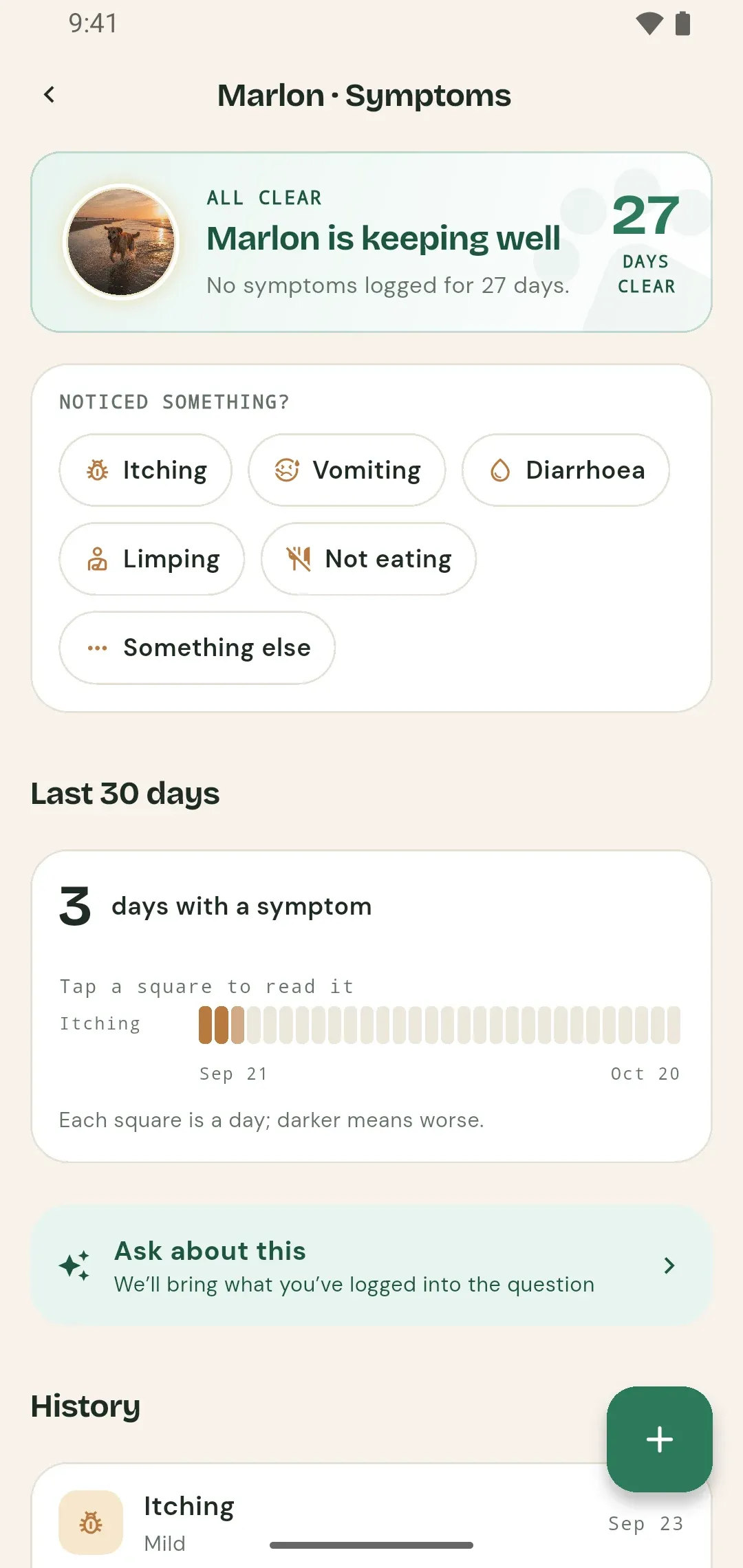
A few weeks of notes on how itchy your dog is each day show the vet whether a treatment is working. If it is hard to remember from week to week, PetTrackr lets you log an itchy spell in a tap and shows whether it is easing or getting worse, ready to show at the appointment.
Which treatment?
That depends on the cause, which is why diagnosis comes first. Your vet may use parasite treatment, medicated shampoos, antibiotics or antifungals for infection, a diet trial for food allergy, and one of several anti-itch medicines for allergies. Many allergic dogs need ongoing management rather than a one-off cure, and regular check-ups help keep flare-ups short.
PetTrackr helps you keep track. It is not veterinary advice: if your pet seems unwell, call your vet.
 Dog diarrhoea – what to do
 Dog vomiting – when to worry
 How much should a dog sleep?