
How much should a dog sleep?
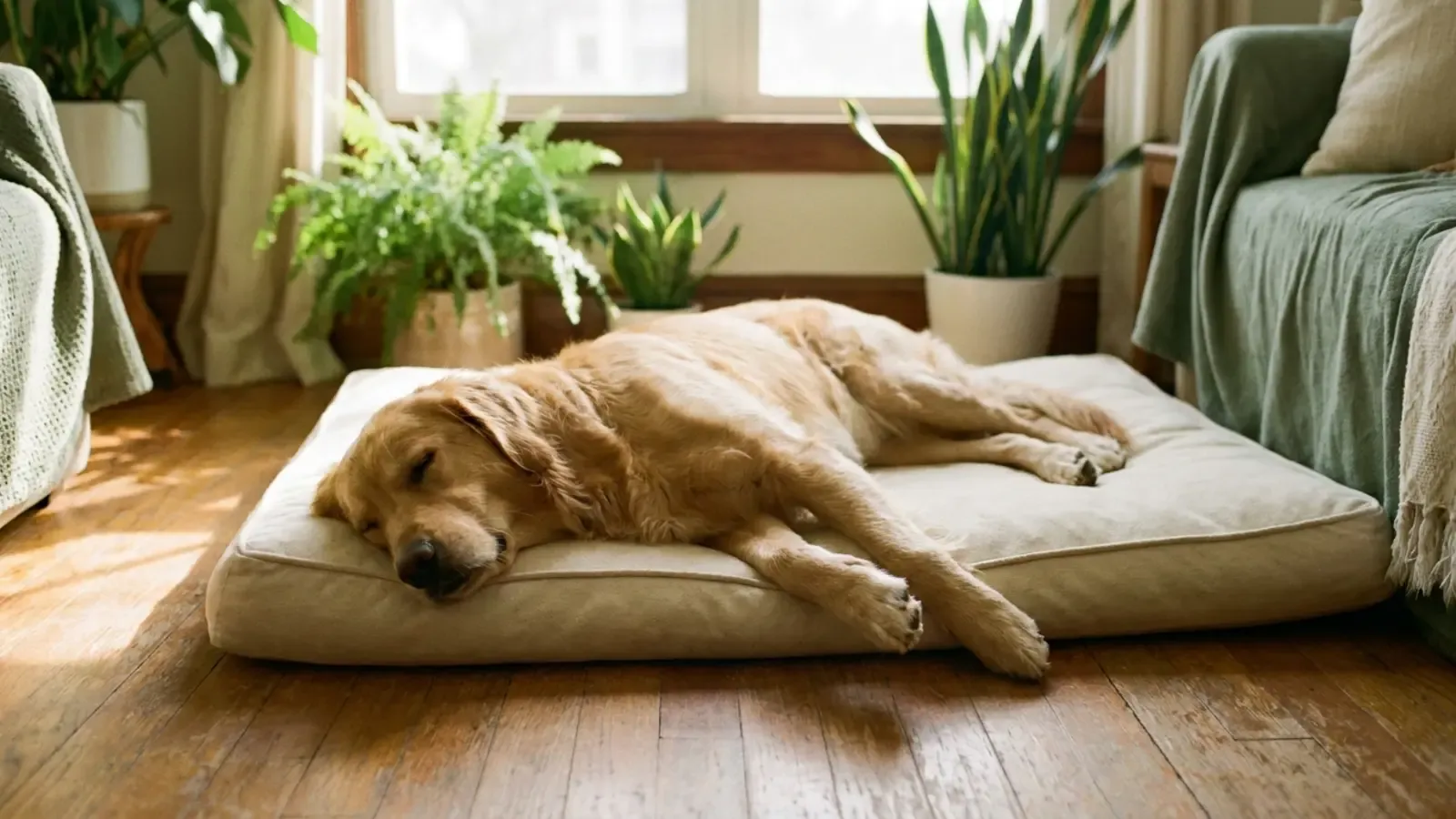
Most adult dogs sleep and doze 12 to 14 hours in every 24. Puppies sleep far more, often 18 to 20 hours, and senior dogs drift back up to around 14 to 17 hours. A dog that spends most of the afternoon asleep is usually just being a dog.
The number matters less than the pattern. A healthy dog has a usual amount of sleep, and a clear change from it, especially with other signs, is what deserves attention.
Dog sleep by age
| Age | Typical sleep in 24 hours | What it looks like |
|---|---|---|
| Puppy (up to about 1 year) | 18–20 hours | Short bursts of play, then deep naps, day and night |
| Adult | 12–14 hours | A long night’s sleep plus several daytime naps |
| Senior (from about 7–10 years, earlier in giant breeds) | 14–17 hours | More daytime napping, lighter or broken nights |
These are the ranges most vets quote, and they include dozing, not just deep sleep. Studies that tracked dogs with activity monitors found many adults sleep somewhat less, averaging around 11 hours, so a healthy adult anywhere from about 10 to 14 hours is usually fine. Dogs sleep in several stretches rather than one long night, and they wake easily, so a dog that seems to be “always resting” may be lightly dozing for much of it.
What changes how much a dog sleeps
- Age. Growth takes a lot of sleep. Puppies usually move to adult habits somewhere between 10 months and a year, later in big breeds.
- Size and breed. Large and giant breeds such as mastiffs and Great Danes tend to sleep more. Working and herding breeds that were bred to go all day often sleep a little less.
- How busy their day is. A dog with walks, play and things to sniff sleeps well afterwards. A dog with nothing to do sleeps from boredom, which is not the same as being rested. See how much exercise a dog needs.
- Weather and season. Dogs often sleep more on hot days and in winter.
- Changes at home. A move, a new baby, a new pet or a family member away can all shift sleep for a while.
- Weight. Overweight dogs often tire faster and rest more. If that sounds familiar, see is my dog overweight?.
Is my dog sleeping too much?
A lot of sleep on its own is normal. Call your vet if more sleep comes with any of these:
- Your dog is hard to wake, slow to respond, or seems confused when they do wake
- They lose interest in food, walks or play they usually love
- They are weak, wobbly, or reluctant to get up, climb stairs or jump into the car
- You notice weight change, vomiting, diarrhoea, coughing, faster breathing at rest, or drinking much more water
- The change is sudden and lasts more than a day or two
Sleeping much more than usual can come with pain, infection, anaemia, heart disease, an underactive thyroid and many other conditions. None of these can be diagnosed from sleep alone, which is exactly why a vet visit is the right step when sleep changes along with behaviour.
Go to a vet straight away if your dog collapses, can’t stand, has pale gums, is struggling to breathe, or can’t be roused.
Is my dog sleeping too little?
Restlessness is worth noticing too, especially in an older dog. Possible reasons include:
- Pain. Arthritis, a sore back or a sore tummy can make it hard to settle. Watch for getting up and lying down repeatedly, circling, panting at rest or reluctance to lie on one side.
- Needing to go out more often. Waking to urinate, or accidents overnight, can point to a urinary problem, kidney disease, diabetes or other conditions that increase thirst.
- Cognitive changes in senior dogs. Canine cognitive dysfunction can mix up the sleep–wake cycle: sleeping more by day, then pacing, whining or seeming lost at night.
- Anxiety. A change in routine, noise or separation can keep a dog alert.
- Not enough to do. A dog with energy left over at bedtime often sleeps poorly.
Snoring and breathing in sleep
Some snoring is normal, particularly in flat-faced breeds like bulldogs, pugs and French bulldogs. Loud snoring with choking or gasping sounds, pauses in breathing, or a dog that seems sleepy all day despite resting can point to an obstructed airway. That is worth raising with your vet.
Twitching and dreaming
Paddling legs, twitching whiskers and muffled barks are normal dreaming. A seizure looks different: a stiff body, jerking you can’t interrupt, drooling, loss of bladder control, and confusion afterwards. If you’re not sure, try to film it and call your vet.
Helping your dog sleep well
- Give them a proper day. Walks, sniffing, play and short training sessions make for better rest.
- Keep a routine. Similar times for meals, walks and bedtime help most dogs settle.
- A bed that suits them. Older dogs often do better on a thick, supportive bed away from draughts and slippery floors.
- A last trip outside before bed, especially for puppies and seniors.
- A quiet place. Somewhere they can rest without being disturbed by children or other pets.
Knowing your dog’s normal
The most useful thing you can bring to a vet is a clear picture of what changed and when. Jot down roughly how long your dog sleeps, how their nights are, and anything new such as pacing, panting or getting up at night. A week of notes is far more helpful than “they seem tired lately”. PetTrackr can do this for you: log last night in one tap and it shows whether your dog’s usual day sits in a healthy range for their age, so a change stands out.
PetTrackr helps you keep track. It is not veterinary advice: if your pet seems unwell, call your vet.
 Dog diarrhoea – what to do
 Dog itching and scratching
 Dog vomiting – when to worry