Why do dogs eat poop?
Dogs eat poop (vets call it coprophagia) mainly because it is an old canine instinct: mother dogs clean up after their puppies, and dogs evolved as scavengers with very different ideas about food than ours. It is common, especially in puppies and in homes with several dogs. Sometimes, though, it is driven by hunger, a medical problem or stress, so a dog who suddenly starts doing it should see the vet.
There is no magic cure, but a clean garden, close supervision and a few training habits make it far less likely. Here is why it happens and what helps.
How common is it?
More than you might think. A UC Davis study led by veterinary behaviourist Benjamin Hart surveyed around 3,000 dog owners. It found that:
- about one in four dogs had been seen eating poop at least once
- about one in six were frequent poop eaters, caught in the act again and again
- it was more common in homes with several dogs
- most poop eaters went for fresh droppings, no more than a day or two old
- poop eaters were no harder to house-train than other dogs
- dogs described as greedy eaters, the ones who steal food from tables, were more likely to do it
The researchers’ explanation is that wild ancestors kept the den clean by eating fresh droppings before parasite eggs in them could hatch into infective larvae. Many modern dogs still carry that instinct.
Puppies and mothers
A mother dog licks her newborn puppies to make them go to the toilet, then cleans up after them, for roughly the first three weeks. That is completely normal.
Puppies explore the world with their mouths, and many eat their own poop, other dogs’ poop or cat poop. A puppy eating its own fresh poop is not dangerous in itself, and the habit usually fades before about nine months old. Clearing up straight away stops it becoming a lasting habit, and good potty training helps too.
Medical causes your vet will rule out
If an adult dog suddenly starts eating poop, see your vet before treating it as a behaviour problem. Anything that makes a dog hungrier or stops them absorbing their food properly can trigger it, including:
- Intestinal parasites (keep up with worming)
- Not enough food, or a diet lacking in calories or nutrients
- Malabsorption problems, where food is not digested and absorbed well
- Diabetes, Cushing’s disease or thyroid disease
- Medicines that increase appetite, such as steroids
Weight loss, diarrhoea, a bigger appetite than usual, or drinking more are all worth mentioning at that appointment.
Behaviour and environment
When the vet finds nothing medical, these are the usual drivers:
| Cause | What it looks like |
|---|---|
| Instinct and habit | Fresh poop is cleared up almost as soon as it lands |
| Boredom or isolation | Dogs left alone for long periods, kept in kennels or small spaces |
| Punishment during house training | A dog told off for accidents may eat the evidence |
| Attention | A big reaction from you makes it more rewarding |
| Food smells near the toilet area | Feeding close to where the dog goes can blur the two |
| Learning from another dog | Common in multi-dog homes |
| A sick or older dog in the house | Some dogs clear up after a dog with loose stools or incontinence |
How to stop a dog eating poop
Be realistic: in Hart’s survey, owners reported very little success with either commercial products or training tricks on their own. What reliably works is making sure your dog can’t get to poop, with training as the back-up.
1. Clear up straight away
The simplest step is the most effective: pick up after your dog immediately, in the garden and on walks. No poop, no habit. Keep your dog on a lead in places where other dogs’ droppings are likely, until training is solid.
2. Teach “leave it” and a reliable recall
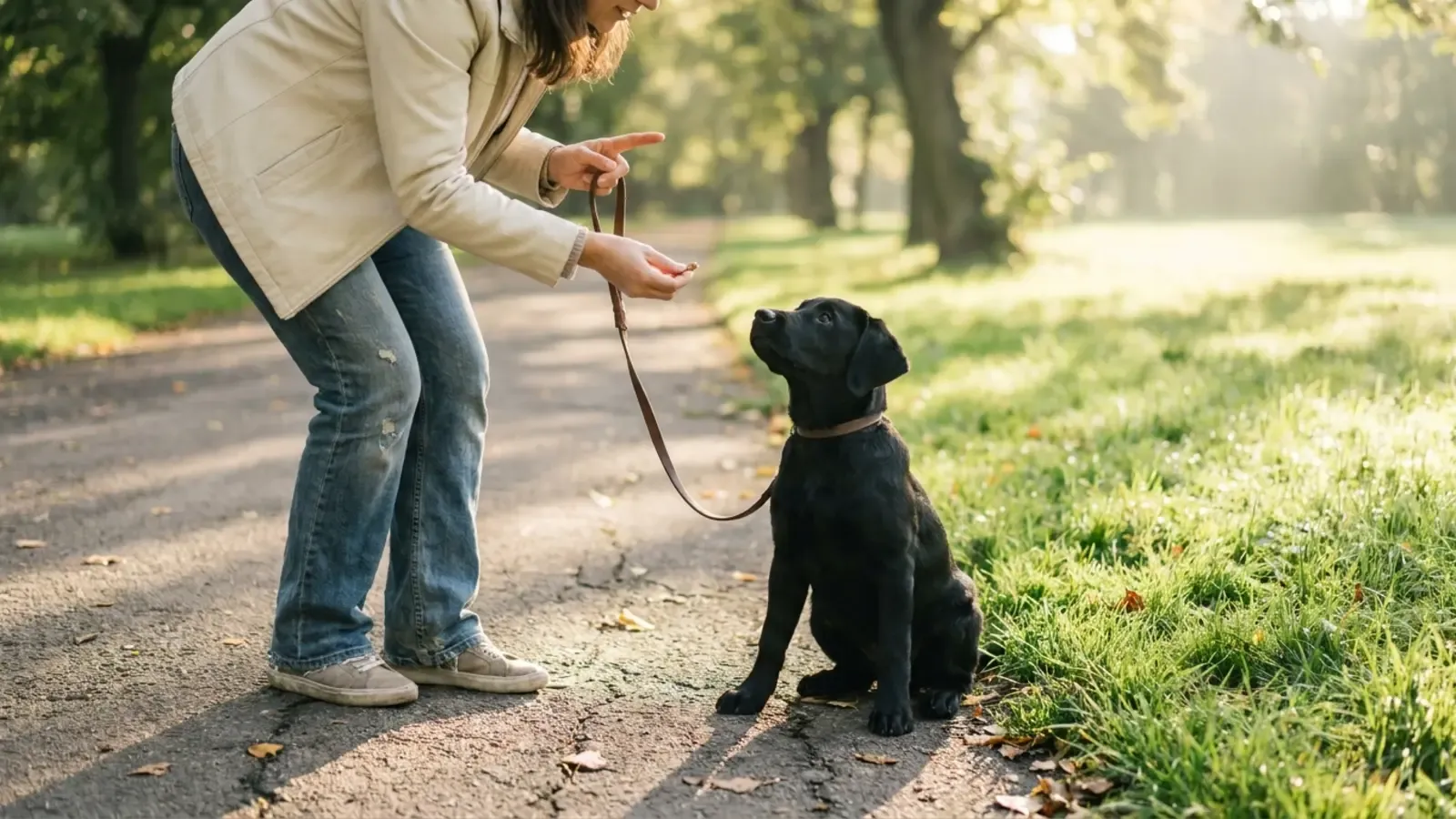
Practise “leave it” at home with a treat in your closed hand, then with things on the floor, then outside. Pair it with a good recall so you can call your dog away before they reach the poop.
3. Reward the moment after the poop
The best time to train is right after your dog goes. As soon as they finish, call them to you and give a really good treat. Many dogs quickly learn that pooping means running to you for a reward, rather than turning round to investigate.
4. Don’t punish or make a fuss
Shouting, rubbing a dog’s nose in it or punishing accidents makes things worse: it can teach a dog to hide the evidence, and it damages trust. The American Veterinary Society of Animal Behavior recommends reward-based methods for all dog training, including unwanted behaviours. Calmly call your dog away and clean up.
5. Deal with the cat litter box
Put the litter box somewhere your dog can’t reach, such as behind a baby gate your cat can hop over, or use a covered box with the entrance facing a wall. Scoop it often.
6. Feed well and keep life interesting
Check with your vet that your dog is on a complete diet in the right amount. Splitting the daily food into more meals, food puzzles, more walks and sniffing games all help a hungry or bored dog.
What about powders, pills and pineapple?
Taste-deterrent products and home remedies such as pineapple are widely sold and talked about, but the evidence for them is weak. In Hart’s survey of 11 marketed products, owners reported success close to zero. Some deterrents have to be given to every dog in the house to have any chance. Ask your vet before adding anything to your dog’s food.
When to get more help
See your vet if the habit starts suddenly in an adult dog, if your dog has diarrhoea, weight loss or a big change in appetite, or if they are eating other animals’ droppings regularly, which can pass on parasites. If it is purely behavioural and nothing is working, your vet can refer you to a veterinary behaviourist or a qualified reward-based trainer.
PetTrackr helps you keep track. It is not veterinary advice: if your pet seems unwell, call your vet.
 How to stop a dog pulling on the lead
 How to stop a puppy biting
 Separation anxiety in dogs