
Dog vomiting – when to worry
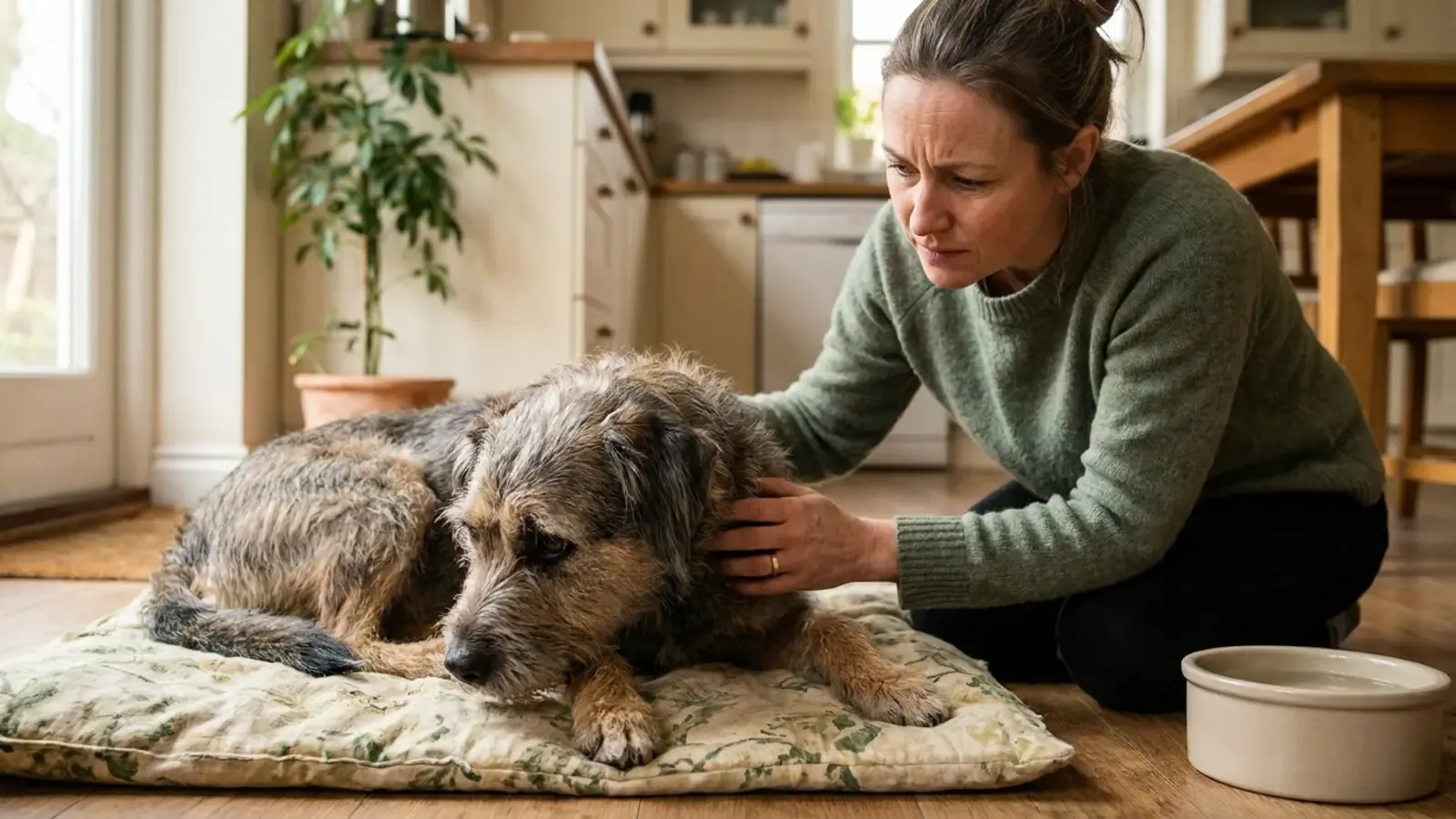
Most dogs vomit now and then, and a single episode in a dog who is otherwise bright and eating is usually not an emergency. Call your vet straight away if your dog retches without bringing anything up, has a swollen belly, vomits blood, may have swallowed something toxic or an object, keeps vomiting, or seems weak or unwell. Puppies, elderly dogs and dogs with existing illness should be seen sooner.
Here is how to tell what you are looking at, what is safe to do at home, and when to stop waiting.
Call the vet now if…
Phone your vet, or an emergency clinic out of hours, without waiting to see if it settles, if your dog:
- Keeps trying to vomit but nothing comes up, especially with a swollen or tight belly, restlessness or drooling. This can be bloat (gastric dilatation-volvulus, GDV), where the stomach fills with gas and can twist. It is life-threatening and needs surgery fast. Large, deep-chested breeds such as Great Danes, German Shepherds, Standard Poodles and Setters are most at risk.
- Vomits blood, fresh red streaks or dark material that looks like coffee grounds
- May have eaten something poisonous (medicines, chocolate, grapes or raisins, xylitol, rat poison, plants, chemicals) or an object such as a toy, sock, corn cob or bone
- Vomits several times in a few hours, or can’t keep even water down
- Is lethargic, weak, collapses, or seems disoriented
- Has a painful belly: yelping when picked up, a hunched back, or stretching in a “prayer” position with the front end down
- Has bloody diarrhoea as well
- Shows signs of dehydration: dry or sticky gums, sunken eyes
- Has pale, grey or blue gums, or is breathing with difficulty
- Is a young puppy, especially one that hasn’t finished its vaccinations. Vomiting with diarrhoea in a puppy can be parvovirus, which is serious and spreads easily. Call ahead so the clinic can prepare.
- Has a medical condition such as diabetes, Addison’s disease or kidney disease, or takes regular medication, including anti-inflammatory painkillers
If you think your dog ate something toxic, do not try to make them vomit at home. Some substances cause more harm coming back up, and home remedies can be dangerous. Call your vet or an animal poison line (in the US, the ASPCA Animal Poison Control Center is on (888) 426-4435; a fee may apply) and have the packaging to hand. Our list of foods toxic to dogs covers the common kitchen culprits.
Book an appointment if…
These are not usually emergencies, but your dog should be seen in the next day or so:
- Vomiting continues, or your dog doesn’t seem right, after 24 hours
- Your dog is still vomiting after one to two days even if otherwise well
- Vomiting keeps coming back, for example more than once a week, or a few times a month for weeks
- Your dog has also lost weight, has a reduced appetite, or is drinking much more water than usual
- You see regular regurgitation (see below)
Vomiting or regurgitation?
They look similar on the carpet but mean different things, and your vet will want to know which it was.
| Vomiting | Regurgitation | |
|---|---|---|
| How it happens | Active: heaving and retching from the belly | Passive: food just comes back up, often with little effort |
| Warning beforehand | Nausea first: drooling, lip licking, swallowing, restlessness | Usually none |
| When | Can be hours after eating | Often during or soon after eating or drinking |
| What comes up | Partly digested food, liquid, yellow bile, foam | Undigested food, often tube-shaped, may be coated in mucus |
| Common causes | Stomach and gut upsets, eating rubbish, infections, toxins, pancreatitis, kidney or liver disease, blockages | Eating too fast, problems with the food pipe (oesophagus), such as megaoesophagus |
A one-off regurgitation after gulping dinner is common. Regurgitation that happens regularly needs a vet: it can come from a problem with the oesophagus, and food that is breathed in can cause pneumonia. If you can, film an episode on your phone. It helps your vet more than any description.
Common causes of vomiting in dogs
Usually minor:
- Eating something they shouldn’t: rubbish, rich leftovers, grass, a dead thing on a walk
- Eating too fast, or a sudden change of food
- Car sickness
- Worms
- A mild stomach bug
More serious:
- Swallowed objects causing a blockage
- Poisons
- Pancreatitis, often after a fatty meal
- Infections such as parvovirus
- Bloat (GDV)
- Kidney disease, liver disease, Addison’s disease or diabetes
- Pyometra (a womb infection) in unspayed females
- Inflammatory bowel disease and, rarely, cancer
- A reaction to a medicine
Looking after a dog that has vomited
If your dog has vomited once or twice, is bright, and has none of the warning signs above, many vets are happy for you to start with home care. Phone your vet first if you are unsure, and always for a puppy, an older dog or a dog with a health condition.
- Water, little and often. Offer small amounts of fresh water frequently rather than a full bowl to gulp, which can bring it straight back up.
- Rest the stomach briefly. Skip the next meal, or offer only a very small one. Vets differ on whether to fast an adult dog for a few hours; never fast a puppy, a very small dog, a diabetic dog or an elderly dog without your vet’s say-so.
- Then small, bland meals. Once there has been no vomiting for several hours, offer a few spoonfuls of a low-fat, easy food: plain boiled chicken breast (no skin or bones) or white fish with plain white rice, or a bland diet from your vet. Feed small portions several times a day.
- Back to normal slowly. If all goes well, mix the usual food back in over two to three days. Avoid treats, chews and fatty foods until fully recovered.
- Keep things calm. Short toilet trips only, no long walks or energetic play for a day or so.
- Watch, and act if it changes. If vomiting returns, your dog won’t drink, gets quieter, or any warning sign appears, call your vet.
Don’t give human medicines. Many common human tablets for tummy upsets and pain are unsafe for dogs. If your dog needs anti-nausea or stomach-protecting medicine, your vet can prescribe one made for dogs.
What to tell your vet
You will get the most from the call if you can say:
- When it started, and how many times your dog has vomited
- What came up: food, liquid, foam, bile, blood, grass, anything foreign. A photo helps
- Whether it was vomiting (heaving) or regurgitation (no effort)
- When your dog last ate, and what
- Whether they could have eaten something unusual, or chewed a toy, bone or packaging
- Whether they are drinking, keeping water down, and passing normal poo and urine
- Their energy level, and any other signs such as diarrhoea or a sore belly
- Any medicines or supplements they take
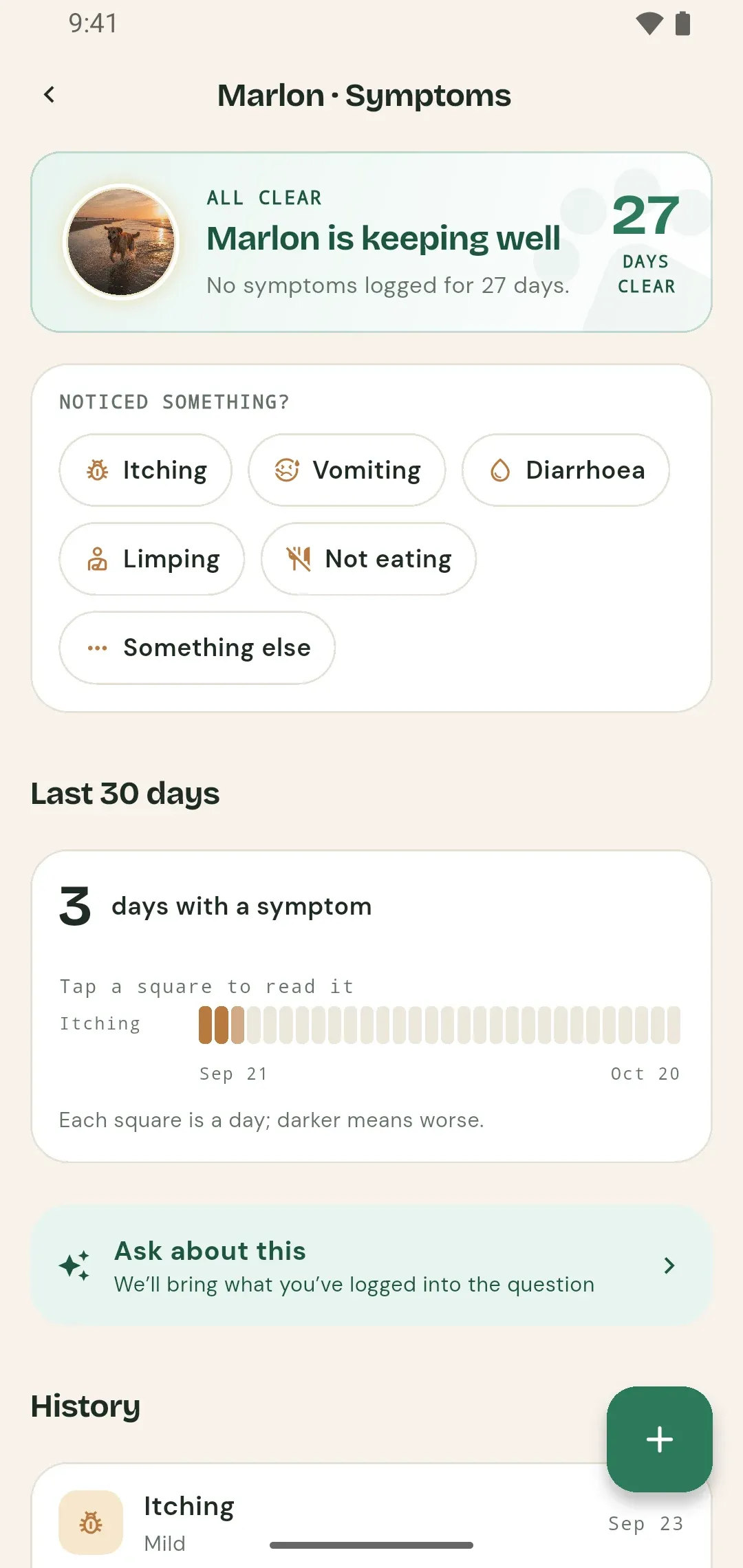
If vomiting comes and goes over days or weeks, a simple log is the clearest thing you can bring. PetTrackr lets you log each episode in a tap, with how bad it was and a note, and shows whether the symptom is easing or getting worse.
Preventing the next one
- Keep bins, bones, corn cobs and food scraps out of reach
- Change foods gradually over about a week
- Slow down a fast eater with a puzzle feeder or slow bowl, or smaller, more frequent meals
- For large, deep-chested breeds, feed two or more smaller meals a day rather than one big one and avoid hard exercise right after eating
- Keep up with worming and puppy vaccinations, which protect against parvovirus
PetTrackr helps you keep track. It is not veterinary advice: if your pet seems unwell, call your vet.
 Dog itching and scratching
 How much should a dog sleep?
 How to give a dog a pill