
Dog diarrhoea – what to do
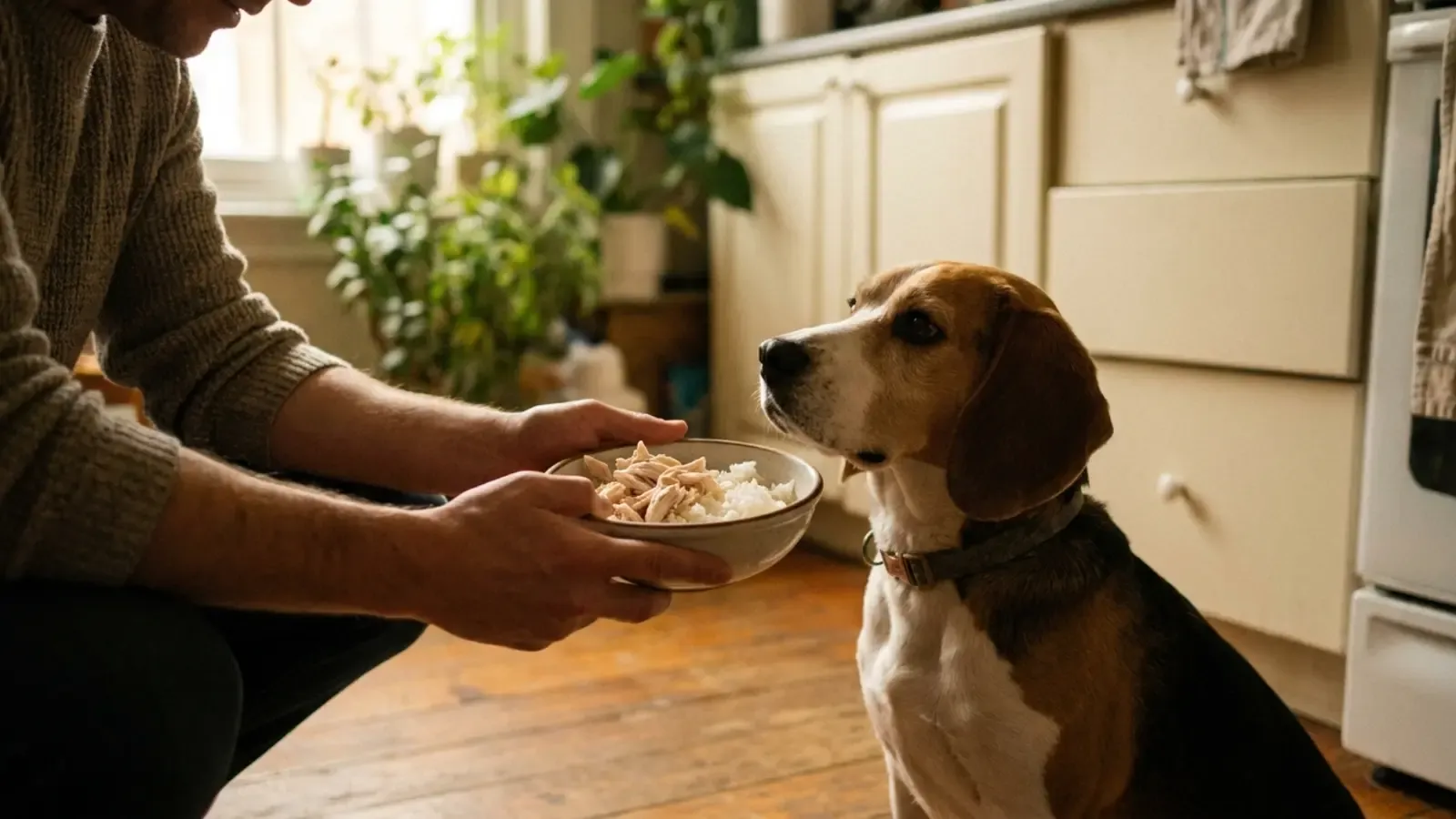
Most dog diarrhoea is a short-lived upset from eating something they shouldn’t, and in an adult dog who is otherwise bright it often settles within 24 to 48 hours with water, rest and small bland meals. Call your vet if it lasts more than a day or so, if there is blood, vomiting, lethargy or a sore belly, or straight away if your dog is a puppy, elderly or already unwell.
Here is what usually causes it, what to feed, and the signs that mean you should stop waiting.
Call the vet straight away if…
Phone your vet the same day, or an emergency clinic out of hours, if your dog has diarrhoea and:
- There is a lot of blood, or the diarrhoea is watery and bright red like raspberry jam
- The poo is black and tarry, which can mean bleeding higher up in the gut
- They are vomiting too, especially repeatedly
- They are lethargic, weak, or collapse
- Their belly is painful: yelping when picked up, a hunched back, or a “prayer” position with the front end down
- They show signs of dehydration: dry or sticky gums, sunken eyes, not drinking
- The diarrhoea is severe, constant and watery
- They may have eaten something toxic or swallowed an object
- They are a puppy, particularly one not fully vaccinated. Parvovirus causes vomiting and often bloody diarrhoea and can be fatal; call ahead so the clinic can keep other dogs safe.
- They are elderly or have a medical condition, or take medicines, especially anti-inflammatory painkillers
Book an appointment if…
- Diarrhoea lasts more than 24 to 48 hours, even if your dog seems well
- It keeps coming back, or soft poo goes on for weeks
- Your dog is losing weight or eating less
- You see mucus or a little blood often, or your dog strains a lot
- Several dogs in the household have it
Common causes
Usually minor:
- Eating rubbish, scraps, rich food or something found on a walk (“dietary indiscretion” is the most common cause)
- A sudden change of food, or too many new treats
- Stress: boarding, travel, a move, fireworks
- Mild infections
Needs a vet:
- Worms and other parasites such as Giardia and coccidia, especially in puppies
- Infections such as parvovirus, Salmonella or Campylobacter
- Haemorrhagic gastroenteritis (sudden, severe bloody diarrhoea)
- Swallowed objects or toxins
- Pancreatitis, often after a fatty meal
- Food intolerance or allergy
- Inflammatory bowel disease, colitis, exocrine pancreatic insufficiency (EPI), liver or kidney disease
- A side effect of a medicine
What to feed a dog with diarrhoea
If your dog is an adult, bright, drinking, and has none of the warning signs above, home care for a day or two is reasonable. If in doubt, phone your vet first.
- Water, always. Diarrhoea loses a lot of fluid. Keep fresh water available and encourage drinking. Your vet may suggest an oral rehydration solution made for pets.
- Food: small and bland. Offer small portions several times a day of a low-fat, easily digested food:
- plain boiled chicken breast (no skin, bones or seasoning) or white fish, with plain boiled white rice, or
- a gastrointestinal diet from your vet, which is complete and balanced.
- On fasting. Some vets suggest a short fast for an adult dog; many now prefer small bland meals straight away. Never fast a puppy, a toy breed, an elderly dog or a dog with diabetes or another condition unless your vet advises it.
- Back to normal gradually. Once the poo is firming up, mix the usual food back in over several days, replacing a little more of the bland food each day.
- Don’t stay on home cooking. Chicken and rice is not a balanced diet. If your dog needs it for more than a few days, talk to your vet.
- Skip the extras. No treats, chews, dairy or fatty foods until fully recovered.
- Rest. Gentle toilet trips rather than long walks or hard play.
About medicines: don’t give human anti-diarrhoea medicines unless your vet says so. Some are unsafe for dogs, particularly for certain herding breeds, and stopping diarrhoea can be harmful if your dog has an infection or has eaten something toxic. Probiotics made for dogs can help some dogs; ask your vet which one, as product quality varies. Antibiotics are not usually needed unless a bacterial infection is suspected.
How to describe it to your vet
Vets ask specific questions because the answers point to where in the gut the problem is. Before you call, note:
| What to note | Why it matters |
|---|---|
| When it started, and how many times a day | Separates a one-day upset from something ongoing |
| Consistency: soft, sloppy, watery | Watery diarrhoea dehydrates faster |
| Amount each time: large or small | Large amounts suggest the small intestine; small amounts often, the large intestine (colon) |
| Straining, urgency, accidents indoors | Typical of colitis |
| Mucus (jelly-like coating) | Common with colon irritation |
| Blood: red streaks, raspberry jam, or black and tarry | Fresh red is from the lower gut; black and tarry can mean bleeding higher up and is more urgent |
| Colour: yellow, green, grey, very pale | Helps your vet build the picture |
| Vomiting, appetite, energy, drinking | Shows how unwell your dog is overall |
| Anything new: food, treats, bins raided, walks somewhere new, other pets ill | Points to a cause |
| Weight loss | Suggests a longer-term problem |
A clear photo of the poo, unpleasant as it is, helps a great deal. Your vet may also ask you to bring a fresh sample in a clean, sealed pot so it can be tested for parasites and infections.
If the diarrhoea is the coming-and-going kind, a written record over a week or two is often what gets to the answer. PetTrackr logs each episode in a tap, with a note or photo, and shows whether it is easing or getting worse, so you can show your vet the pattern instead of guessing.
Preventing diarrhoea
- Change foods gradually over about a week
- Keep bins, compost and scraps out of reach, and limit treats
- Stick to a regular worming schedule, especially for puppies
- Keep vaccinations up to date to protect against parvovirus
- Know which foods are toxic to dogs and keep them well away
PetTrackr helps you keep track. It is not veterinary advice: if your pet seems unwell, call your vet.
 Dog itching and scratching
 How much should a dog sleep?
 How to give a dog a pill