
Why do cats knead?
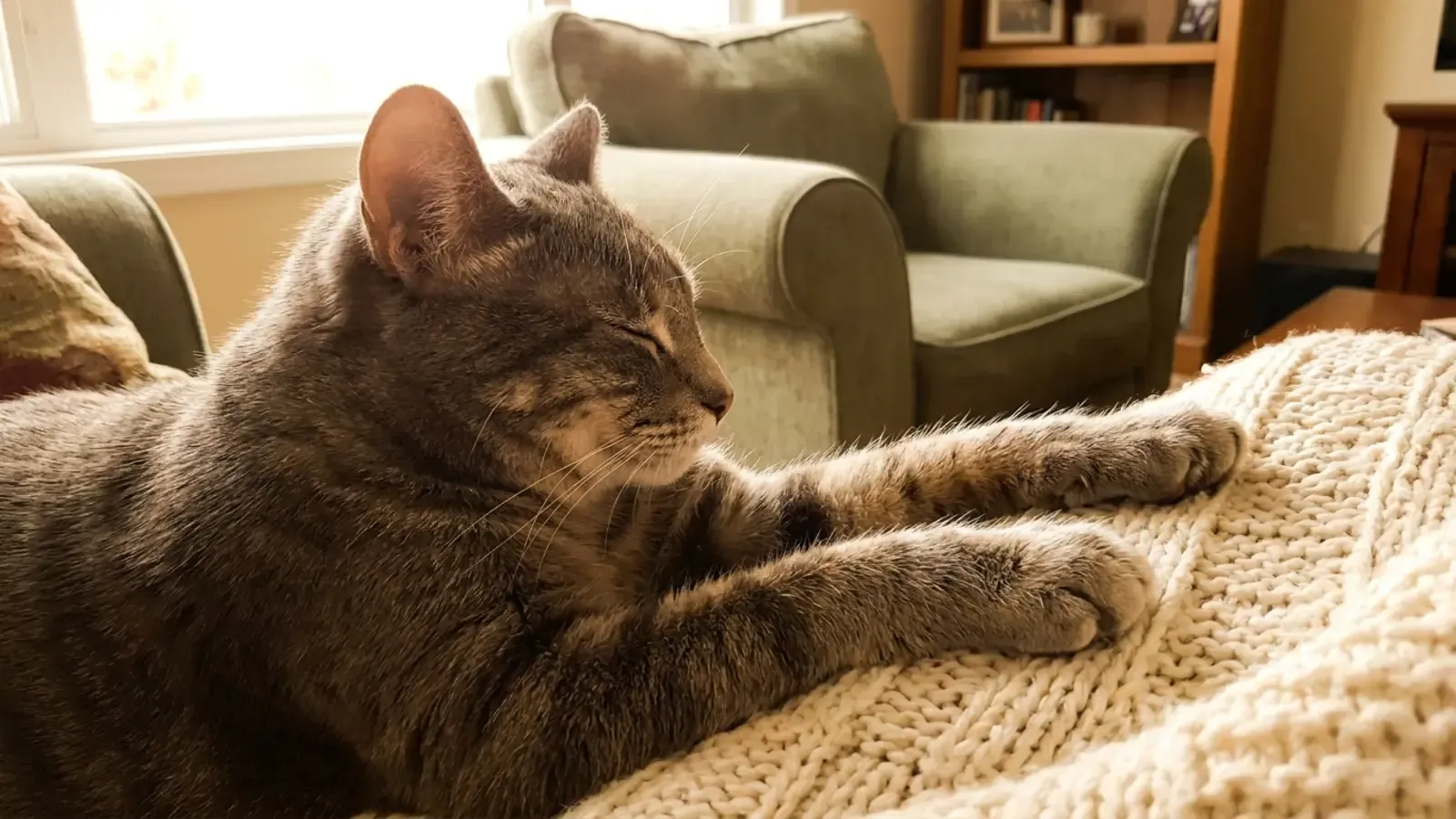
Cats knead because they learned it at the very start of life: newborn kittens push their paws against their mother to get milk flowing, and many cats keep the habit as adults as a way to feel calm and content. Kneading, or “making biscuits”, usually means your cat is relaxed and comfortable, often with you. It can also help them soften a resting spot and leave their scent behind.
Here is what is going on when your cat kneads, what to do about the claws, and the few times kneading is worth a closer look.
The main reasons cats knead
A leftover from kittenhood
The most widely accepted explanation is nursing. Kittens knead their mother’s belly to stimulate milk, and the whole experience comes with warmth, food and closeness. VCA notes that nursing also involves oxytocin, the hormone tied to bonding. Many adult cats return to the same rhythmic paw movement when they feel safe and cosy, which is why kneading so often comes with purring, half-closed eyes and sometimes a little drool.
Comfort and contentment
Kneading tends to happen in the softest, warmest places: a fleecy blanket, a duvet, a jumper, your lap. It is something cats do when they are settled, and adult cats usually knead less often than kittens.
Making a bed
One theory is that wild ancestors trampled grass or leaves into a comfortable, safe nest before lying down. Your cat may be doing the indoor version when they knead a cushion, circle once or twice and then curl up.
Leaving their scent
Cats have scent glands in their paw pads. Pressing into a surface may leave a little of their own scent on it, quietly marking a favourite bed, blanket, or person as theirs.
Showing affection
Cats generally knead the people and animals they like and trust. If your cat climbs onto you and starts to knead, take it as a compliment, even if the claws come out.
A good stretch
Pushing and pulling with the front legs also stretches the muscles of the legs and back, which may be part of why kneading often happens just before or after a nap.
Why does my cat knead me with claws out?
Many cats flex their claws in and out as they knead. It is part of the movement, not a sign of aggression. It can still hurt, and it can snag blankets and furniture. A few kind ways to make it more comfortable:
- Keep the claws trimmed. Taking off just the sharp tips makes a big difference. See how to trim cat nails for a step-by-step method.
- Put a thick blanket on your lap before your cat settles, so the kneading lands on that instead of your legs.
- Give them their own kneading spot, such as a soft, thick throw in their favourite sleeping place, and reward them with a treat or a fuss when they use it.
- Gently move a paw onto the blanket if it strays onto bare skin.
What not to do: don’t push your cat away roughly, tap their nose or scold them. They are doing something that feels safe and loving, and punishing it only teaches them that being close to you is unpredictable.
Kneading and suckling on fabric
Some cats suckle, nibble or “nurse” on a blanket or jumper while they knead. Often this is harmless and fades, but keep an eye on it. If your cat chews holes in fabric or swallows it, talk to your vet: swallowed fabric can cause a blockage in the gut, and frequent fabric chewing can have medical or stress-related causes worth looking into.
When kneading can be a sign of stress or illness
For most cats, kneading is simply a happy habit. But because it is so soothing, some cats knead more when they feel anxious or unwell, in the same way some cats purr when they are in pain. VCA suggests talking to your vet if you notice:
| What you see | Why it matters |
|---|---|
| Kneading much more often than usual | Can be self-soothing in a cat that feels unwell |
| Kneading in unusual places, such as under the bed | A change in where a cat settles can point to stress or discomfort |
| Kneading alongside hiding more | Hiding is one of the most common signs that a cat is in pain or anxious |
| Kneading alongside eating less, or a change in litter box habits | Changes in appetite and toileting always deserve a vet check |
| Kneading that seems frantic and hard to interrupt | Repetitive behaviour can be linked to stress and anxiety |
If something has changed at home, such as a new pet, a house move or a new baby, a sudden increase in kneading may be your cat coping with it. Giving them extra hiding places, high perches, predictable routines and regular play can help. If you are introducing another cat, our guide to introducing a new cat explains how to keep it low-stress.
Signs of pain in cats can be subtle, so if your cat’s kneading has changed and you are unsure why, our guide to signs of pain in cats is a good next read.
Kneading versus scratching
Kneading and scratching both involve the paws, but they are different behaviours. Kneading is a slow, rhythmic push on soft surfaces, usually while relaxed. Scratching is a strong pulling stroke, usually on rough or upright surfaces, which keeps claws in shape and leaves visual and scent marks. If your cat is damaging the sofa, that is almost always scratching, and the fix is a good scratching post in the right place. See how to stop a cat scratching furniture.
PetTrackr helps you keep track. It is not veterinary advice: if your pet seems unwell, call your vet.
 How to get a cat into a carrier