
How to stop a cat scratching furniture
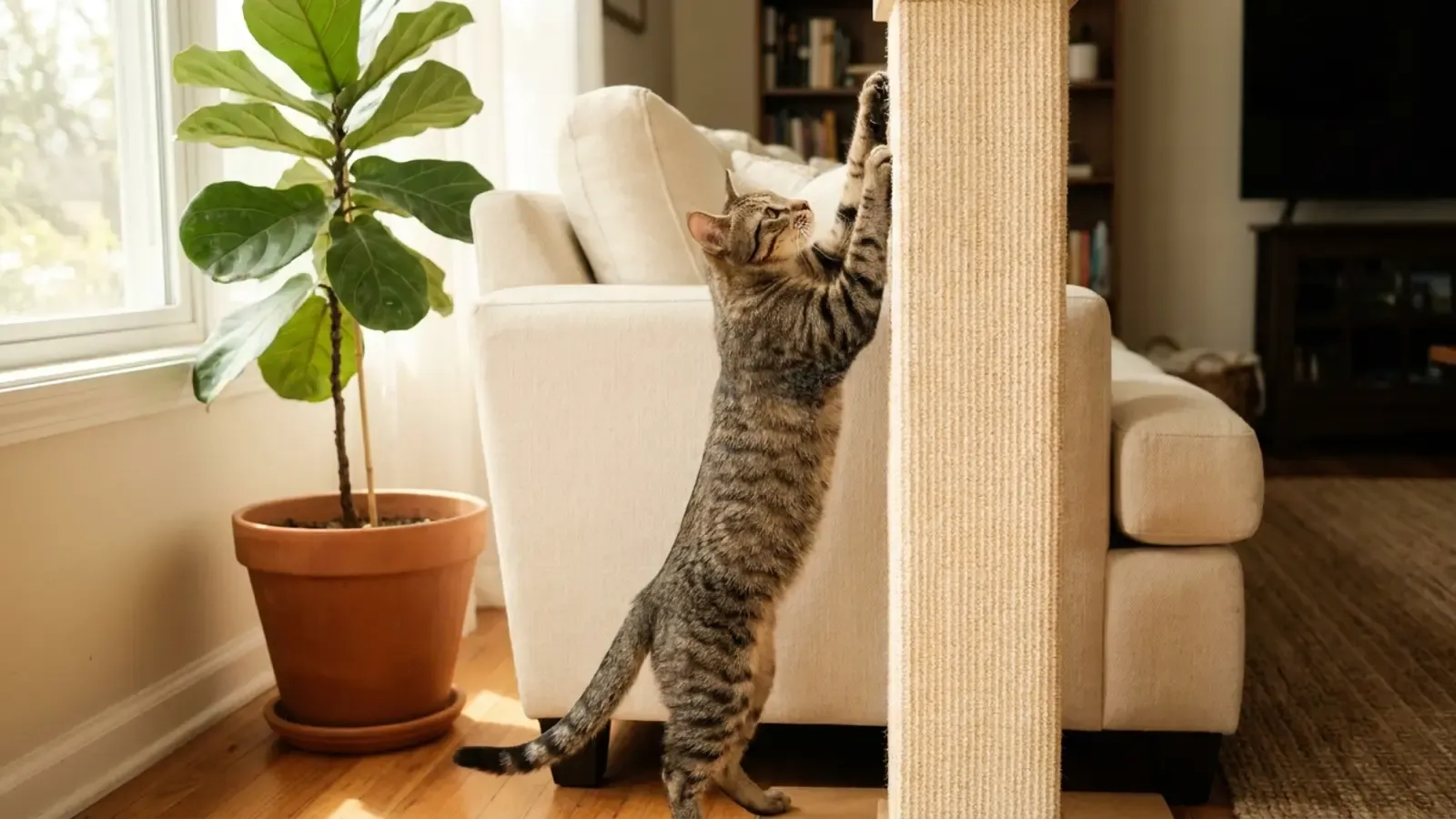
You can’t stop a cat scratching, and you shouldn’t try: scratching is a normal, necessary behaviour. What you can do is move it off your furniture. Give your cat a tall, sturdy scratching post with a rough texture, put it right next to the piece they are scratching and next to where they sleep, make the furniture unpleasant to scratch for a while (double-sided tape, foil or a throw), and reward them every time they use the post. Keep their claws trimmed, and never punish them.
Why cats scratch
Understanding why your cat scratches tells you what a good alternative needs to offer. The American Association of Feline Practitioners (AAFP) describes scratching as normal, partly inherited and partly learned, and lists several jobs it does:
- Claw care. Scratching pulls off the worn outer layer of the claw (the “husk”) and keeps the claws in working order for climbing and hunting.
- A full-body stretch. Cats often scratch right after waking up.
- Marking. Scratches leave a visible mark, and glands between the toes leave scent. That’s why cats scratch prominent spots like the sofa arm, the doorframe or the stairs, rather than somewhere hidden.
- Feelings. Cats often scratch when excited, when greeting you, or when stressed.
So a cat scratching the sofa isn’t being naughty. The sofa is simply the best scratching post in the room: big, stable, rough, and right where everyone hangs out.
Step 1: get the right scratching post
Most “my cat ignores the post” problems come down to the post itself. A good one is:
| Feature | What to look for |
|---|---|
| Height or length | Tall enough (or long enough, for a horizontal one) for a full stretch with the front legs extended |
| Stability | Heavy base or fixed to the wall. A post that wobbles once may never be used again |
| Texture | Rough and shreddable: sisal rope, wood, carpet, cardboard, rough fabric |
| Direction | Vertical, horizontal or angled. Watch what your cat scratches now and copy it |
- If your cat scratches upright things like the sofa back or doorframe, go for a tall vertical post.
- If they scratch carpet or rugs, try a flat or angled cardboard or sisal scratcher on the floor.
- Many cats like both, so having one of each is ideal. In multi-cat homes, provide more than one.
- Don’t throw out a shredded post. Cats prefer ones that are already torn up and smell of them.
Step 2: put it in the right place
Location matters as much as the post. The AAFP recommends:
- Next to where your cat sleeps, because they often scratch on waking.
- Right next to the furniture they are scratching, ideally touching it. Once the habit has moved, you can shift the post a little at a time to a spot you prefer.
- In the main living areas, not hidden in a spare room. Scratching is partly a message; it needs an audience.
Step 3: make the furniture unappealing (for a while)
At the same time, make the spot they’ve been scratching less attractive. Options recommended by the AAFP and ASPCA include:
- Double-sided sticky tape on the area they scratch
- Aluminium foil, plastic sheeting or a smooth throw over the arm of the sofa
- An upside-down vinyl carpet runner (knobbly side up) on the floor in front of it
- Loose fabric draped over the area, which is unsatisfying to scratch
Leave the deterrents in place until your cat is reliably using the post, then remove them gradually. Smell-based sprays are hit and miss, and many essential oils are harmful to cats, so avoid those.
Step 4: make the post rewarding
- Rub catnip or a little silvervine on the post, or hang a toy from it.
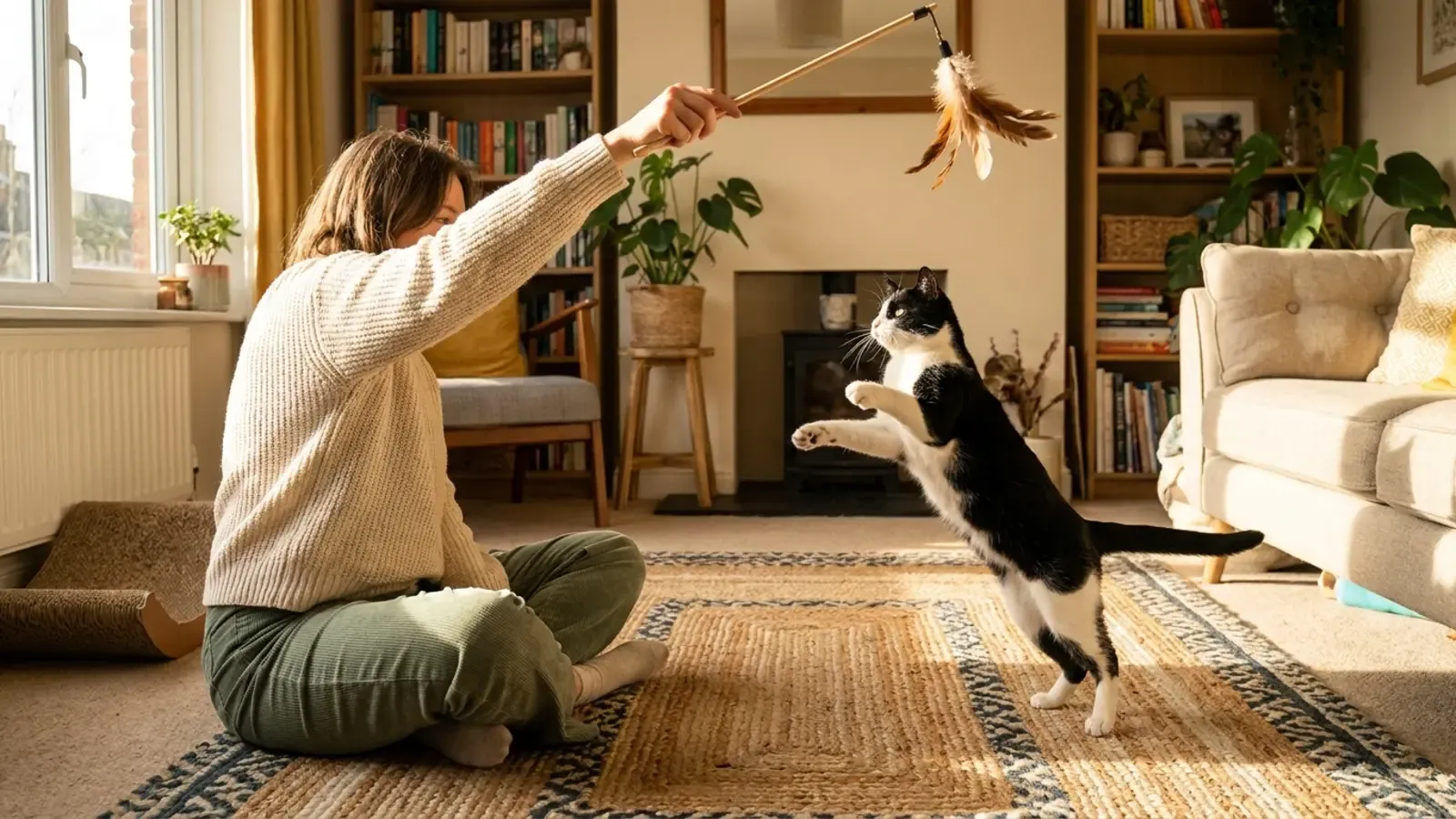
- Drag a wand toy up and down the post so your cat digs their claws in while playing.
- Reward every scratch on the post with a treat or praise.
- If your cat starts scratching the furniture, gently interrupt (a calm word or a toy) and guide them to the post, then reward. The AAFP suggests picking them up gently and taking them to the scratcher.
- Synthetic pheromone products can help calm stressed cats, and some are designed to encourage scratching on the right surface. Ask your vet what is available where you live.
Don’t hold your cat’s paws against the post and make scratching motions. The ASPCA warns this can frighten them and put them off the post.
Training is quicker if you think of it in small steps: post by their spot, reward each scratch, then make the sofa boring. That is exactly how PetTrackr’s scratch post course breaks it down, one short lesson a day.
Step 5: trim the claws
Shorter claws do less damage. Indoor cats, kittens and older cats usually need regular trims, while outdoor cats often wear their claws down naturally. Use proper cat clippers so the claws don’t split. Our guide on how to trim cat nails walks you through it.
Nail caps are another humane option. These soft caps are glued over the claws and usually need replacing every 4 to 6 weeks as the claws grow. Your vet can fit the first set and show you how.
Why punishment backfires
Shouting, spraying water or tapping your cat:
- Doesn’t teach them where they should scratch
- Can make them afraid of you, so they scratch when you aren’t looking
- Adds stress, which the AAFP notes can drive more scratching, in the same spot or somewhere new
If scratching suddenly increases, look for a cause: a new cat, a house move, a cat outside the window, boredom, or not enough play. More enrichment, perches and daily play sessions often help.
Why vets oppose declawing
Declawing (onychectomy) is not a manicure. It is the amputation of the last bone of each toe, the bone the claw grows from. The major veterinary and welfare bodies are clear about it:
- The AAFP strongly opposes declawing as an elective procedure and says vets have an obligation to offer owners alternatives.
- The AVMA discourages declawing as an elective procedure and supports non-surgical alternatives.
- The ASPCA is strongly opposed to declawing and says it should never be used as a behavioural remedy or a preventive measure.
The AAFP lists the risks: acute pain, bleeding, swelling, infection and nerve damage after surgery, and long-term problems including lameness, regrowth of claw tissue, changes in how the cat stands, behaviour problems and chronic pain. The alternative surgery, cutting the tendons that extend the claws (tendonectomy), is not recommended either. Declawing is banned in many countries, including the UK, and in several US states.
Every alternative in this guide is kinder, and for most cats, a good post in the right place plus a little patience is all it takes.
PetTrackr helps you keep track. It is not veterinary advice: if your pet seems unwell, call your vet.
 How to get a cat into a carrier
 Why does my cat bite me?