
How to introduce a new cat
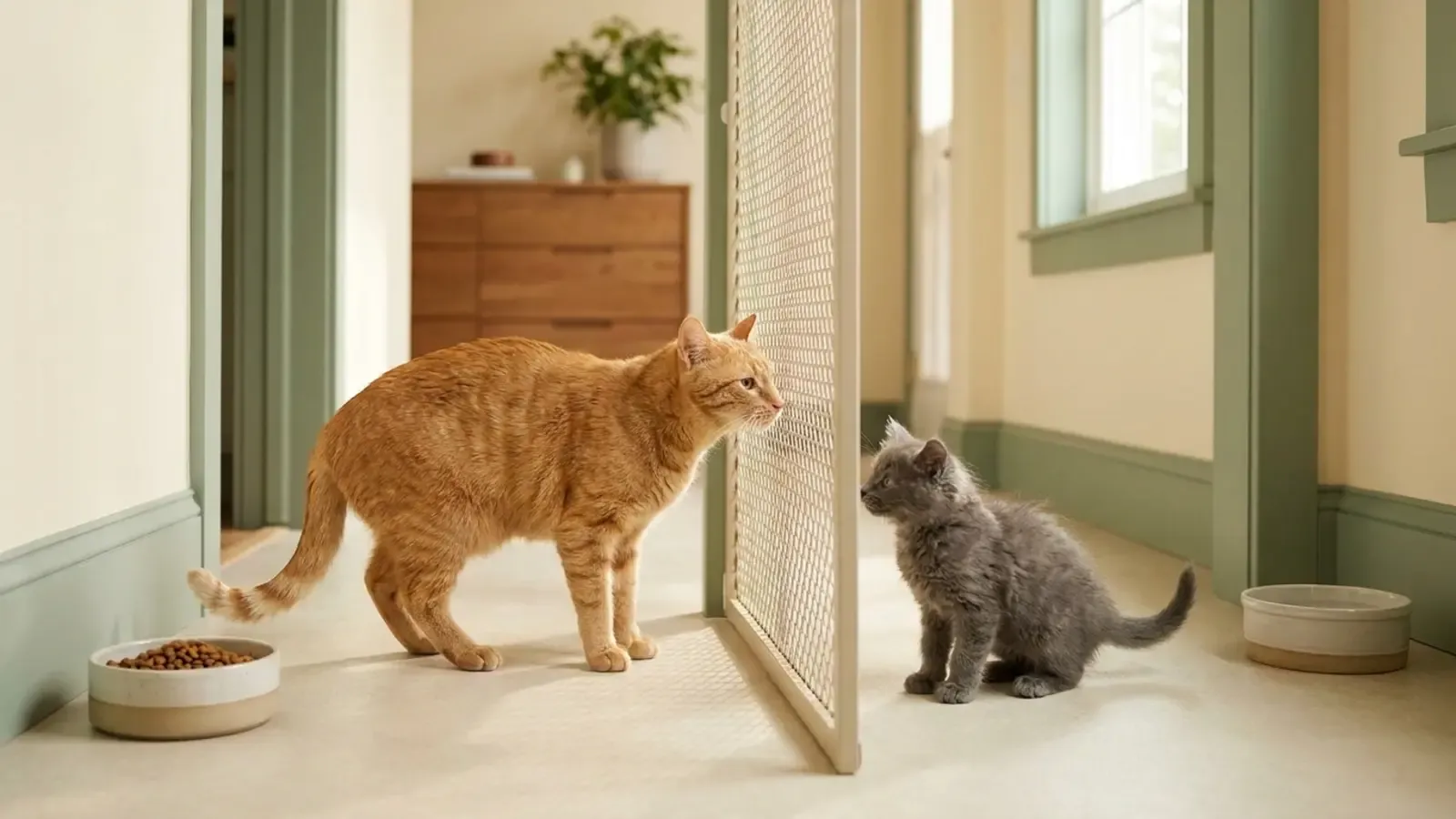
To introduce a new cat, go slowly and in stages: keep the new cat in a separate room with everything they need, let the cats get used to each other’s scent first, then let them see each other through a barrier, then allow short supervised meetings, gradually getting longer. Only move on when every cat is relaxed at the current step. It can take a few days or a few months; rushing is how most introductions go wrong.
Cats are territorial and don’t automatically want company. A slow introduction gives them the best chance of living together calmly, and a bad first meeting can leave tension that lasts for years.
Before the new cat arrives
Health checks
The AAFP recommends that every cat has a recent vet check before an introduction, and that the new cat is tested for common infectious diseases. Make sure vaccinations and parasite treatments are up to date for everyone. The AAFP also advises against adding a new cat if your resident cat is unwell or a senior with medical problems.
Set up a transition room
Choose a quiet room away from busy areas, with a door that closes securely. Fill it with everything the new cat needs:
- Food and water bowls, well away from the litter box
- A litter box
- Hiding places: a covered bed, a cardboard box, the carrier with a blanket over it
- High spots: a cat tree, shelf or cleared windowsill
- A scratching post and toys
Remove anything dangerous (toxic plants, dangling cords and strings) and anything you’d rather not have peed on, like plush rugs.
Enough of everything, everywhere
The AAFP calls a shortage of resources the most common cause of tension between cats. Around the home, aim for one per cat, plus one of each: litter boxes, food bowls, water bowls, beds, scratching posts, perches and hiding spots, spread out so no cat can guard them all.
Many vets also suggest plugging in a synthetic feline pheromone diffuser in the main living area and the transition room a day or two before the new cat arrives.
The introduction, step by step
| Stage | What you do | Move on when |
|---|---|---|
| 1. Settling in | New cat lives in the transition room only | They explore the room confidently and aren’t hiding all the time |
| 2. Scent swap | Swap bedding or toys between the cats daily | Neither cat hisses, growls or avoids the item |
| 3. Scent transfer | Rub a soft cloth on one cat’s cheeks and leave it near the other | Both stay relaxed |
| 4. Play through the door | Play with each cat near the closed door, without seeing each other | Calm play on both sides |
| 5. Swap territories | Let the new cat explore the house while the resident cat is in another room | New cat is relaxed exploring |
| 6. Seeing each other | Short sessions through a tall gate, screen or glass door | Both eat or play calmly in view of each other |
| 7. Supervised time together | Short meetings in a large room, with toys and treats, building up | They can share space without tension |
1. Let the new cat settle
Carry the new cat in, still in a covered carrier, straight to the transition room. Open the carrier door and let them come out when they choose. Stay at this step until they are eating, using the litter box and exploring confidently. For some cats that is a day or two; for others, longer.
2. Swap scents
Cats learn a lot through smell, so let them meet that way first. Each day, swap a blanket, bed or toy between the new cat’s room and your resident cat’s favourite spot. Watch how each cat reacts: sniffing and ignoring is great; hissing, growling or avoiding the item means stay at this step longer.
3. Transfer scent
Once they are relaxed about each other’s belongings, gently rub a soft cloth on one cat’s cheeks and chin (where their scent glands are), then leave it where the other cat can sniff it. Use a fresh cloth for each cat.
4. Play on either side of the door
Play with each cat near the closed door, with a toy on each side, so they hear each other while doing something fun. Keep sessions short, 5 to 20 minutes. If either cat hisses or growls at the door, don’t tell them off; just stop, put more distance between them, and try again another day.
5. Let the new cat explore
Put your resident cat in another favourite room with treats and toys, and let the new cat explore the rest of the house for short periods. This lets them learn the layout and the smells. Then return the new cat to their room and let the resident cat back in.
6. Let them see each other
Next, let the cats see each other through a barrier: a tall pet gate (stacked gates if your cats can jump), a screen door, or a glass door. Start with short sessions at a distance, and pair them with something good, such as meals or treats placed a comfortable distance from the barrier, or a game with a wand toy. If either cat stares, hisses, growls or flicks their tail, block the view and go back a step for a few days.
7. Supervised meetings
When they are calm seeing each other, open the barrier for short supervised sessions in a large room. Keep the mood light with play and treats, and have a cushion, towel or piece of cardboard ready to block their view if tension builds. Gradually make sessions longer. Keep separating them when you can’t supervise until you are confident they are relaxed together.
Signs to slow down
Go back a step, and stay there longer, if you see:
- Hissing, growling, spitting or swatting
- Staring at each other, or one cat stalking the other
- Ears flat, tail flicking or lashing, fur puffed up
- Hiding much more than usual
- Not eating, or eating much less
- Peeing or pooing outside the litter box
- One cat guarding doorways, food or the litter box
Some hissing at the start is normal. It means “I need more space”, not “this will never work.”
Stress can also make a cat physically ill. Cats under stress are more prone to bladder inflammation (cystitis), and a cat who starts peeing outside the box should see a vet; see cat peeing outside the litter box.
If a fight breaks out
- Never use your hands to separate fighting cats. Frustrated cats often redirect onto the nearest target, and a cat bite can be serious. Our guide to why cats bite explains redirected aggression.
- Make a loud noise, or slide a cushion, board or blanket between them.
- Separate them into different rooms with their own resources and let them calm down, which can take hours.
- Restart the introduction a few steps back.
Once they live together
- Keep resources plentiful and spread out, permanently.
- Play with each cat every day. An energetic young cat who gets enough play is less likely to pester an older one.
- Provide vertical space such as shelves and cat trees, so cats can keep their distance.
- Don’t force interaction. Many cats live peacefully side by side without ever becoming close friends, and that is a good outcome too.
If tension continues despite a slow introduction, talk to your vet, who can check for medical problems and refer you to a feline behaviour specialist if needed.
Bringing home a kitten? Our new kitten checklist covers what else you need.
PetTrackr helps you keep track. It is not veterinary advice: if your pet seems unwell, call your vet.
 How often to clean a litter box
 How to trim cat nails
 Pet medical records to keep