
Signs of pain in cats
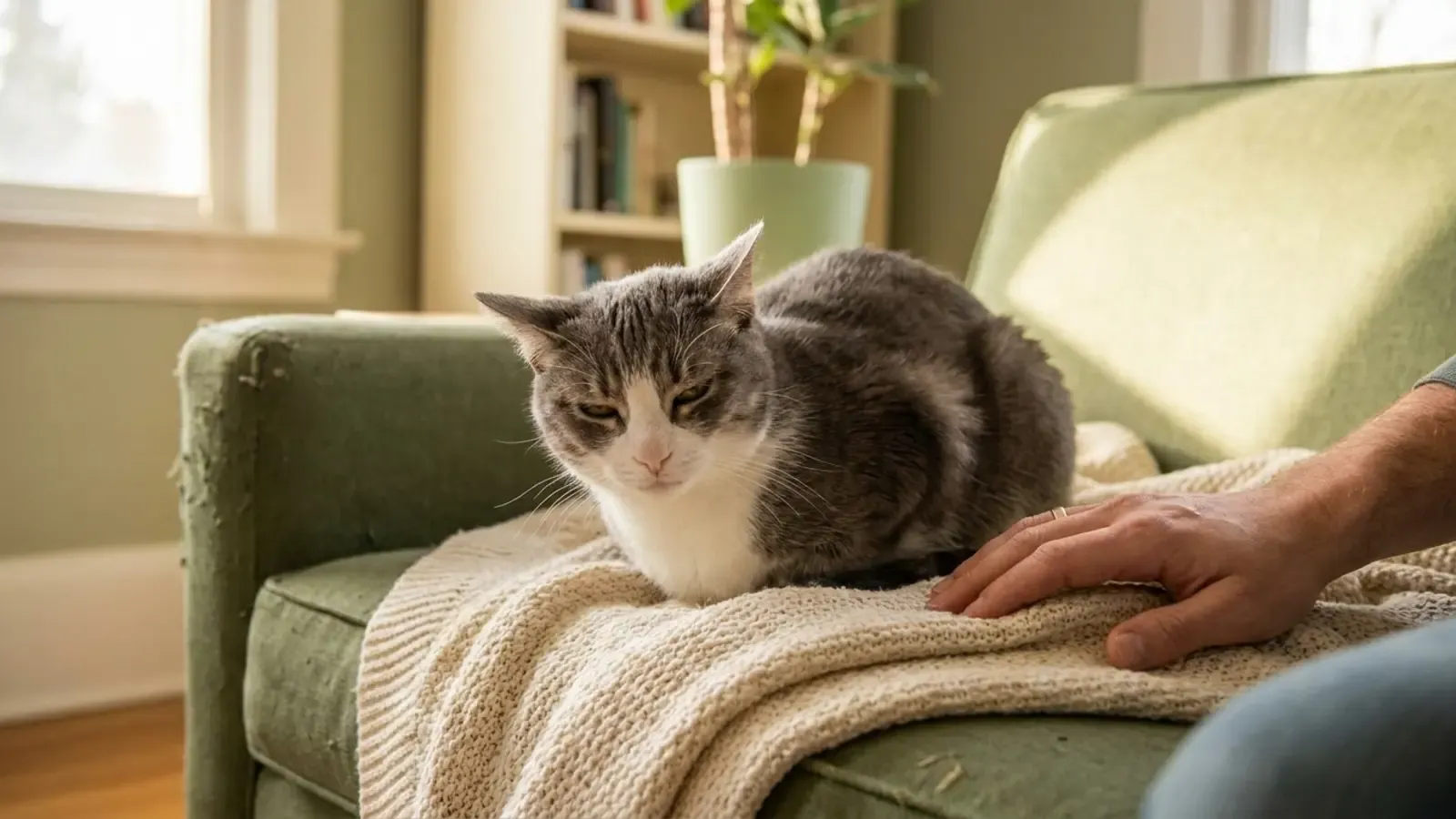
Cats rarely cry out when they hurt. Pain usually shows as a change in behaviour: hiding, eating less, grooming less (or over-grooming one spot), not jumping up where they used to, using the litter tray differently, or sitting hunched with squinted eyes and ears turned out to the sides. If your cat has changed in any of these ways, it’s worth a call to your vet.
Cats evolved to hide weakness, so by the time pain is obvious it has often been there a while. Knowing the quiet signs lets you act sooner.
Get to a vet straight away if…
Some kinds of pain are emergencies. Go now, or call an emergency clinic, if your cat:
- Strains in the litter tray but passes little or no urine, goes in and out repeatedly, or cries while trying. A blocked bladder, most common in male cats, can be fatal within a day or two.
- Breathes with its mouth open, pants, or breathes with obvious effort
- Suddenly can’t use one or both back legs, especially if crying and the legs feel cold. This can be a blood clot from heart disease.
- Has had an accident: hit by a car, a fall, caught in a door, or a fight with a deep wound
- Cries out, growls or bites when touched somewhere
- Collapses, can’t stand, or is very flat and hard to rouse
- Has a swollen, tense belly, or vomits repeatedly
- Holds one eye shut, or the eye looks cloudy or red
The subtle signs
Changes in behaviour
- Hiding more, or no longer coming to greet you
- Less interest in food, or eating more slowly, dropping food or chewing on one side (often dental pain)
- Grooming changes: a scruffy, matted or greasy coat because grooming hurts, or over-licking one area until it goes bald
- Litter tray changes: going outside the tray, especially if climbing in hurts, or straining
- Less active: sleeping more, playing less, staying in one place
- Restlessness: getting up and lying down repeatedly, unable to get comfortable
- Irritability: hissing, swatting or biting when picked up, stroked or brushed, in a cat that used to enjoy it
- Vocal changes: more meowing, growling, or purring at odd times. Purring does not mean all is well; cats also purr when unwell.
Changes in movement and posture
- Not jumping onto the bed, sofa or windowsill, or hesitating before jumping
- Taking the stairs slowly, one at a time
- Limping, stiffness, or a “tiptoe” walk
- Sitting hunched with the head low and the feet tucked in, rather than curled up
- Lying with the front legs tucked under the chest and the back arched
- Difficulty stretching, scratching or getting into the litter tray
Arthritis is far more common in older cats than most owners realise, and it rarely causes an obvious limp. A cat that “has slowed down” or “doesn’t jump anymore” is often a cat with sore joints.
The Feline Grimace Scale
Researchers at the Université de Montréal developed and validated the Feline Grimace Scale to score pain from a cat’s face. It looks at five features, each scored 0, 1 or 2:
| Feature | Relaxed (0) | Pain shows as (1–2) |
|---|---|---|
| Ears | Facing forward, upright | Pulled apart and rotated outwards, flattened towards the sides |
| Eyes | Open | Narrowed, squinting, eyes half closed |
| Muzzle | Relaxed and round | Tense, drawn in, elliptical shape |
| Whiskers | Loose, curved, relaxed | Straighter, stiffer, pushed forward or pulled back |
| Head position | Above the shoulders | Level with or below the shoulders, chin tucked |
Vets add up the five scores (0 to 10). In the published study, scores of about 4 or more out of 10 suggested a cat would benefit from pain relief. The scale was designed for vets and trained staff, and it works best on a cat that is awake and not busy eating, grooming or sleeping. For owners, it is simply a useful way to know what to look at: a squint, sideways ears, a tight muzzle and a low head together are a strong hint that something hurts.
The official site (felinegrimacescale.com) has photo examples and a free training tool if you want to get better at reading your cat’s face.
Common causes of pain in cats
- Arthritis, especially in cats over 10
- Dental disease: tooth resorption, gum disease, broken teeth
- Urinary problems: cystitis, bladder stones, blockages
- Injuries: bite wounds and abscesses, falls, road accidents
- Gut problems: constipation, pancreatitis, swallowed objects
- After surgery or a procedure
- Ear, eye and skin problems
- Cancer
What to do if you think your cat is in pain
- Don’t wait for it to become obvious. If something seems off, call your vet. Describe what has changed and since when.
- Never give human painkillers. Paracetamol (acetaminophen) is extremely toxic to cats, even a fraction of a tablet. Ibuprofen, aspirin, naproxen and similar medicines can cause kidney failure and stomach ulcers. Don’t give a dog’s pain medicine either. Your vet can prescribe pain relief that is safe for cats.
- Make life easier while you wait. Put food, water, a bed and a litter tray with a low side on one level. Add steps or a chair so favourite spots are reachable. Keep them warm and quiet.
- Handle gently. A cat in pain may bite or scratch, even a gentle one. If you must move them, slide a towel underneath and support the whole body. Use a carrier that opens from the top if you have one; our guide to getting a cat into a carrier helps.
- Take notes or a video. Cats often behave normally at the clinic out of fear or adrenaline. A short video of the limp, the posture or the trouble jumping at home is very useful to your vet.
Living with long-term pain
Arthritis and other long-term pain can usually be managed well with prescribed medicine, weight control, gentle play and changes at home. Cats on pain treatment often become noticeably more active and affectionate. If your cat is on long-term medication, our guide on how to give a cat a pill has tips for making it easier, and senior cat care covers adapting the home.
It helps to keep a short record of good and bad days: did they jump onto the bed, groom, come to greet you, use the tray normally? Over a few weeks that tells you and your vet whether the treatment is working. PetTrackr lets you log a symptom in a tap and shows whether it is easing or getting worse, so changes are easy to spot and share at the next visit.
PetTrackr helps you keep track. It is not veterinary advice: if your pet seems unwell, call your vet.
Sources
- Evangelista et al. (2019), Facial expressions of pain in cats: the Feline Grimace Scale, Scientific Reports
- Feline Grimace Scale (Université de Montréal)
- VCA Animal Hospitals: How Do I Know if My Cat Is in Pain?
- Cornell Feline Health Center: Feline Lower Urinary Tract Disease
- International Cat Care: NSAIDs and your cat
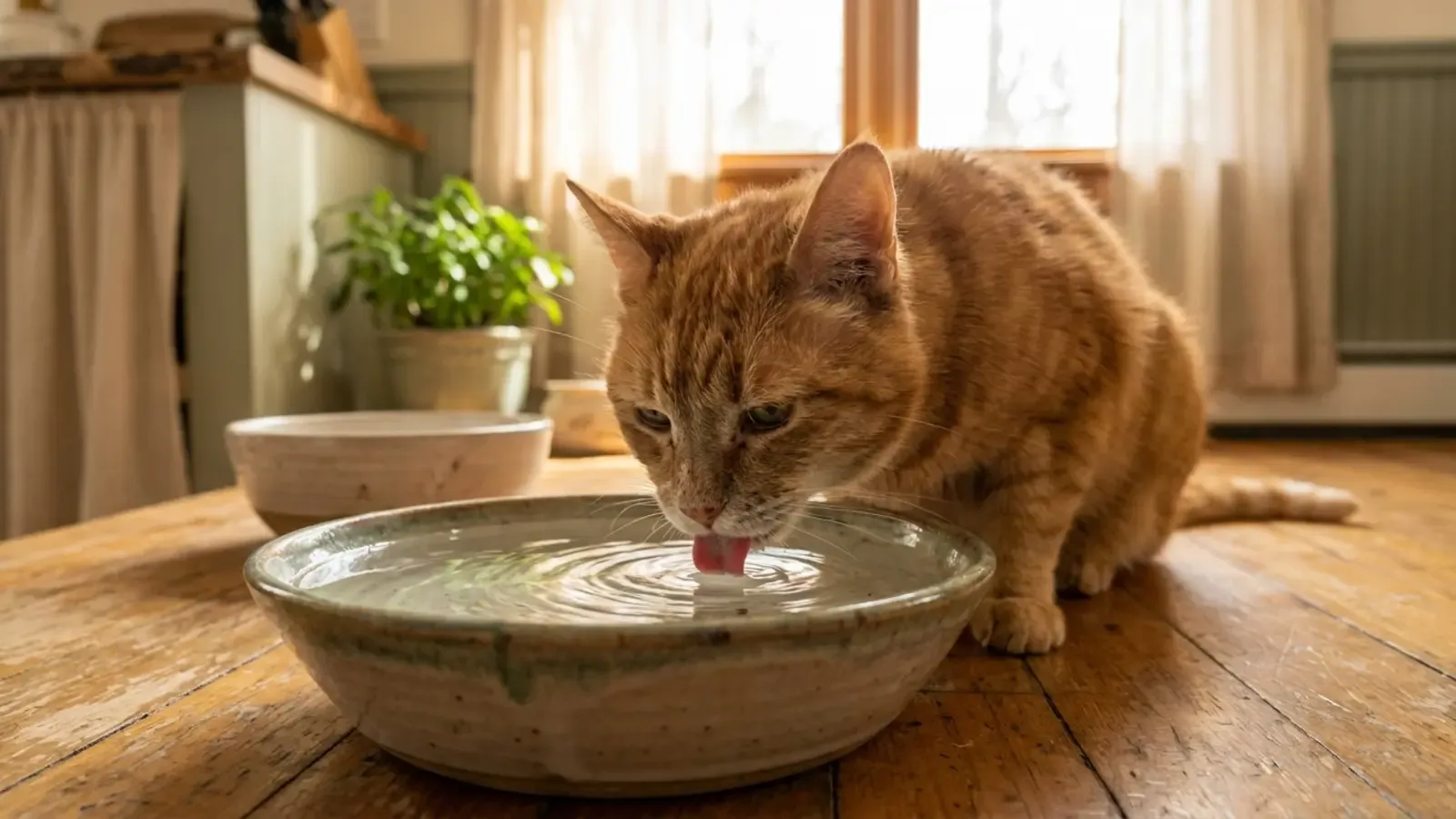 Cat drinking a lot of water?
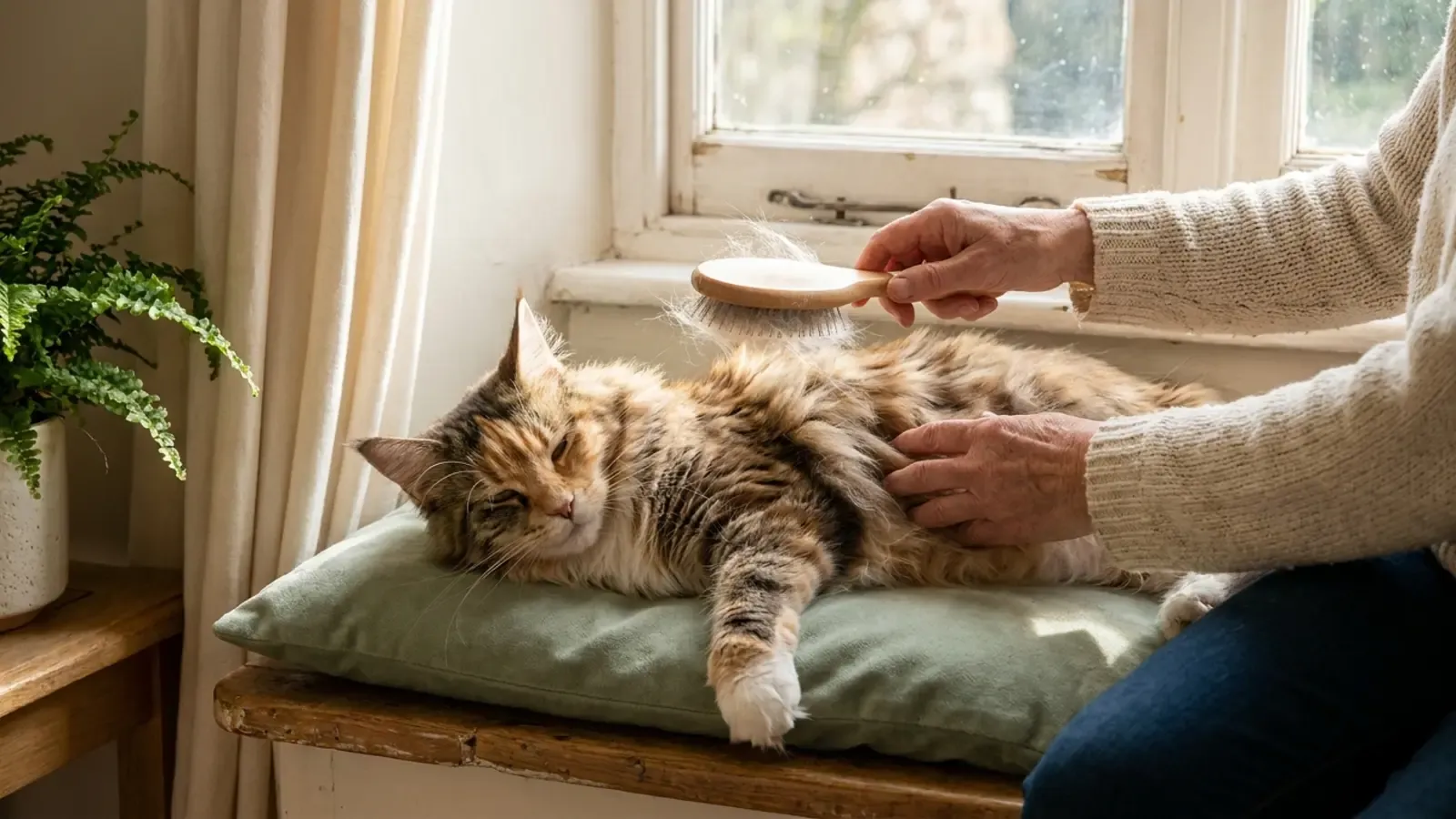 Cat hairballs
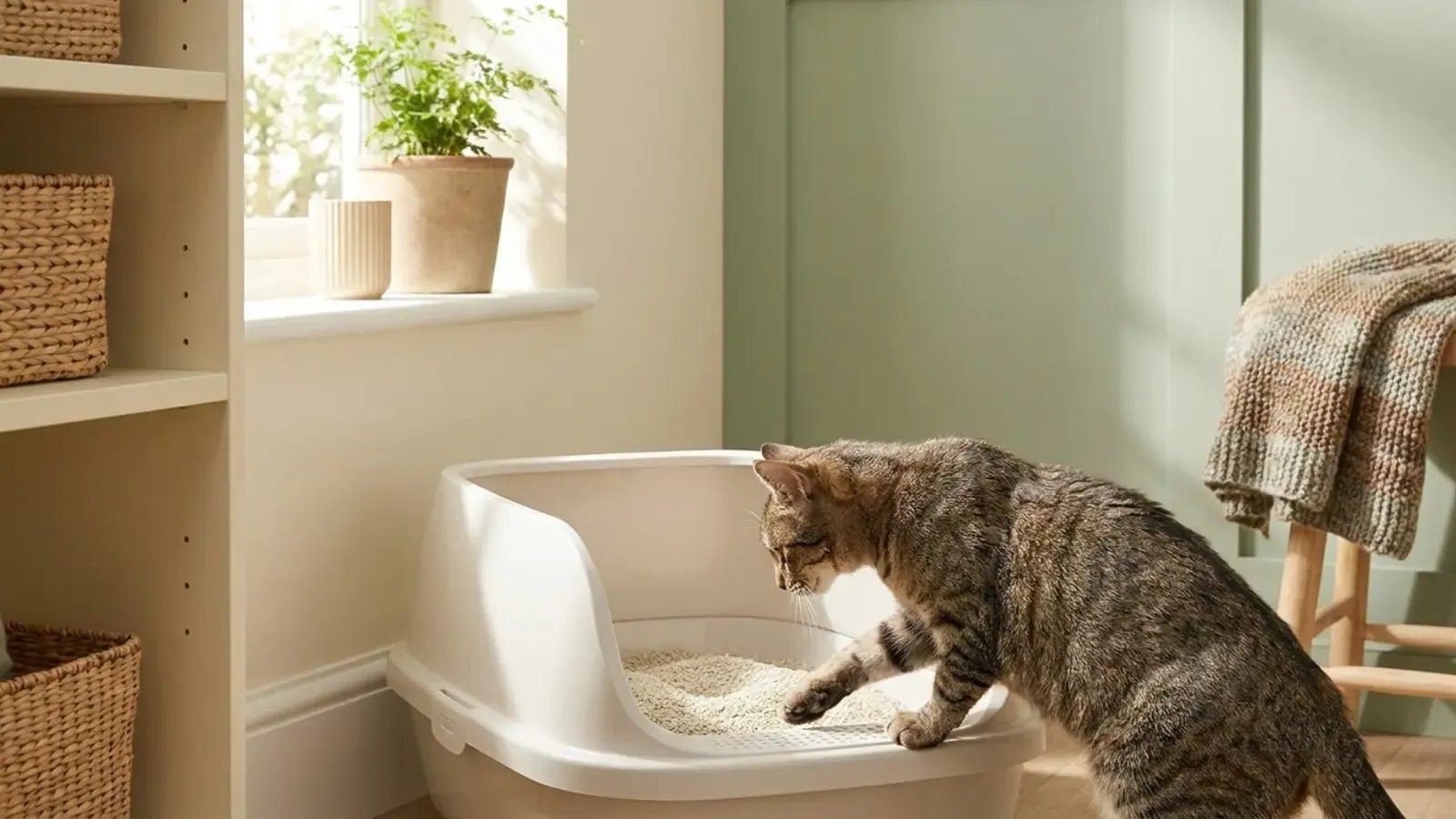 Cat peeing outside the litter box