
Cat peeing outside the litter box
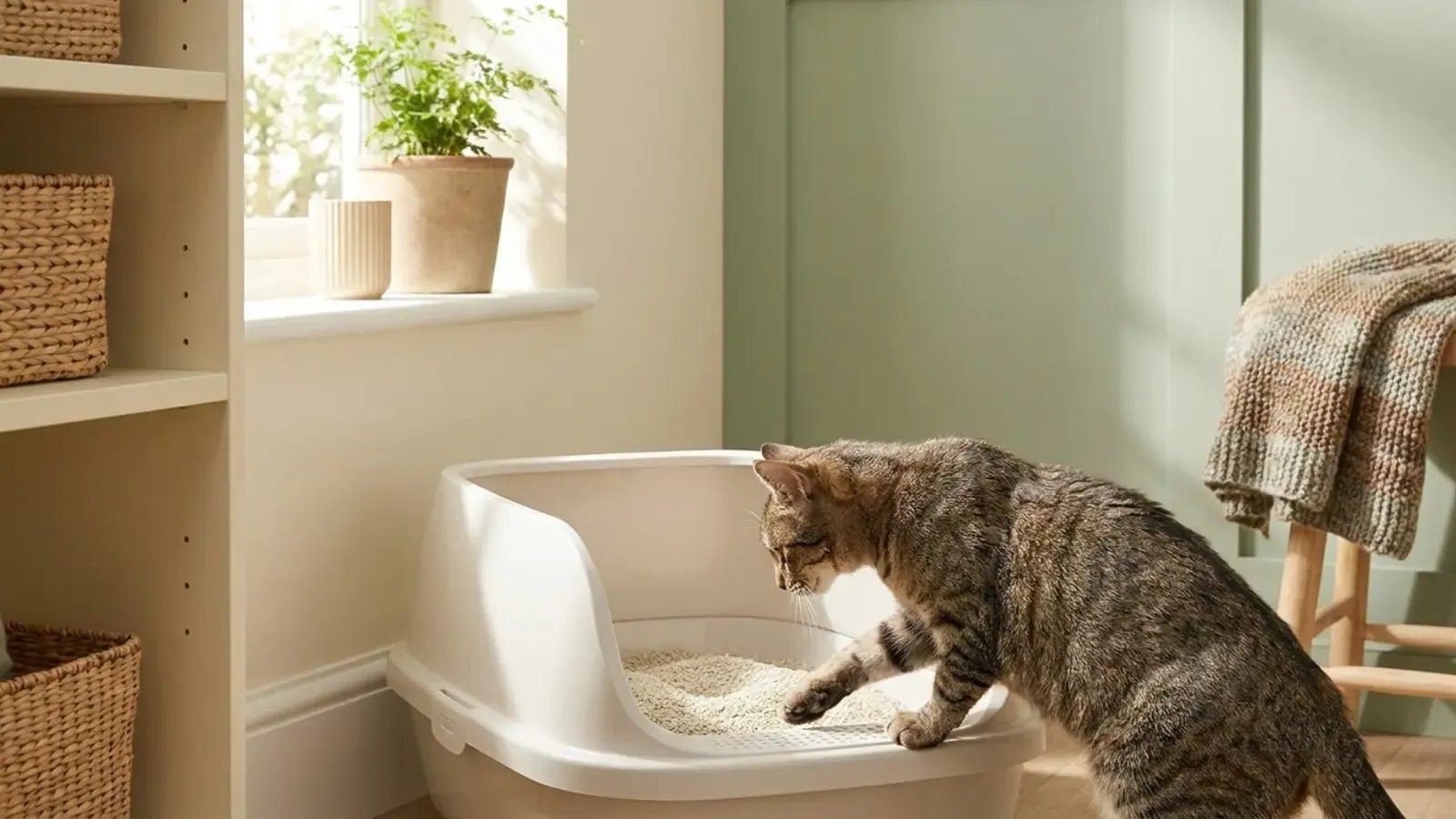
When a cat pees outside the litter box, rule out a medical problem first: bladder inflammation (feline idiopathic cystitis), crystals or stones, infection, kidney disease, diabetes and arthritis are all common causes. If your cat is straining and little or no urine comes out, especially a male cat, that is an emergency: go to a vet now. Once your vet has ruled out illness, the cause is usually the litter box itself (too few, too small, too dirty, wrong litter or wrong place), or stress.
It is never spite. The AAFP and ISFM put it clearly: cats house-soil because a physical, social or medical need is not being met.
First: is it an emergency?
Go to a vet or emergency clinic immediately if your cat:
- Strains in the litter box and passes little or no urine
- Goes back and forth to the box again and again
- Cries when trying to pee, or licks their genitals a lot
- Is also vomiting, lethargic, hiding or not eating, or has a tense, painful belly
These can be signs of a urethral obstruction, where the tube that drains the bladder is blocked. Cornell Feline Health Center calls this an absolute emergency: a fully blocked cat can die within about 24 to 48 hours without treatment. It is far more common in male cats, because their urethra is narrower. Owners often mistake it for constipation, so if in doubt, go.
Medical causes (see your vet first)
The AAFP and ISFM recommend a full physical exam and a urine test for every cat that starts house-soiling. Common medical reasons include:
| Cause | What it is | Typical signs |
|---|---|---|
| Feline idiopathic cystitis (FIC) | Bladder inflammation with no single identified cause; the most common diagnosis in cats with urinary signs, and closely linked to stress | Frequent small pees, straining, blood in urine, peeing in odd places |
| Bladder crystals or stones | Mineral deposits (often struvite or calcium oxalate) that irritate or block the urinary tract | Similar signs, can lead to blockage |
| Urinary tract infection | Bacterial infection of the bladder | Frequent, painful urination, sometimes blood |
| Kidney disease, diabetes, hyperthyroidism | Conditions that increase thirst and urine volume | Drinking more, larger clumps, weight loss |
| Arthritis or pain | Getting into a high-sided box hurts | Peeing just outside the box, stiffness, less jumping |
Cats can learn to associate the box with the pain they felt while using it, so even after the illness is treated, they may keep avoiding it. That is why the box setup below matters too. If your cat is drinking more than usual, see our guide to a cat drinking a lot of water.
Helping a cat with cystitis
Cornell’s advice for managing FIC includes plenty of fresh water (wet food helps), a consistent diet and feeding routine, one more litter box than the number of cats, and reducing stress at home with hiding places, climbing spots and play. Your vet may also recommend a specific diet.
Litter box problems
Once your vet has ruled out illness, look hard at the litter box. These are the AAFP and ISFM recommendations, with the ASPCA’s alongside:
- Number: one box per cat, plus one. Two cats need three boxes.
- Placement: spread them around the house, not side by side; to a cat, boxes next to each other count as one big box. On each floor of a multi-level home.
- Location: quiet and private, away from food and water, washing machines and busy doorways, and never where a cat can be cornered or blocked in by another cat.
- Size: bigger is better. Aim for about 1.5 times your cat’s length from nose to base of tail. Many shop-bought boxes are too small; a large storage box works well.
- Lids and liners: many cats dislike covered boxes and liners. Try an open box.
- Litter: most cats prefer soft, unscented, clumping litter. Avoid scented and dusty litters and deodorisers. The ASPCA suggests a shallow layer of 1 to 2 inches.
- Cleaning: scoop at least once a day and wash the box regularly with hot water and mild, unscented soap. Avoid strong chemicals. Our guide on how often to clean a litter box has a full routine.
- Older cats: a box with a low side, or one with an entry cut down, is easier on stiff joints.
If your cat keeps going in one particular spot, try putting a litter box there for a while.
Daily scooping is the easiest part to let slip. In PetTrackr, the litter box scoop and full change sit on your cat’s daily plan with a reminder, and anyone in the household can tick them off.
Stress and other cats
Stress is one of the biggest triggers for both cystitis and house-soiling. Common causes include a new cat, dog or baby, moving house, building work, changes to routine, or a cat outside the window. In multi-cat homes, one cat may block another’s access to the box, food or resting places. More boxes in more places, more hiding spots and perches, and daily play help. If you are adding a cat to the household, introduce them slowly; see how to introduce a new cat.
Spraying is different
Urine marking (spraying) is a separate behaviour. A spraying cat usually stands with the tail upright and quivering and sprays a small amount on a vertical surface, such as a wall, door or curtain, while still using the box normally. According to the AAFP and ISFM:
- Unneutered males and most unspayed females mark as part of their sexual behaviour; neutering greatly reduces it.
- Marking near windows and doors often means the perceived threat is outside, such as a neighbour’s cat.
- Marking in the middle of rooms, stairways or hallways often points to stress inside the home.
Blocking the view of outdoor cats, keeping strange cats out of your cat flap (a microchip flap helps), and reducing stress at home are the main fixes. Your vet can help with a plan.
How to clean up properly
Cats return to spots that still smell of urine, so cleaning thoroughly is part of the fix:
- Blot fresh urine with paper towels; don’t rub.
- Use an enzyme-based pet odour cleaner designed to break down urine, following the directions.
- Clean an area wider than the stain. The AAFP suggests up to three times the size, as urine spreads.
- Test on a hidden patch first.
- Avoid ammonia-based cleaners, which smell like urine to a cat and can draw them back.
- A UV torch can help you find old, dried patches.
Afterwards, make the spot less inviting for a while: cover it, put a food bowl or bed there, or place double-sided tape or foil on it.
Never punish
Rubbing your cat’s nose in it, shouting, or carrying them to the box makes things worse. Punishment adds fear and stress, damages your bond and, as the AAFP notes, can push a cat to go in even more hidden places. Patience, a vet check and a better litter setup solve most cases.
PetTrackr helps you keep track. It is not veterinary advice: if your pet seems unwell, call your vet.
 Cat hairballs
 Cat throwing up
 How much do cats sleep?