
Cat drinking a lot of water?
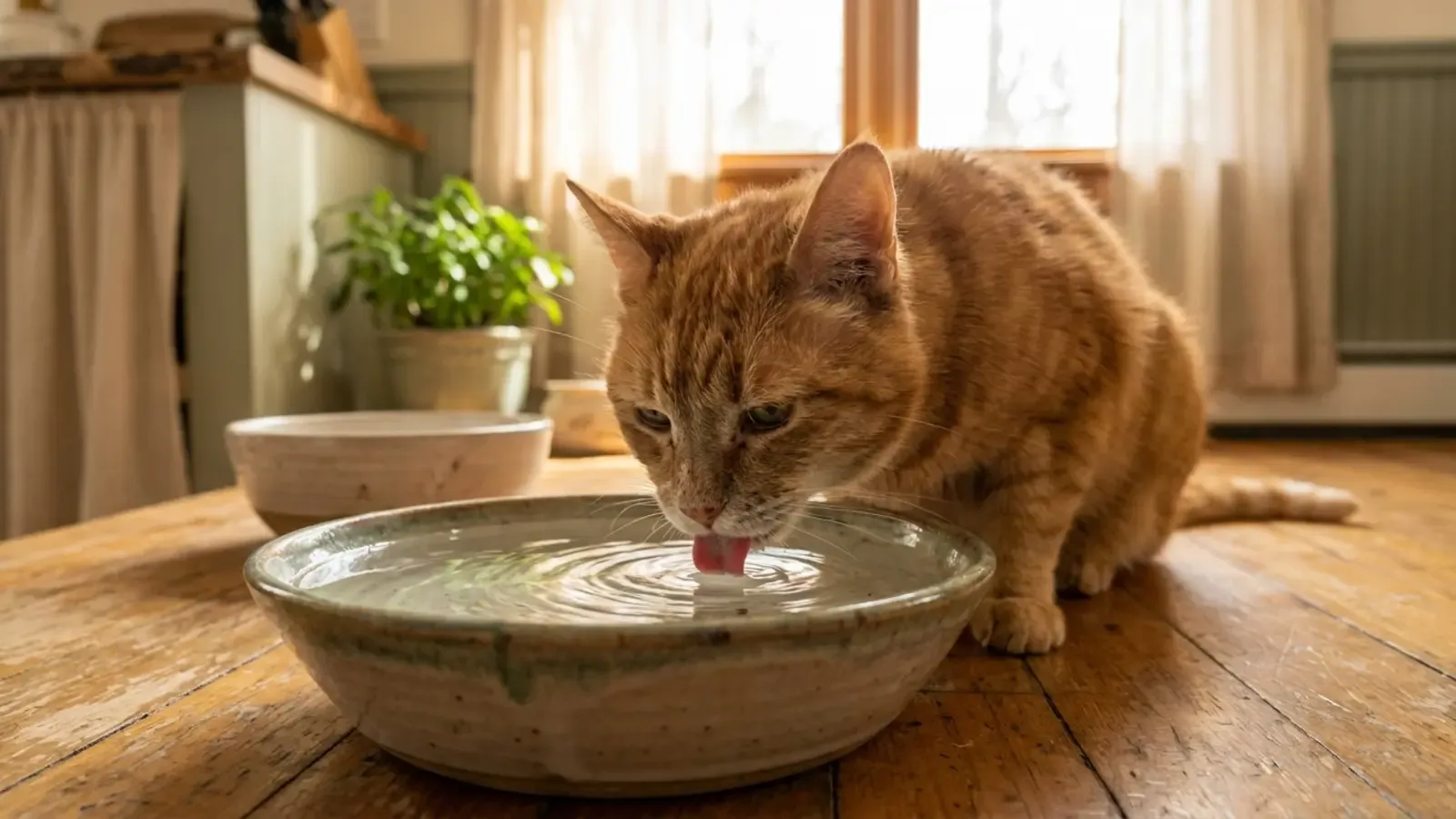
A cat that suddenly drinks much more water than usual should see a vet. Increased thirst is one of the earliest signs of chronic kidney disease, hyperthyroidism and diabetes, all common in middle-aged and older cats and all easier to manage when caught early. It is rarely an emergency, but it is not something to wait out.
A healthy cat needs roughly 40 to 60 ml of water per kilogram of body weight a day, counting the water in its food. Cats on wet food often drink very little from the bowl at all.
How much water is normal for a cat?
Cats evolved from desert ancestors and get much of their water from prey, so they are naturally light drinkers. Wet food is around three-quarters water; dry food contains very little. That is why the bowl alone can mislead: a cat moved from wet to dry food will drink more, and that is normal.
| Cat’s weight | Typical total water a day (food + bowl) | Cornell’s “drinking too much” mark |
|---|---|---|
| 3 kg (6.6 lb) | about 120–180 ml | more than about 195 ml (6.6 fl oz) |
| 4 kg (8.8 lb) | about 160–240 ml | more than about 260 ml (8.8 fl oz) |
| 5 kg (11 lb) | about 200–300 ml | more than about 325 ml (11 fl oz) |
| 6 kg (13.2 lb) | about 240–360 ml | more than about 390 ml (13.2 fl oz) |
The Cornell Feline Health Center lists more than one fluid ounce per pound of body weight a day (about 65 ml per kg) as a warning sign in older cats. Vets use different cut-offs: some consider more than about 50 to 60 ml/kg a day high, and almost all agree that more than 100 ml/kg a day is definitely too much. You don’t need an exact figure to act, though. A clear, lasting change from your own cat’s normal is reason enough to see a vet.
How to tell if your cat is drinking more
Owners usually notice it indirectly:
- Refilling the water bowl more often
- Your cat drinking from taps, glasses, the shower or plant saucers
- Bigger, heavier clumps in the litter tray, or needing to change litter more often. Drinking more almost always means peeing more.
- Accidents outside the tray, because the cat can’t get there in time
- Your cat waiting by the bowl or crying for water
Measuring it
If you want numbers for your vet, measure for two or three days:
- Pick up every other water source you can, or measure each one.
- Fill the bowl with a measured amount from a jug each morning.
- Twenty-four hours later, pour what is left back into the jug and note what was drunk.
- Leave a second, identical bowl out of the cat’s reach to see how much simply evaporates, and subtract that.
- If you have more than one cat, the number covers all of them; note who you see drinking.
Write down what your cat eats too (wet, dry or both, and how much), because that changes what normal looks like.
Why cats drink more water
The common medical causes
- Chronic kidney disease (CKD). The most common cause in older cats. Cornell estimates it affects up to 40% of cats over 10 and 80% over 15. As the kidneys lose the ability to concentrate urine, the cat loses more water and drinks to keep up. Later signs include weight loss, a poor coat, reduced appetite and vomiting.
- Hyperthyroidism. An overactive thyroid gland, common in middle-aged and older cats. Classic signs are weight loss despite a big appetite, increased thirst and urination, restlessness, night-time yowling and sometimes vomiting.
- Diabetes mellitus. More likely in overweight, older and male cats. The typical picture is weight loss despite eating well, plus drinking and peeing much more. Some diabetic cats start standing flat on their back legs, with the hocks close to the ground.
Other causes
- Urinary tract infections and other bladder problems
- Liver disease
- A womb infection (pyometra) in an unspayed female
- Some medicines, including steroids and diuretics
- Hot weather, more activity, or a switch from wet to dry food (these are normal reasons)
Because several of these can overlap, especially in older cats, your vet will usually want blood and urine tests to tell them apart.
When to see a vet
Book an appointment within a few days if your cat:
- Has been drinking noticeably more for more than a couple of days with no obvious reason
- Is peeing more, or having accidents
- Is losing weight, even if eating normally or more than usual
Go the same day if increased thirst comes with:
- Vomiting, not eating, or being very lethargic or weak
- Fast or laboured breathing
- Wobbliness, collapse, or a strange smell on the breath
- Straining in the litter tray with little or no urine (this is an emergency, especially in male cats)
- In a cat already diagnosed with diabetes: weakness, wobbliness, twitching or seizures, which can be blood sugar dropping too low
Never restrict water to “cut down” on drinking. A cat that drinks more is usually compensating for water it is losing. Taking water away can make it dangerously dehydrated very quickly.
What happens at the vet
Your vet will weigh your cat, examine them (including feeling the thyroid and kidneys), and usually check blood pressure, since high blood pressure often comes with kidney disease and hyperthyroidism. Then most commonly:
- Blood tests: kidney values, blood sugar, thyroid hormone (T4) and others
- Urine test: how concentrated it is, sugar, protein, signs of infection. Your vet may give you non-absorbent litter to collect a sample at home.
Bring your notes: how long it’s been happening, how much they drink if you measured, any change in diet, weight or appetite, and litter tray changes. The good news is that kidney disease, hyperthyroidism and diabetes can all be managed, and many cats live well for years with treatment.
If you’re keeping track of a change like this, or of results over time, PetTrackr keeps your cat’s health records and lab results in one place, and lets you log “drinking more” as a symptom in a tap so you can show your vet when it started and whether it is getting worse.
Helping your cat stay hydrated
Whatever the cause, good hydration helps, especially for cats with kidney disease:
- Offer water in several places around the home, away from food and the litter tray
- Use wide, shallow bowls; many cats dislike their whiskers touching the sides
- Try a water fountain if your cat likes running water
- Wash bowls daily and refill with fresh water
- Feed some or all of the diet as wet food, if your vet agrees
- Keep up with yearly check-ups, and twice-yearly blood tests for older cats if your vet suggests it. See senior cat care for what to ask about.
PetTrackr helps you keep track. It is not veterinary advice: if your pet seems unwell, call your vet.
 Cat hairballs
 Cat peeing outside the litter box
 Cat throwing up