
Cat hairballs
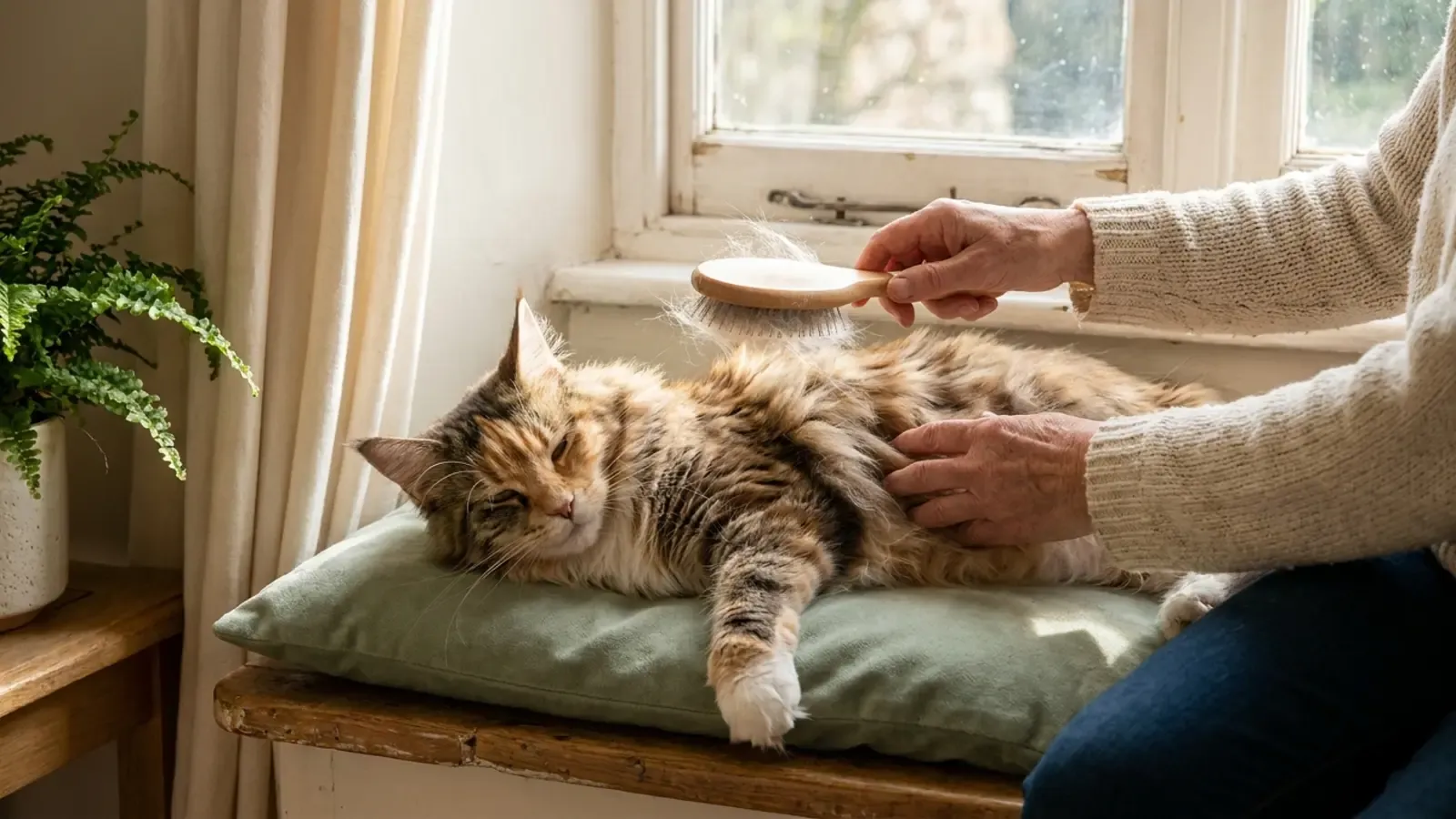
Hairballs form when a cat swallows loose fur while grooming and some of it collects in the stomach instead of passing through. An occasional hairball is normal. Frequent hairballs are not, and are often a sign of overgrooming or a gut problem. The best prevention is regular brushing. And a cat who retches without producing anything, stops eating, or seems lethargic needs a vet promptly, because a hairball can occasionally cause a blockage.
Why cats get hairballs
A cat’s tongue is covered in tiny backward-facing hooks. They are excellent at pulling out loose fur, and that fur has nowhere to go but down. Hair is made of keratin, which cats can’t digest. Most of it passes out in the faeces, but some collects in the stomach. When enough builds up, your cat brings it back up as a hairball.
Hairballs are more likely in:
- Long-haired cats, such as Persians and Maine Coons
- Adult and older cats: kittens and young cats are less likely to get them
- Shedding seasons, typically spring and autumn
- Cats who overgroom, which can be caused by itchy skin (fleas, allergies), pain, or stress
How often is normal?
This is where sources honestly differ. Cornell Feline Health Center says that bringing up a hairball once every week or two is common and usually causes no lasting problems. VCA Animal Hospitals is stricter: a hairball every now and again is normal, but vomiting more than once or twice a month is not, even if it is only hairballs.
What both agree on:
- A change matters. A cat who used to have a hairball now and then and now has them weekly needs a check.
- Frequent hairballs are a clue, not just a nuisance. They can mean your cat is swallowing more hair than usual (overgrooming), or that their gut isn’t moving hair through as it should.
- Vomiting that isn’t hair should not be blamed on hairballs. Food, foam or bile with a few hairs in it is not a hairball. See cat throwing up for that.
| What you see | What to do |
|---|---|
| An occasional hairball, cat otherwise well | Nothing urgent. Keep up brushing |
| Hairballs more often than they used to, or weekly | Book a routine vet visit |
| Bald patches, red skin, licking one spot a lot | Vet visit: possible itch, pain or stress |
| Retching or hacking with nothing coming up, repeatedly | See your vet promptly |
| Not eating for more than a day or two, lethargy, vomiting | See your vet without delay |
| Coughing with neck stretched low, no hairball | See your vet: could be asthma |
How to prevent hairballs
Brush your cat regularly
Every hair you brush out is one your cat doesn’t swallow. Cornell recommends daily brushing or combing, which matters most for long-haired cats and during shedding seasons. For short-haired cats, a few sessions a week is often enough, but daily during a moult helps.
- Use a brush suited to the coat: a slicker or wide-toothed comb for long hair, a rubber grooming mitt or soft bristle brush for short hair.
- Keep sessions short and pleasant. A minute or two with treats is better than a long session your cat hates.
- Long-haired cats can mat, especially behind the ears, under the legs and on the belly. Mats are painful; ask a groomer or vet to remove them rather than cutting them out with scissors.
Many cats don’t love brushing at first. The trick is to build it up gradually: let them sniff the brush, then one or two strokes with a treat, then slowly more. PetTrackr has a step-by-step cat brushing course that takes you from first sniff to the tricky bits in short daily lessons.
Diet and water
- Hairball-control diets use extra fibre to help hair move through the gut. They can help some cats, but check with your vet first, especially if your cat has other health problems.
- Hairball remedies and laxatives (pastes and gels) are sometimes used to help move hair along. Cornell advises never giving your cat a laxative without your vet’s approval and supervision.
- Water keeps the gut moving. Wet food, a water fountain or several bowls around the house help cats who don’t drink much.
Treat the cause of overgrooming
If your cat grooms so much they leave thin or bald patches, the hairballs are a symptom. Common causes include fleas, skin allergies, pain (cats sometimes lick over a sore joint or belly) and stress. Keep flea treatment up to date and ask your vet to look for the reason.
Signs of a hairball blockage: see a vet
Hairballs that don’t come up can sometimes move into the intestine and block it. Cornell describes this as uncommon but serious; without surgery, it can be fatal. Contact your vet without delay if your cat:
- Retches or tries to vomit repeatedly without producing anything
- Refuses food for more than a day or two
- Is lethargic or hiding
- Has a tender or swollen belly
- Is constipated or producing very little in the litter box, or has diarrhoea
- Keeps vomiting food or fluid
Your vet may examine your cat, run blood tests and take X-rays or an ultrasound. Many cats recover with a few days of fluids and a vet-directed laxative; a true blockage may need surgery.
Hairballs in older cats
Older cats often groom less thoroughly, and arthritis can make it hard for them to reach their back and hindquarters, so they may need more help with brushing, not less. At the same time, frequent vomiting in a senior cat is more likely to have a medical cause, such as hyperthyroidism, kidney disease or bowel disease. If an older cat starts bringing up hairballs more often, don’t assume it is just hair. Our senior cat care guide covers what else to watch for.
PetTrackr helps you keep track. It is not veterinary advice: if your pet seems unwell, call your vet.
 Cat drinking a lot of water?
 Cat peeing outside the litter box
 How much do cats sleep?