
Senior cat care
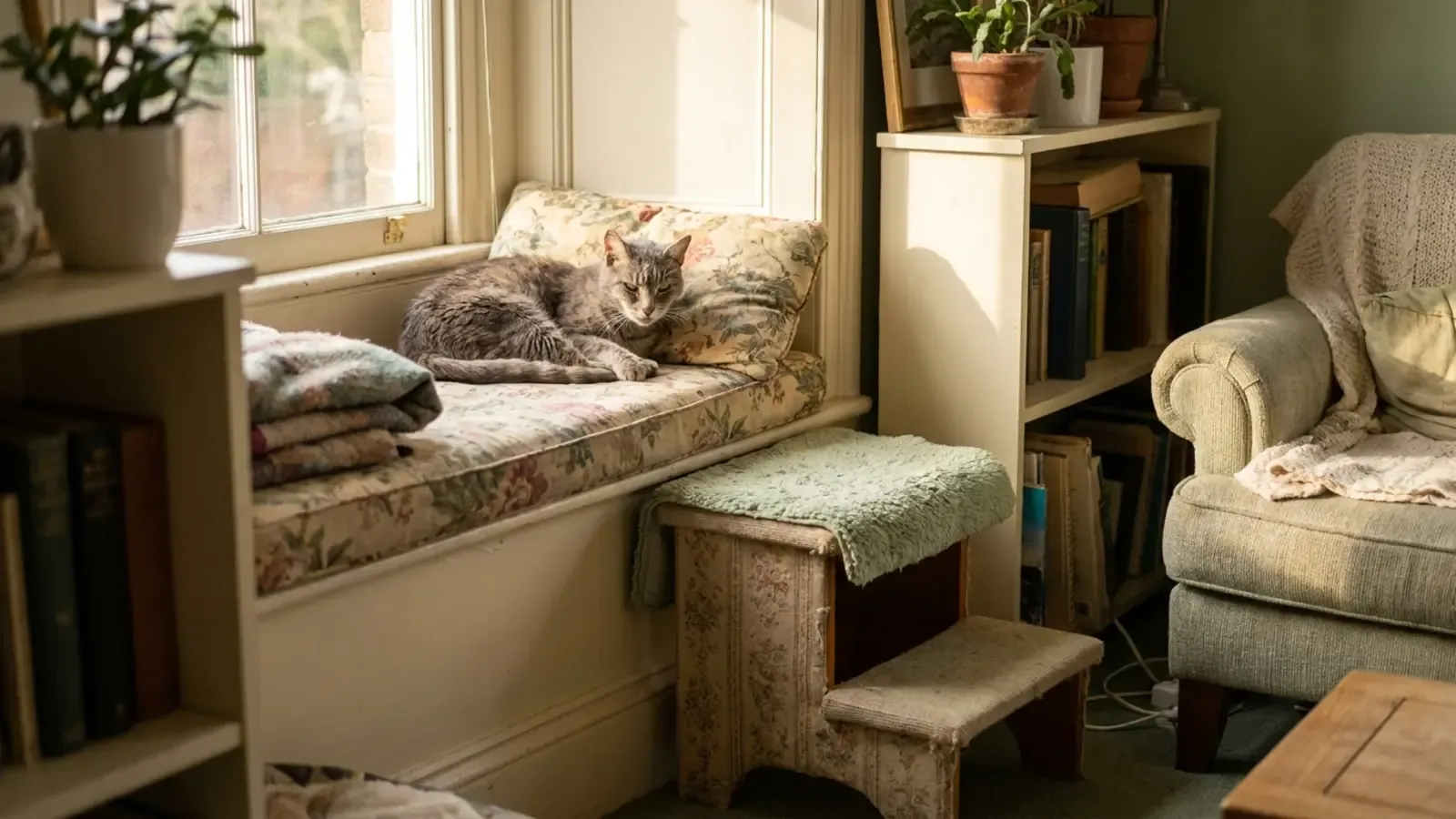
Cats are considered senior from over 10 years old. From then on, they should see the vet at least every 6 months, because the common illnesses of older cats, kidney disease, an overactive thyroid, diabetes, high blood pressure, arthritis and dental disease, all start quietly and are far easier to manage when caught early. At home, the big jobs are watching their weight, keeping them drinking, and making the litter box, food and favourite spots easy to reach.
Cats are experts at hiding discomfort. An older cat who sleeps more, jumps less or grooms less isn’t necessarily “just old”; often they are telling you something.
Cat life stages
The 2021 AAHA/AAFP Feline Life Stage Guidelines split a cat’s life into four age-based stages, plus an end-of-life stage that can come at any age:
| Life stage | Age | Focus |
|---|---|---|
| Kitten | birth to 1 year | Vaccines, neutering, socialisation |
| Young adult | 1 to 6 years | Preventing obesity, dental care |
| Mature adult | 7 to 10 years | Start screening for kidney disease and other age-related problems |
| Senior | over 10 years | Twice-yearly checks, early detection |
International Cat Care uses a slightly different split and adds a super senior stage from 15. A 10-year-old cat is roughly a person in their mid-50s; a 15-year-old is in their mid-70s. More in cat years to human years.
The guidelines are clear that these lines are approximate. A fit 11-year-old may be treated more like a mature adult, and a cat with kidney disease at 8 may need senior-level care.
Vet checks every 6 months
The AAHA/AAFP guidelines recommend that senior cats are seen at least every 6 months, and more often if they have a long-term condition. At a senior visit, expect:
- Weight, body condition and muscle condition, compared with last time
- Feeling the neck for an enlarged thyroid, and the belly
- A look at the joints and how your cat moves, since arthritis is easy to miss
- A look in the mouth for dental disease and tooth resorption
- An eye exam and blood pressure, because high blood pressure can damage the eyes
- Blood and urine tests, usually every 6 to 12 months, to pick up kidney disease, thyroid disease and diabetes early
Many cats find the vet stressful. A carrier that is already part of the furniture helps a lot (see how to get a cat into a carrier), and some vets prescribe a calming medicine to give before the visit.
The common illnesses of older cats
Kidney disease
Chronic kidney disease is one of the most common problems in older cats, which is why the guidelines stress early screening from the mature adult stage. Early on it often shows nothing, or only gradual weight loss. Later signs include drinking and urinating more, a poorer appetite, weight loss, vomiting and lethargy.
Hyperthyroidism
An overactive thyroid usually affects middle-aged and older cats. Cornell lists the most common signs as weight loss despite a big appetite, and more thirst and urination. Some cats also vomit, have diarrhoea, seem restless, or look scruffy. It is very treatable. It can also mask kidney disease, so vets check both together.
Diabetes
Diabetes is more common in older, overweight cats. The classic signs are again drinking and peeing more and losing weight, sometimes with a big appetite.
High blood pressure
Hypertension often goes with kidney or thyroid disease. Its effects can include sudden blindness from bleeding or detachment in the eye. Regular blood pressure checks catch it first. Sudden blindness, dilated pupils that don’t react, or bumping into things are an emergency: call your vet the same day.
Arthritis
Arthritis is one of the most underdiagnosed diseases in cats. The AAHA/AAFP guidelines quote estimates that 40 to 92% of cats may show signs of degenerative joint disease, and it is more common and more severe in older cats. Cats rarely limp. Instead, owners notice:
- Not jumping onto the counter, bed or window seat any more
- Hesitating before jumping, or jumping up in stages
- Grooming less, especially the lower back
- Peeing or pooing just outside the litter box
- Sleeping more and playing less
Your vet can prescribe pain relief made for cats. Never give your cat human painkillers; some, such as paracetamol (acetaminophen), are deadly to cats. Our guide to signs of pain in cats has more on what to look for.
Dental disease
Older cats commonly have gum disease and painful tooth resorption. Drooling, dropping food, chewing on one side or suddenly preferring wet food are all signs.
Watch their weight, in both directions
Weight changes in older cats are one of the earliest clues that something is wrong. The AVMA notes that sudden weight loss in a senior pet often means something is wrong, especially in cats, with hyperthyroidism, cancer, diabetes and kidney disease as common causes.
Some loss is part of ageing. The AAHA guidelines report that cats can lose up to a third of their lean body mass between the ages of 10 and 15, and older cats digest protein and fat less well. That is exactly why it’s hard to tell normal from not by eye. Weigh your cat once a month on a baby scale, or by weighing yourself holding them and subtracting your own weight, and note it down. A loss of even a few hundred grams in a small cat is worth mentioning.
Being underweight is the bigger risk in old cats. The AAHA guidelines note that underweight cats have higher risks of illness and death, and that a slightly higher body condition, up to 6 out of 9, can be associated with living longer.
Diet
The AAHA guidelines suggest that healthy senior cats often do best on food that is:
- Higher in calories and protein, to hold on to muscle
- Highly digestible and tasty, since appetite and digestion can fade
- Fed in smaller amounts, more often
Cats with kidney disease, hyperthyroidism or diabetes may need a prescription diet, so ask your vet before changing food. Wet food adds water, which helps cats who don’t drink much. See how much to feed a cat for amounts, and never let an older cat go without eating for more than a day: cats that stop eating can become seriously ill quickly.
Drinking
Keep water easy to find, in several places, away from food and litter. Some cats prefer wide bowls or a running fountain. Notice how often you are refilling: drinking more than usual is one of the most important signs in an older cat, pointing to kidney disease, diabetes or hyperthyroidism. Our guide cat drinking a lot of water explains what to do.
Litter box access
Litter problems in older cats are rarely about behaviour. The AAHA/AAFP guidelines say a change in litter box use may point to urinary disease, constipation or diabetes, or simply to weak muscles, poor balance or pain. Make the box easy:
- Low sides or a low entry point, so a stiff cat can step in rather than climb
- Large: about one and a half times your cat’s length from nose to tail tip. Most shop-bought boxes are too small; a large storage box with one side cut down works well
- On every floor your cat uses, so they never need the stairs to reach one
- Close to where they sleep, in a quiet spot away from food
- Scooped every day, since sick or arthritic cats are pickier about a dirty box. More in how often to clean a litter box
Make home easier
The guidelines recommend cutting the distance an older cat has to travel to reach food, water and a litter box, and giving them warm, comfortable resting places. Other easy wins:
- Steps, ramps or a sturdy chair up to the bed, sofa or favourite window ledge
- Warm, padded beds in sunny, draught-free spots
- Food and water on the floor or a low step rather than a high counter
- Gentle grooming for cats who can no longer reach their back, and regular nail trims, since older cats’ claws grow thick and can curl into the pads
- Quiet routines. Older cats cope less well with change, new pets and noise. Give them somewhere to retreat that nobody disturbs
Changes in behaviour
The guidelines advise that any new or unusual behaviour in a senior cat should be checked by a vet. Night-time yowling, a common worry, can come from failing hearing or sight, cognitive dysfunction, pain, hyperthyroidism or high blood pressure. Cognitive decline in cats is most often noticed after age 10, and shows up as confusion, staring, changes in sleep, more vocalising and forgetting where the litter box is.
Keeping track
The hardest thing about an older cat is spotting change that happens over months. A small notebook works; so does an app. In PetTrackr, you can log your cat’s weight against the healthy range for their breed, age and sex, record symptoms like drinking more or vomiting and see whether they are easing or getting worse, and keep every vet visit and test result together for the next check-up.
PetTrackr helps you keep track. It is not veterinary advice: if your pet seems unwell, call your vet.