
How to teach a dog recall
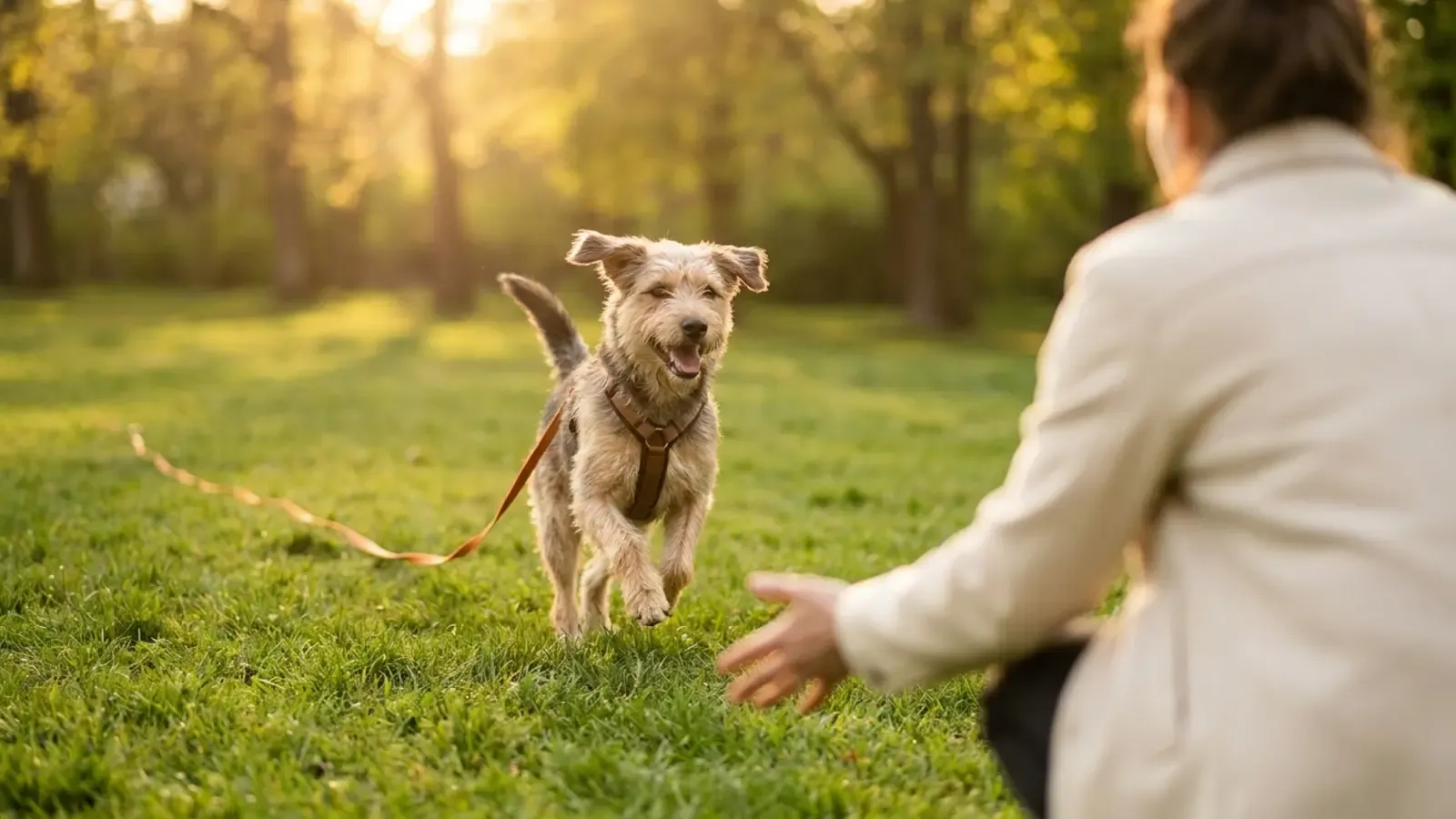
To teach a dog recall, pick one cue word (or a whistle), start somewhere boring like your kitchen, and reward your dog with something wonderful every time they come to you. Then add distance, then distractions, one at a time, using a long line outdoors so your dog never learns that ignoring you is an option. Never tell your dog off when they arrive, however long they took.
Recall is the most useful thing you will ever teach your dog, and for many owners the hardest. Here is a plan you can follow, step by step, and the mistakes that quietly undo it.
Why dogs don’t come back
From your dog’s point of view, recall is a choice between you and whatever they are doing. The RSPCA lists the usual reasons a recall falls apart:
- Not enough reason to come. A pat on the head can’t compete with a squirrel.
- Coming back has led to something bad: a telling-off, the end of the walk, the end of a game.
- The cue was never really taught, or different people use different words.
- The cue has been repeated until it means nothing. “Come, come, COME, come here!” teaches a dog that the first four don’t count.
- Too much distraction, too soon. Practising only in the house and then expecting it to work in a busy park.
Every step below is designed to fix one of those.
What you need
- Rewards your dog loves: small pieces of cooked chicken, cheese or sausage, or a favourite toy. Save the very best for recall.
- One cue. A short word (“Here!”, “Come!”) or a whistle. Agree on it as a household.
- A long line of around 5 to 10 metres for outdoor practice, clipped to a harness rather than a collar.
- Patience. Short, frequent sessions beat long ones. A few recalls a day, every day, works better than twenty on a Sunday.
Step-by-step recall training
Step 1: Make their name mean “look at me”
Say your dog’s name in a happy voice when they are close by. The moment they look at you, give a treat. Repeat until a head turn is instant. A recall starts with attention.
Step 2: Add your recall cue at short distance
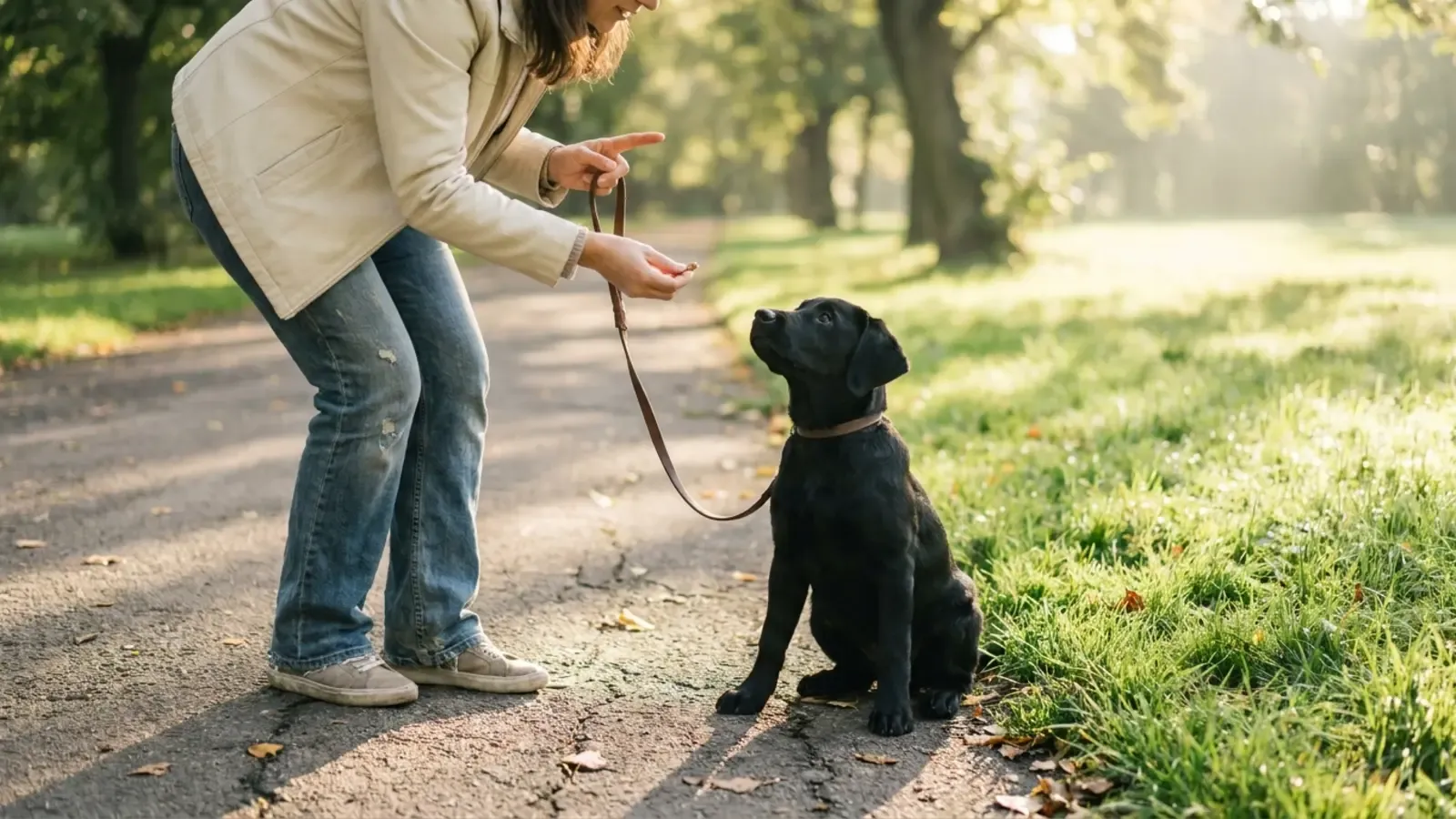
In a quiet room, wait until your dog is a couple of steps away. Say their name and your cue once, open your arms or crouch, and step backwards. When they reach you, praise and reward. Dogs Trust suggests giving your dog at least five seconds to respond before calling again.
Add a gentle touch to the collar or harness before the treat. That way, being held never becomes a surprise later.
Step 3: Play recall games
Make coming to you the best game in the house:
- Ping-pong recall: two people at opposite ends of a room or garden take turns calling the dog, each rewarding when the dog arrives.
- Hide and seek: step out of sight, call once, and throw a small party when your dog finds you.
- Catch them coming anyway: if your dog is already running towards you, say the cue and reward. The RSPCA calls this a free win.
Step 4: Add distance
Move to the garden or another enclosed space. Let your dog wander a little further before you call. If they hesitate, you have gone too far too fast; make it easier and build up again.
Step 5: Go outside on a long line
This is the step most people skip. Before your dog is ever off lead in an open space, practise on a long line so you can always follow through. The RSPCA advises using a harness rather than a collar for any lead longer than about 2 metres (6 feet).
Let your dog explore on the line, then call. If they don’t respond, do not reel them in like a fish. Dogs Trust and the RSPCA both suggest gently guiding them in, stepping on the line so they can’t go further, getting closer, or running a few steps away from them in an exciting way so they follow.
Step 6: Add distractions gradually
Work through a ladder like this, staying at each rung until your dog comes back almost every time:
| Stage | Where | Distractions | Reward |
|---|---|---|---|
| 1 | Indoors | None | Good treat |
| 2 | Garden | Smells, toys lying around | Good treat |
| 3 | Quiet park, long line | Grass, scents, distant people | Great treat |
| 4 | Busier park, long line | Other dogs at a distance, joggers | Best treat or a game |
| 5 | Off lead, safe open space | Real life | Best treat, then variable |
The more you ask, the better the reward has to be. Coming away from another dog deserves the best thing in your pocket.
Step 7: Fade the treats, slowly
Once recall is reliable, start mixing rewards: sometimes a treat, sometimes a toy, sometimes praise and a game. Dogs Trust suggests moving to every other time, then every third. Keep rewarding often for hard recalls in exciting places, for the rest of your dog’s life.
The golden rule: never punish arrival
The AVSAB position on humane training is that reward-based methods should be used for all dog training, and aversive methods should not. For recall it is especially obvious why. If your dog finally comes back after ten minutes of ignoring you and gets shouted at, the lesson they learn is “coming back gets me shouted at”, not “I should have come sooner.”
However frustrated you feel, greet a returning dog warmly. Then make the next practice easier.
Common recall mistakes
- Calling only to end the fun. If recall always means lead on and home, your dog will learn to avoid it. The RSPCA suggests that the large majority of recalls should be for practice: call, reward, let them go again. Clip the lead on, walk a few steps, and unclip it again sometimes too.
- Calling when you know they won’t come. If your dog is mid-chase, go and get them instead. Every ignored cue weakens it.
- Repeating the cue. Say it once. If nothing happens, help them (move away, get closer, use the line) rather than saying it again louder.
- Calling for unpleasant things. Don’t call your dog for a bath, a nail trim or medicine. Go and fetch them.
- Letting them off lead too soon. Only let your dog off in open spaces once they come back reliably on the long line in a similar place.
Recall for different dogs
- Puppies follow you naturally in the early weeks. Use it: practise lots of tiny recalls at home before adolescence makes the world more interesting. Our new puppy checklist covers the rest of those first weeks.
- Adolescent dogs (roughly 6 to 18 months) often seem to forget everything. That is normal. Go back to the long line and easier stages for a while.
- Sighthounds, scent hounds and some working breeds can find chasing or tracking so rewarding that an off-lead recall in open country may never be fully safe. A long line or secure field is a perfectly good answer.
- Rescue dogs may have learned that being called means trouble. Choose a brand-new cue and start from Step 1.
If keeping it up week after week is the hard part, the PetTrackr training courses turn recall into a short daily lesson that moves on only when your dog has got each step, on separate days.
When to get help
If your dog runs off and won’t come back despite steady practice, or chases livestock, cars or other animals, ask your vet to recommend a qualified, reward-based trainer or behaviourist. Keep your dog on a lead or long line in the meantime. Make sure their microchip details are up to date and they wear ID, wherever local law requires it.
PetTrackr helps you keep track. It is not veterinary advice: if your pet seems unwell, call your vet.
 How to stop a dog pulling on the lead
 How to stop a puppy biting
 Why do dogs eat poop?