How to stop a puppy biting
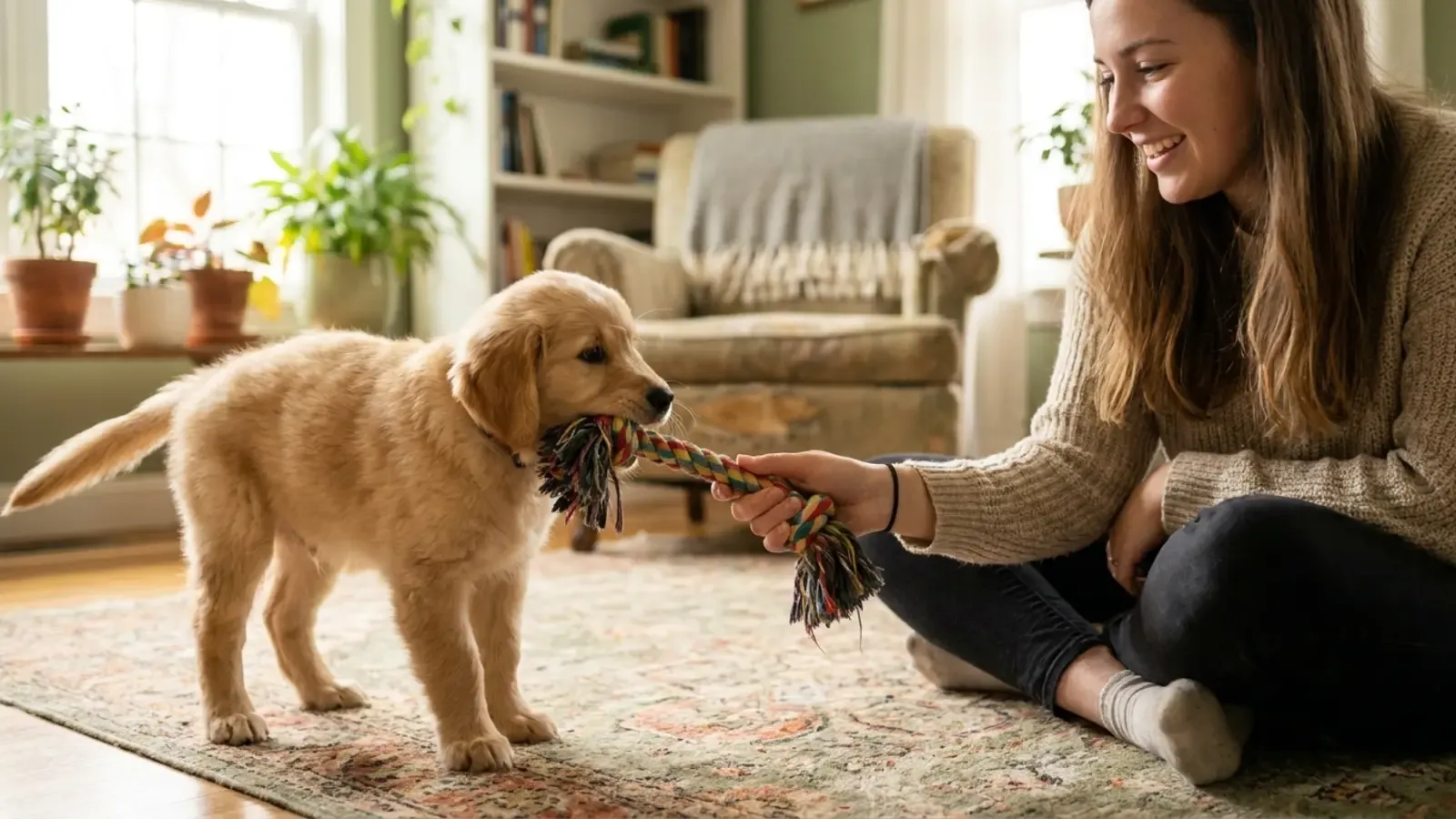
To stop a puppy biting, give them something better to bite and make human skin a game-ender. Keep a toy within reach, offer it the moment teeth come out, praise gentle play, and if your puppy bites anyway, calmly stop playing for a few seconds to a minute. Never hit, shout or hold their mouth shut: it makes biting worse, not better.
Puppy biting is normal. Puppies explore with their mouths, play-bite their littermates and chew because their teeth hurt. The goal isn’t a puppy who never mouths, it is a dog who has learned how gentle a human hand needs them to be.
Why puppies bite
- Play. Littermates wrestle and mouth each other all day. You are the new littermate.
- Teething. Baby teeth start falling out at about three to four months, and the adult set is usually in by six months. Sore gums want something to chew. See our guide to puppy teething.
- Overtiredness. A puppy who suddenly turns into a land shark in the evening is often overtired, not naughty. Young puppies need a lot of sleep; our guide on how much puppies sleep has the numbers.
- Excitement. Fast hands, flapping sleeves and squealing children are irresistible.
- Attention. If biting gets a big reaction, your puppy learns that it works.
Bite inhibition: the most important lesson
Bite inhibition means learning to control the force of a bite. Puppies start learning it from their mother and littermates, who yelp and stop playing when a bite is too hard. A dog who learned good bite inhibition as a puppy is far less likely to cause injury if they ever do bite as an adult, which is why the work you do now matters.
The order of lessons is:
- Softer. First teach that hard bites end the fun. Gentle mouthing can still be allowed early on.
- Less often. Then teach that teeth on skin ends the fun at all, and toys are where teeth go.
- Never on people. By adulthood, your dog should keep their mouth off people unless invited (and many owners never invite it).
How to stop a puppy biting, step by step
1. Always have a toy ready
Keep chew toys and tug toys in every room. When your puppy goes for your hands, freeze, then offer the toy and play with that instead. Soft toys you can wiggle, ropes and frozen stuffed food toys are good for teething puppies.
2. Praise and reward gentle play
Tell your puppy they are doing well when they lick, play gently or choose the toy. Quietly reward calm behaviour with a treat or a game. Puppies repeat what pays.
3. Make biting end the game
If teeth land on skin hard:
- Go still and stop playing straight away. Some people add a short, calm “ouch”.
- Turn away or step out over a baby gate for a short time-out, from a few seconds up to about a minute.
- Come back calmly and offer a toy.
The time-out is about removing the fun, not about punishment. Keep it short and boring, and don’t drag your puppy anywhere. Don’t pull your hand away sharply while teeth are on it, which can tear the skin and turns it into a chase game.
4. Prevent the bites you can predict
- Schedule naps. Many puppies bite most when they need sleep. A quiet rest in a crate or pen often stops a biting frenzy. See how to crate train a puppy to make that a happy place.
- Use a lead or house line to guide a puppy away calmly instead of grabbing them.
- Give daily brain work. Sniffing games, food puzzles and short training sessions tire a puppy out far more than chasing hands does.
- Keep games structured. Tug is fine, with a long toy, and the game pauses if teeth touch skin. Avoid rough hand-wrestling.
5. Teach alternatives
Short, daily training sessions give your puppy something to do with all that energy. Sit, touch (nose to your hand), settle on a mat and “leave it” are all useful replacements for biting. If you like a plan to follow, PetTrackr has step-by-step training courses with short daily lessons, so you know exactly what to practise next.
6. Help children stay safe
Children are bitten more often because they move fast and squeal. Supervise all play, teach children to stand still like a tree and fold their arms if the puppy gets mouthy, and keep a toy handy for them to offer.
What not to do
The American Veterinary Society of Animal Behavior recommends reward-based training for all dogs and advises against methods that rely on pain, fear or intimidation. For puppy biting, that means never:
- tapping or flicking the nose, or slapping
- holding the mouth shut, or pushing fingers into the throat
- pinning your puppy down or “alpha rolling”
- shouting in their face, squirting water or shaking a noisy can
- biting your puppy back
These can scare a puppy, damage your relationship and make some puppies bite harder to defend themselves.
How long does puppy biting last?
Every puppy is different, but this is the usual shape of it:
| Age | What to expect |
|---|---|
| 8–12 weeks | Lots of mouthing and play-biting. Focus on toys and softer bites |
| 3–6 months | Teething: baby teeth fall out, chewing peaks. Frozen chews help |
| 6 months onwards | Adult teeth in. Mouthing should be easing if training is consistent |
| Adolescence (roughly 6–18 months) | Some puppies have a mouthy, excitable phase again. Keep going |
If biting is getting harder over time rather than softer, that is a sign to get help.
When to get professional help
Most puppy biting is play. Speak to your vet or a qualified reward-based trainer if your puppy:
- growls with a stiff body or hard stare, or freezes before biting
- bites when you touch their food, toys, paws or ears
- seems frightened, not playful, when biting
- is breaking skin regularly despite consistent training
Your vet can check for pain or a medical cause and point you to a veterinary behaviourist if needed.
PetTrackr helps you keep track. It is not veterinary advice: if your pet seems unwell, call your vet.
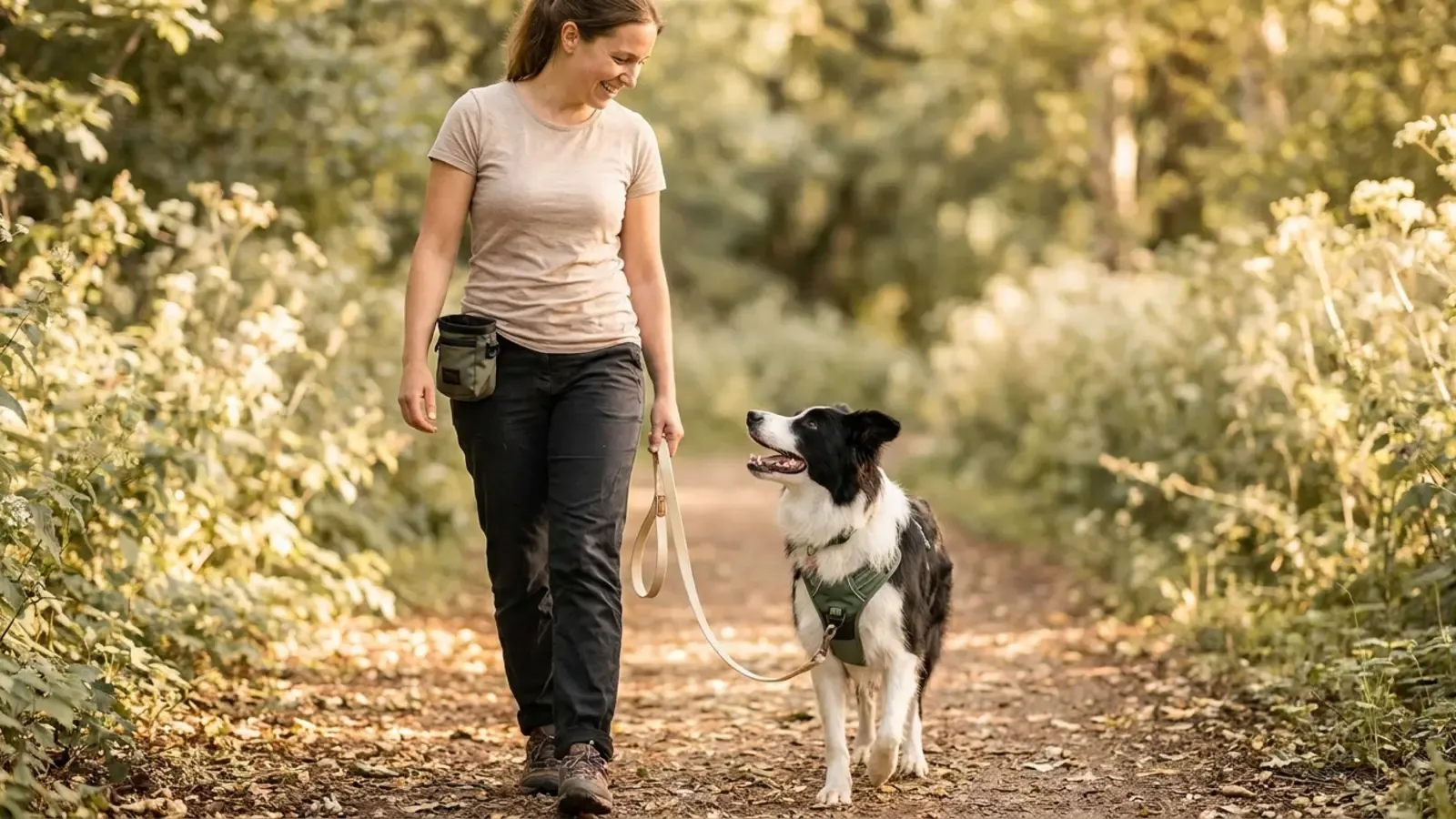 How to stop a dog pulling on the lead
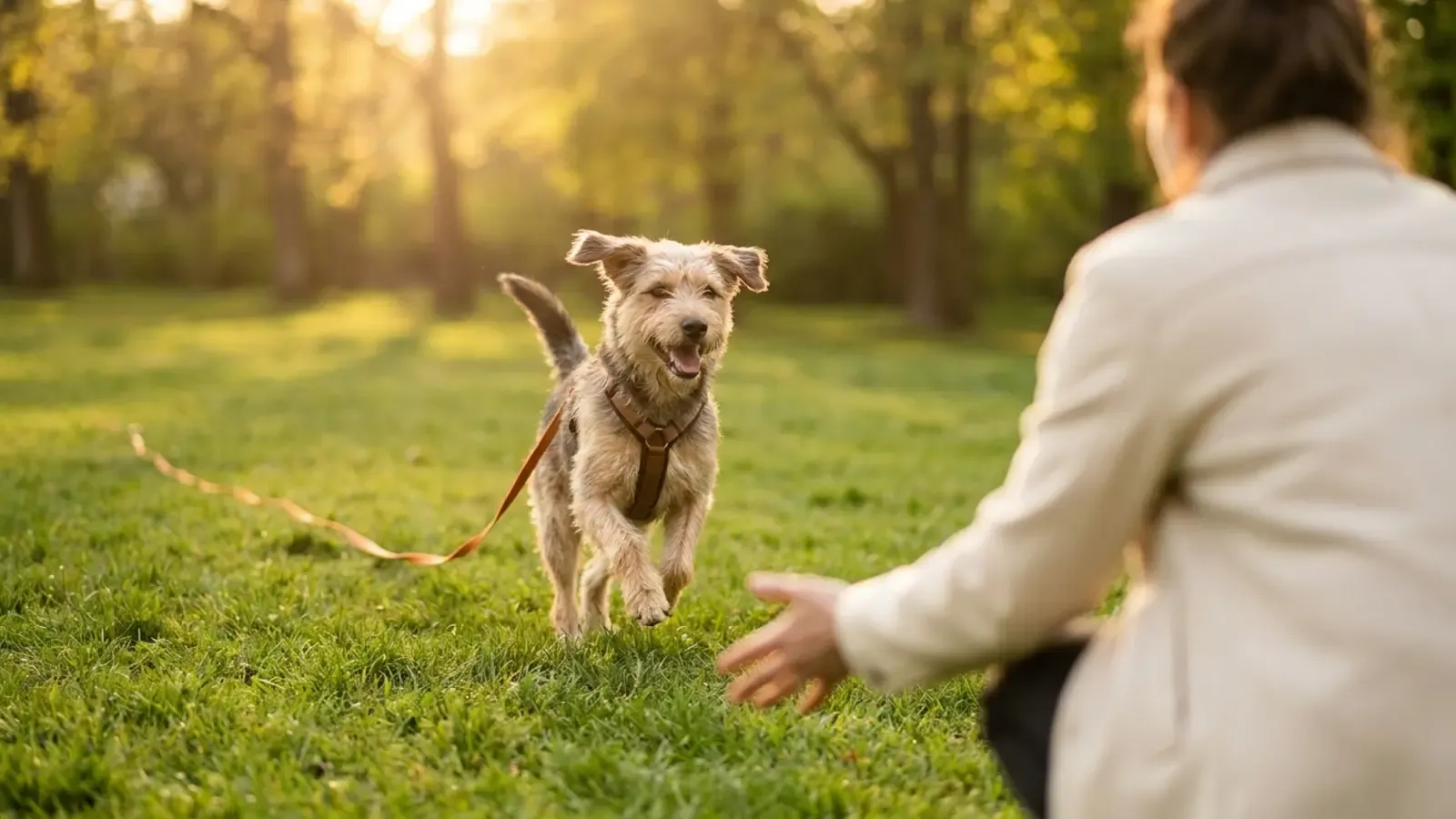 How to teach a dog recall
 Separation anxiety in dogs