How to stop a dog pulling on the lead
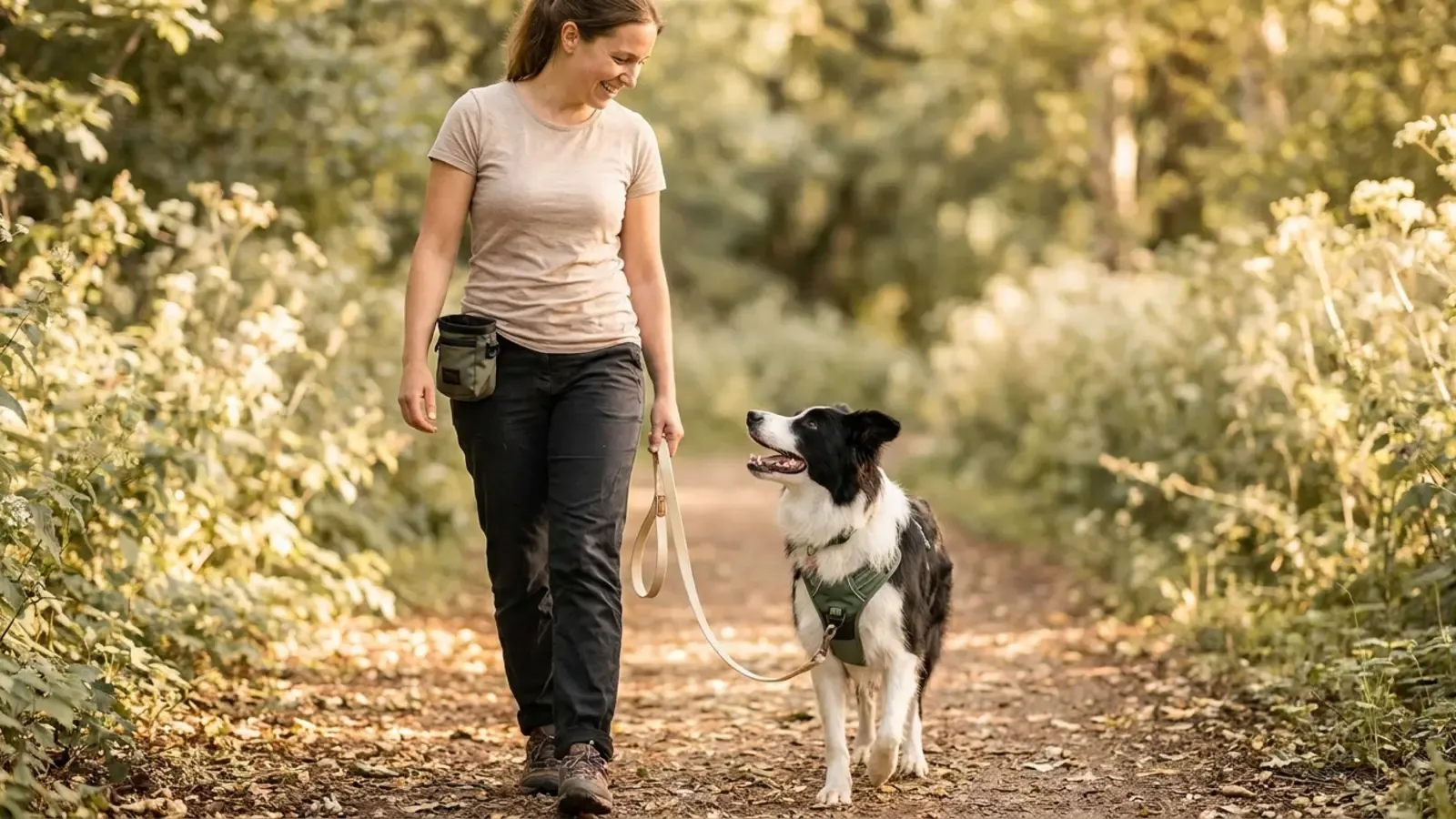
To stop a dog pulling on the lead, make a slack lead the only thing that moves you forward. The moment the lead goes tight, stop and stand still. When your dog turns back or the lead loosens, reward them and walk on. Pair that with lots of rewards for walking beside you, start somewhere quiet, and be consistent on every walk.
Dogs pull because pulling works: it gets them to the next smell sooner. They aren’t being dominant or stubborn. Change what works, and the pulling fades.
The kit: harness or collar?
A well-fitted harness is usually the best choice for a dog that pulls. A harness spreads pressure across the chest and body rather than the neck and throat. A harness with a clip on the front of the chest (front-attach) also tends to turn a pulling dog gently back towards you, which makes pulling less rewarding. Many trainers use a double-ended lead clipped to both the chest and the back of the harness for extra control.
A harness doesn’t stop pulling by itself, though, and nor does a collar. Training does.
Good kit for loose-lead walking:
- A comfortable, well-fitted harness (Y-shaped at the front so it doesn’t restrict the shoulders), or a flat collar for dogs that don’t pull hard
- A standard lead about 1.5–2 metres long, not a retractable one: a retractable lead rewards pulling by paying out more line whenever the dog pulls
- A treat pouch and small, tasty treats your dog loves
Introduce a new harness gently, with treats, before you use it on a walk.
Tools to avoid
The American Veterinary Society of Animal Behavior advises against choke chains, prong (pinch) collars and electronic shock collars, and against lead jerking and other physical corrections. They work, when they work, through pain or discomfort, and studies link them to stress, fear and aggression, while reward-based training is at least as effective. A dog who learns that the lead hurts near other dogs can come to dread other dogs.
Head halters (a strap over the nose) divide opinion. Some trainers use them for very strong dogs, but most dogs dislike them at first, and RSPCA Queensland discourages them because they can cause discomfort or injury if used incorrectly. Start with a front-attach harness, and only consider a head halter with guidance from a reward-based trainer.
Loose-lead walking, step by step
Short sessions of five to ten minutes are plenty. Move to the next step when your dog finds the current one easy.
Step 1: Teach “beside me is the best place” at home
Indoors, with no lead, reward your dog every time they are next to you, on the side you want them to walk. Take a step and reward them for staying with you, then two steps, then a few. Change direction now and then and reward them for following.
Step 2: Add the lead, still indoors or in the garden
Clip the lead on and repeat. Reward often, every step or two at first, for being near you with a slack lead. Talk to your dog and keep it fun.
Step 3: Stop when the lead goes tight
This is the core rule. The instant the lead tightens:
- Stop and stand still. Don’t pull back, jerk the lead or tell your dog off.
- Wait quietly until your dog turns towards you or the lead goes slack.
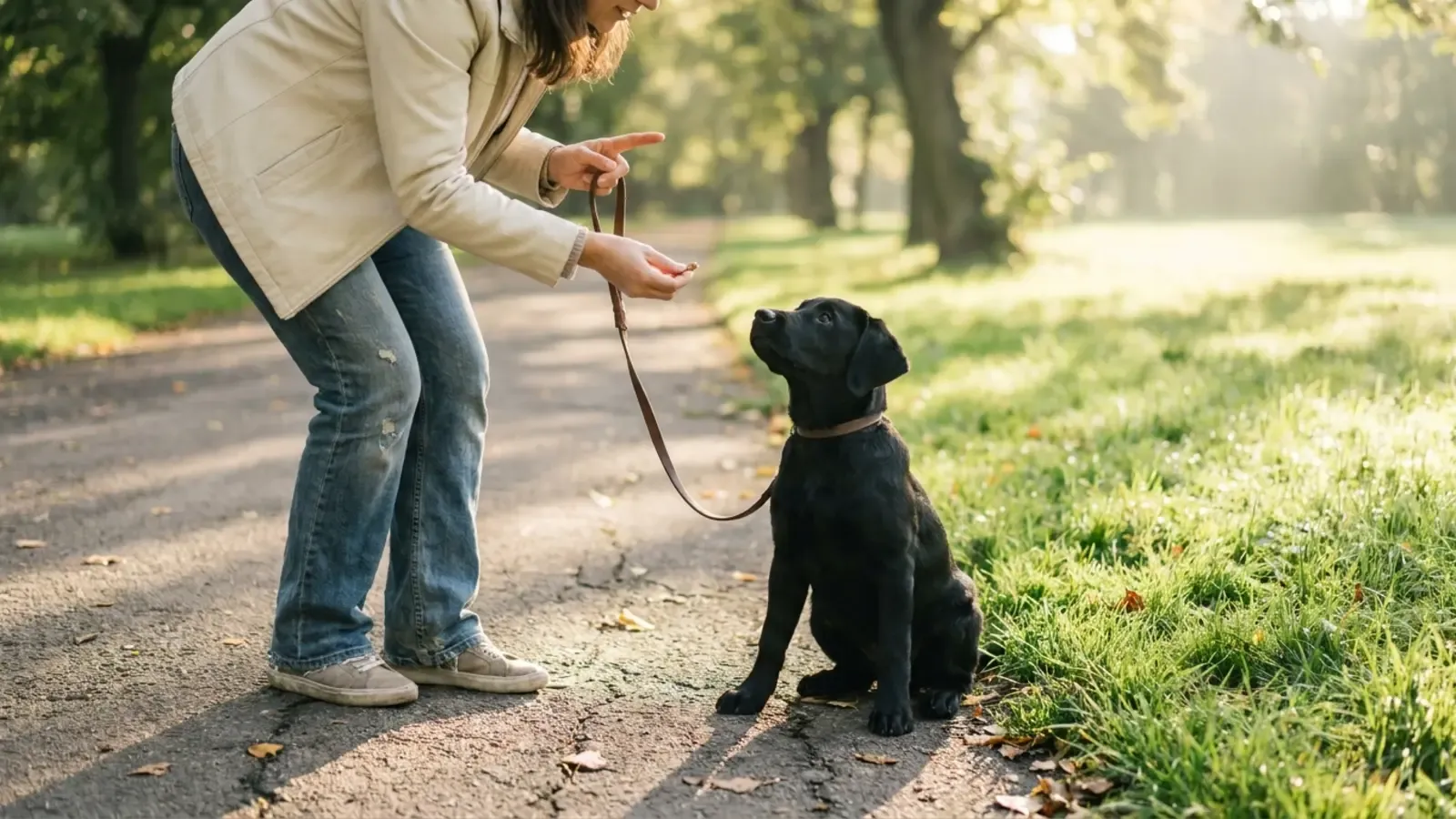
- Mark it (“yes!”) and reward next to your leg, then walk on.
If your dog doesn’t turn back, walk a couple of steps in the opposite direction, then reward them for catching up. The message is simple: a tight lead means we stop, a loose one means we go.
Step 4: Build up distractions slowly
Move from the garden to a quiet street, then a slightly busier one, then the park. Each time you add distraction, reward more often again. If your dog is pulling constantly, the step is too hard: go back to somewhere easier.
Step 5: Reward with life
Once your dog gets the idea, use what they want as the reward. A slack lead earns “go sniff!”, a greeting with a dog friend, or moving towards the park. These real-life rewards are some of the most powerful you have.
Step 6: Thin out the treats
As the walking improves, gradually reward less often, but never stop entirely. Keep rewarding the good moments for the life of your dog.
Consistency is everything
If pulling sometimes works, your dog will keep trying it. That is the hard part, because real life has train times and rain.
- Train on every walk. Expect walks to take longer while your dog is learning.
- Agree the rules at home. Everyone who walks the dog stops when the lead goes tight.
- Use a “training” and a “just get there” setup if you can’t train every time. Dogs Trust suggests using two different harnesses or attachment points: one for training walks and one for quick outings. Your dog learns the difference, though it may take longer.
- Tire the brain before you go. A few minutes of sniffing games or training before a walk takes the edge off an excitable dog.
- Let your dog sniff. Walks are your dog’s newspaper. Scheduled sniff breaks make it easier for them to walk nicely in between.
If you would like a plan to follow, PetTrackr has a step-by-step loose-lead walking course with short daily lessons, so you always know what to practise next.
Common problems
| Problem | What to try |
|---|---|
| Pulls hardest at the start of the walk | Practise in the garden first, or walk a quiet loop before the busy route |
| Zigzags across your path | Reward closer to your leg, on one side only, and more often |
| Lunges at other dogs, cats or bikes | Increase the distance, reward calm looking, and get help from a reward-based trainer |
| Fine on the way home, pulls on the way out | Normal. Train more on the way out, and use sniff breaks as rewards |
| Stops and refuses to walk | Check for pain, fear or a hot pavement; never drag a dog forward |
When to get help
If your dog pulls because they are frightened, lunges and barks at other dogs or people, or you can’t hold them safely, talk to your vet and a qualified reward-based trainer or veterinary behaviourist. A sudden change, such as a dog who stops wanting to walk or starts lagging, is a reason to see the vet: pain can look like a training problem.
For dogs that also run off, our guide on how to teach a dog recall uses the same reward-based approach. And to make sure all that walking adds up, see how much exercise a dog needs.
PetTrackr helps you keep track. It is not veterinary advice: if your pet seems unwell, call your vet.
 Separation anxiety in dogs
 Why do dogs eat poop?