
New kitten checklist
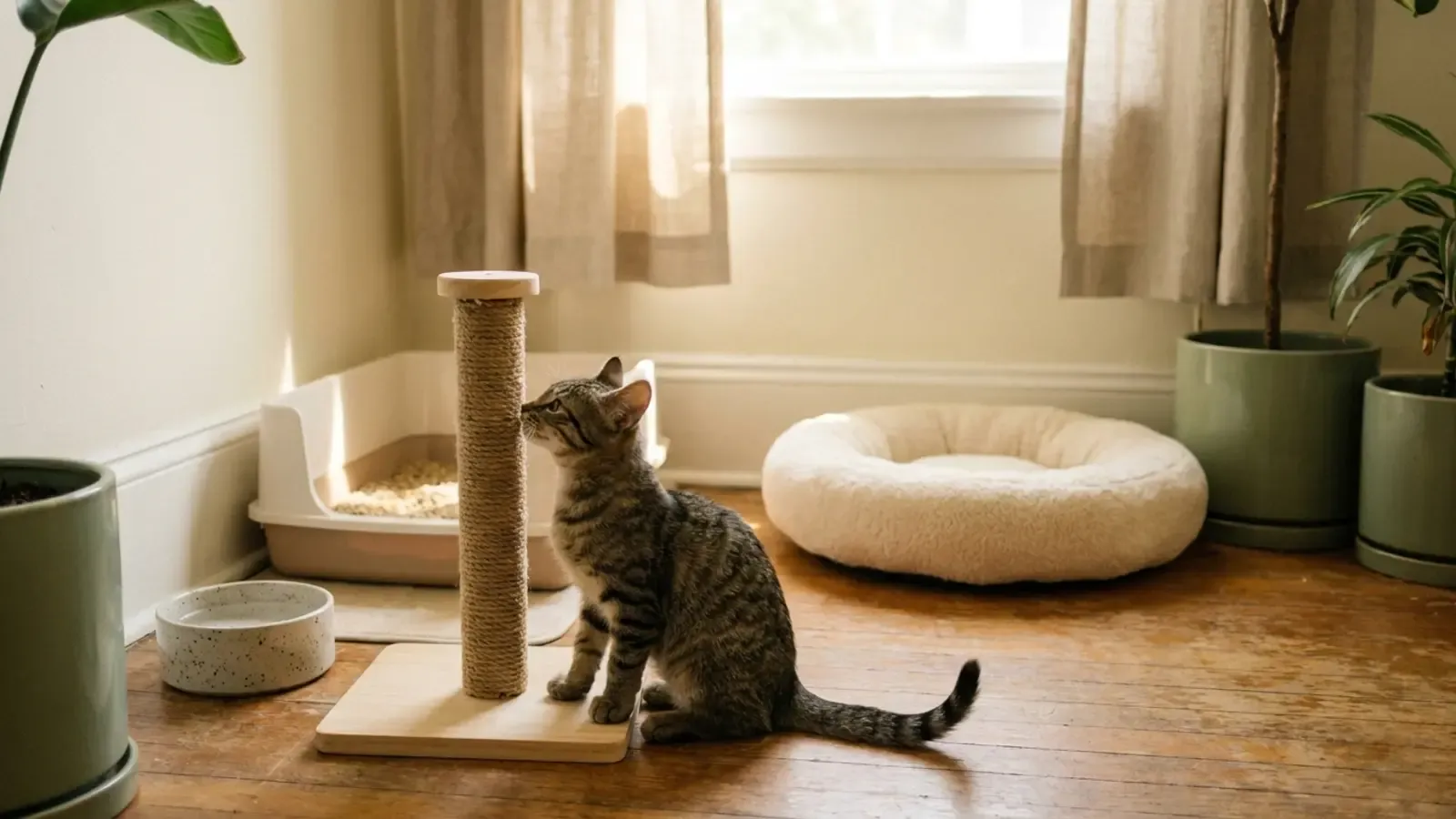
Before a kitten comes home you need two low-sided litter trays, the litter and food they already know, bowls, a carrier, a scratching post, a bed, a few toys and one quiet room set up for them. In the first week, keep them in that room, book a vet check, and let them explore the rest of the house slowly.
Most kittens arrive at 8 to 12 weeks old, weaned and already using a tray. Here is everything else, in the order you’ll need it.
What to buy before your kitten comes home
The essentials
| Item | What to look for |
|---|---|
| Litter trays | Two, with low sides a kitten can step over. Upgrade to bigger trays as they grow |
| Litter | The same type the kitten uses now. Unscented, fine and soft underfoot |
| Food | The same kitten food they eat now, labelled complete for growth. Change later, gradually |
| Bowls | Separate food and water bowls, shallow and wide. Keep water away from food |
| Carrier | Sturdy and easy to clean. One that opens from the top makes vet visits easier |
| Scratching post | Tall enough for a full stretch and heavy enough not to wobble. Sisal rope works well |
| Bed | High sides and a low front, with fleece inside. A cut-down cardboard box is fine |
| Hiding places | A covered bed, a box on its side, or a space under a chair |
| Toys | Balls, small soft toys and a wand toy for play together |
| Brush or comb | Suited to the coat. Short daily sessions get them used to handling |
Useful from the start
- A cat toothbrush and cat toothpaste: never human products
- A breakaway (snap-open) collar, if you use one, sized to fit and loosened as they grow
- Puzzle feeders to make meals last longer
- A pheromone diffuser in the kitten’s room. International Cat Care suggests plugging one in 48 hours before arrival
- Cleaner for accidents: a biological (enzyme) cleaner. Avoid disinfectants that go cloudy in water, such as some pine and phenol products, which are toxic to cats
Set up the kitten room
Pick a quiet room for the first week or two. It should have:
- Litter trays at one side, away from food, water and the bed
- Food and water on the other side, apart from each other
- A bed and at least one place to hide
- A scratching post near the bed: cats like to scratch when they wake
- No houseplants, dangling cords or gaps behind furniture
International Cat Care advises two trays in separate spots in the kitten’s room, because some kittens prefer one for urine and one for faeces. Across the home, the rule is one tray per cat, plus one. More on trays in how to litter train a kitten.
Kitten-proof your home
Kittens climb, squeeze into gaps and chew. Before they roam:
- Lilies: keep every kind out of the house. All parts of true lilies, including pollen and vase water, can cause kidney failure in cats
- Other plants: check houseplants and cut flowers against the ASPCA’s list
- Washing machine and tumble dryer: check inside before every use and keep the doors shut
- Fridge, hob and oven: check before closing the fridge, and keep kittens off worktops
- Strings, thread, elastic, ribbons, hair ties: swallowed, they can cause serious gut damage. Put wand toys away after play
- Laundry capsules, cleaning products and medicines: shut away. A small amount of a human medicine can poison a kitten
- Gaps and holes behind appliances and in fireplaces: block them
- Windows and balconies: screens or keep them closed
- Food: onion, garlic, chocolate and more are dangerous. See foods toxic to cats
If you think your kitten has eaten something toxic, call your vet or an animal poison line straight away.
Ask the breeder or shelter for
- Vaccination and worming records, with dates and products
- The microchip number and transfer details
- The food brand, how much and how often
- The litter they use
- A piece of bedding or a toy that smells of home
Day one
- Carry them in the carrier straight to their room. Open the door and let them come out when ready
- Show them the tray gently once. Most kittens know what it is for
- Keep visitors away and other pets out of the room
- Feed little and often. International Cat Care recommends at least four meals a day for kittens aged 8 to 12 weeks
- Sit quietly in the room and let them come to you. Play with a wand toy if they want to
- Bedtime: a warm bed in their room. A kitten that learns to sleep through the night in its own space lets you sleep too
The first week
| Day | Focus |
|---|---|
| 1–2 | Settling in one room. Food, water, tray, sleep, quiet company |
| 2–5 | Vet check: health exam, vaccines and worming plan, microchip |
| 3–7 | Daily gentle handling: stroking, touching paws and ears, a soft brush |
| 4–7 | Short supervised trips into other rooms, back to base to rest |
| 7+ | Careful introductions to resident pets, a step at a time |
Feeding
| Age | Meals a day (at least) |
|---|---|
| 8–12 weeks | 4 |
| 3–6 months | 3 |
| Over 6 months | 2 |
These are International Cat Care’s minimums. Fresh water always, in a bowl away from food.
Vet care
At the first visit your vet will check your kitten over and set the plan for the next few months:
- Vaccines usually start at 8 to 9 weeks, with a second dose 3 to 4 weeks later, often a third at 16 to 20 weeks, and a booster at or after 6 months. See the kitten vaccination schedule
- Worming: International Cat Care recommends treating kittens for roundworm every two weeks from 3 to 8 weeks, then monthly to 6 months. Bring the breeder’s record so your vet knows what was given
- Flea treatment: only products made for kittens of that age and weight
- Neutering: International Cat Care now recommends around four months, and the American Association of Feline Practitioners supports neutering by five months. Kittens can become pregnant from about four months. See when to spay or neuter
- Testing: ask whether your kitten should be tested for FeLV and FIV, especially if their history is unknown
Keep your kitten indoors until they are vaccinated and neutered.
Vaccines, worming, flea treatment and four meals a day are a lot of dates for one small cat. PetTrackr keeps each vaccine with its next due date, puts meals and treatments on a daily plan, and reminds you before anything lapses.
Socialising
A kitten’s most sensitive period for learning what is safe is between about 2 and 7 or 8 weeks, so much of it happens before they reach you. You can keep building on it: gentle handling, the carrier left out as a place to nap, calm visitors, and household sounds at a low level. If your kitten seems very frightened, slow down and ask your vet for help rather than pushing on.
Paperwork and ID
- Microchip registered in your name. In England, cats must be microchipped by 20 weeks of age; rules vary elsewhere
- Collar, if used: breakaway only, and not a replacement for a chip
- Vaccination card, kept somewhere you’ll find it
- Pet insurance, if you want it, arranged early
Printable checklist
Before they arrive
- Two low-sided litter trays, scoop, litter (same as now)
- Food (same as now), food and water bowls
- Carrier
- Scratching post
- Bed with sides, hiding places
- Toys, including a wand toy
- Brush, cat toothbrush and toothpaste
- Enzyme cleaner (no phenol disinfectants)
- Kitten room set up, lilies out of the house
- Vet chosen and first appointment booked
Collect from the breeder or shelter
- Vaccination and worming records
- Microchip number and transfer paperwork
- Food and litter brands, meal times
- Bedding that smells of home
First week
- Vet check, vaccine and worming plan
- Microchip registered to you
- Daily gentle handling
- Gradual access to the rest of the house
- Neutering date discussed
- Next vaccine date noted
PetTrackr helps you keep track. It is not veterinary advice: if your pet seems unwell, call your vet.
 When to spay or neuter your dog or cat