
How many calories does my dog need?
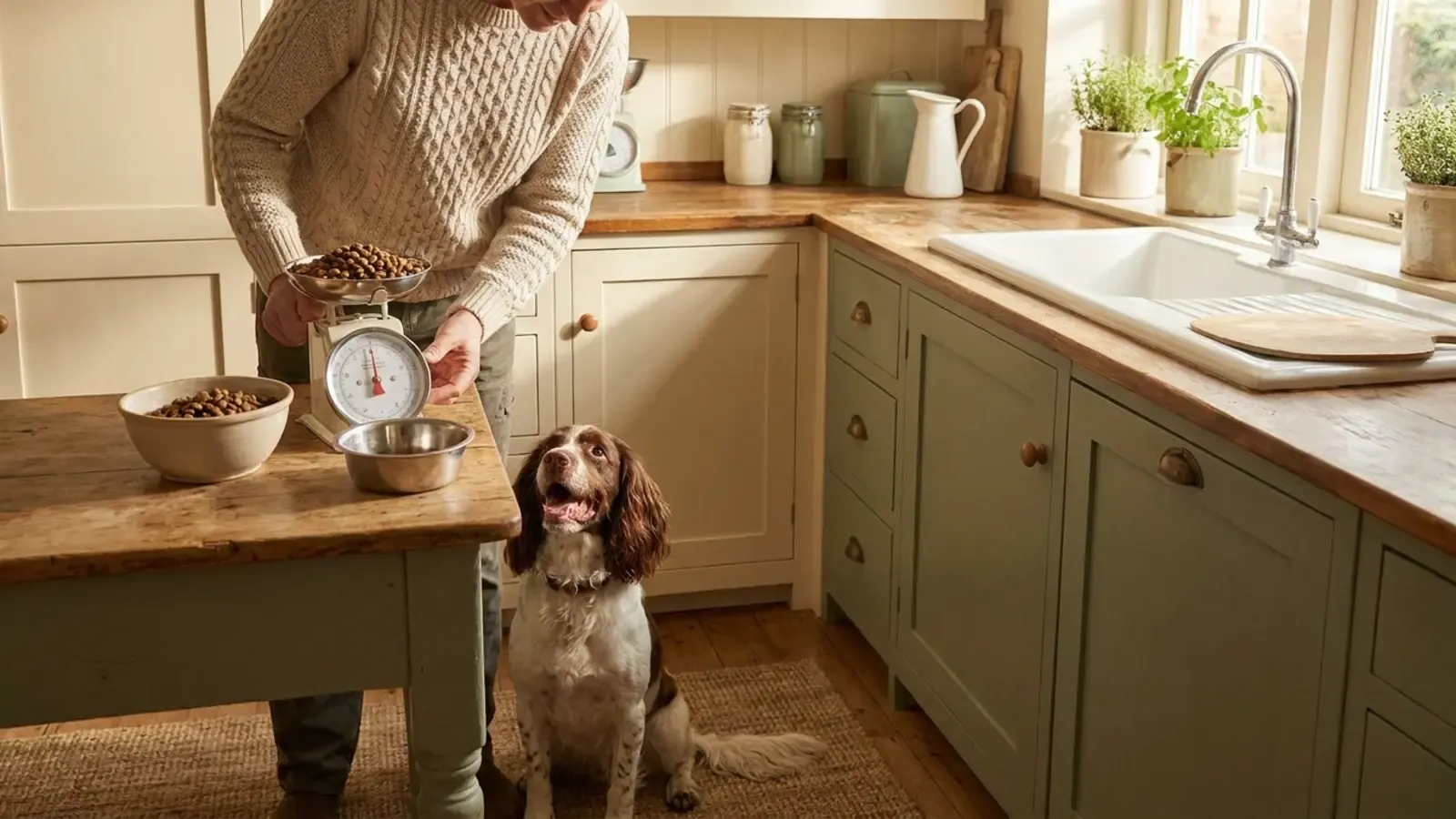
The number on the back of the food bag is a starting point for an average dog. Your dog isn’t average, and the right amount depends on their weight, age and how much they move. Here is how vets work it out, and how to check you’ve got it right.
Short answer: a normally active adult dog needs roughly 1.6 × 70 × (weight in kg)0.75 calories a day. For a 20 kg dog that is about 1,060 kcal. Our dog calorie calculator does the sum for you.
Step 1: resting energy
Vets start with the resting energy requirement (RER), what your dog burns lying still in a comfortable room:
RER = 70 × (body weight in kg)0.75
The power of 0.75 is there because energy needs don’t grow in a straight line with size: a 40 kg dog doesn’t need four times what a 10 kg dog does, closer to three.
Step 2: adjust for life stage and activity
Multiply the RER by a factor for your dog’s life:
| Dog | Multiply RER by |
|---|---|
| Puppy | 2.5 (often 3.0 under 4 months) |
| Adult, not very active | 1.4 |
| Adult, normally active | 1.6 |
| Adult, very active or working | 2.0 or more |
| Senior | 1.4 |
| Weight loss (under vet guidance) | 1.0, at the target weight |
Neutering usually lowers energy needs a little, so many neutered dogs do best near the lower figure.
Step 3: turn calories into a portion
Find the calories on the food label, usually written as kcal per kg or per cup. Then:
grams a day = daily kcal ÷ kcal per kg × 1,000
A dog needing 1,060 kcal on food with 3,600 kcal/kg needs about 295 g a day, split across meals. Weigh it: cups vary by up to 20%, and that adds up over a month.
Count the treats. Chews and training treats add up fast. Keep them under about 10% of the day’s calories, and trim meals on heavy-treat days.
Step 4: check it’s working
The formula gets you close. Your dog’s body tells you the rest.
- Weigh every two weeks at first, at the same time of day.
- Feel the ribs. You should feel them easily under a thin layer of fat, without seeing them. From above, there should be a visible waist behind the ribs.
- Adjust by about 10% if the weight drifts for two weigh-ins in a row, and check again in two weeks.
If your dog is losing or gaining weight without a change in food, or seems hungrier or less hungry than usual, talk to your vet: it can be a sign of illness.
How PetTrackr helps
PetTrackr works out your dog’s daily target from their weight, age and activity, or uses the number your vet gave you, and fills the calorie ring as you log meals. Each weigh-in is placed on the healthy range for their breed, and if a weight goal is needed it plans the calories around it and checks the pace. See how it works.
PetTrackr helps you keep track. It is not veterinary advice: if your pet seems unwell, call your vet.
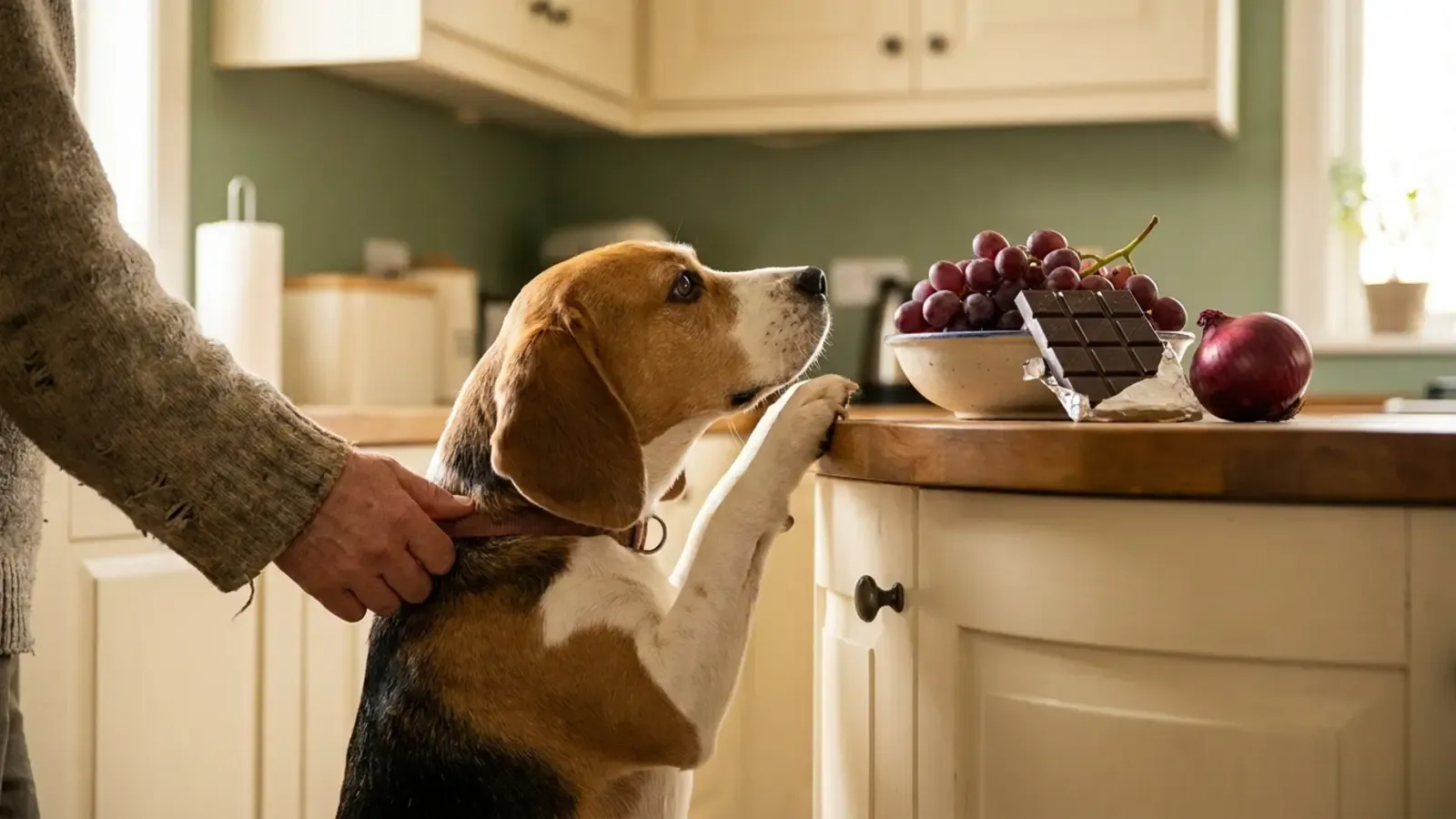 Foods toxic to dogs
 How many treats can a dog have?
 How much to feed a puppy