
How to help your dog lose weight
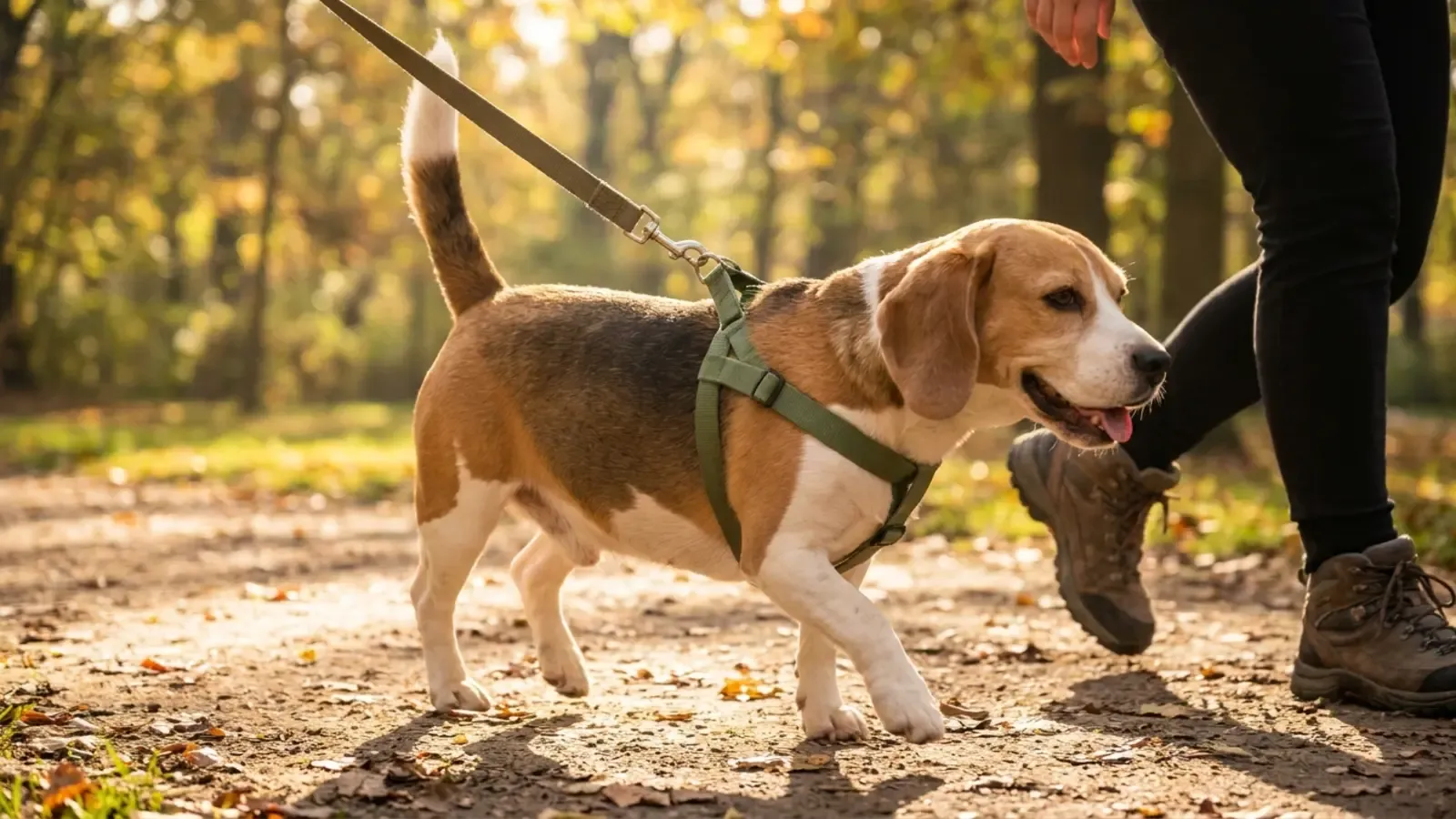
To help your dog lose weight safely, feed for the weight you want them to reach, not the weight they are now, count every treat, weigh their food, add a little more exercise, and aim to lose about 1 to 2% of their body weight a week. Start with a vet check, so you know the target and that nothing medical is behind the gain.
It takes months, not weeks. Here is a plan that works and keeps the weight off.
Step 1: see your vet first
Before you cut anything, a vet visit is worth it for three reasons:
- A target weight. Your vet can estimate your dog’s ideal weight from their frame and body condition score. If you want to check for yourself first, see is my dog overweight?.
- Ruling out a cause. Conditions such as an underactive thyroid or Cushing’s disease can cause weight gain, and a round belly can be fluid rather than fat.
- A safe starting point for dogs with arthritis, heart disease or other conditions that change how much they can exercise.
Step 2: set the target and the pace
Most vets aim for a loss of 1 to 2% of body weight per week, the rate the AAHA weight management guidelines describe as safe for dogs. Slower is fine; faster tends to cost muscle and to come straight back.
| Starting weight | 1% a week | 2% a week |
|---|---|---|
| 10 kg (22 lb) | 0.1 kg | 0.2 kg |
| 20 kg (44 lb) | 0.2 kg | 0.4 kg |
| 30 kg (66 lb) | 0.3 kg | 0.6 kg |
| 40 kg (88 lb) | 0.4 kg | 0.8 kg |
So a 30 kg dog aiming for 25 kg should expect it to take roughly two to four months, and a little longer as the weekly loss shrinks with them. If your dog has a lot to lose, your vet may set a first, closer goal and a second one after that.
Step 3: work out the calories
Start from the resting energy requirement (RER) for the target weight:
RER = 70 × (target weight in kg)0.75
A common veterinary starting point for weight loss is to feed about 1 × RER at the target weight; some vets start lower. Then adjust from the weigh-ins.
| Target weight | Daily calories to start (1 × RER) |
|---|---|
| 5 kg (11 lb) | about 235 kcal |
| 10 kg (22 lb) | about 395 kcal |
| 15 kg (33 lb) | about 535 kcal |
| 20 kg (44 lb) | about 660 kcal |
| 25 kg (55 lb) | about 780 kcal |
| 30 kg (66 lb) | about 900 kcal |
| 40 kg (88 lb) | about 1,110 kcal |
Compare that with what your dog eats now (check the bag for kcal per cup or per kg). It is often a big drop, which is why the next step matters.
Step 4: choose the right food
If the cut is small, feeding a little less of your dog’s normal food can be enough. For a bigger cut, vets usually recommend a weight-loss (therapeutic) diet. VCA warns that simply shrinking the portion of a normal food can leave a dog short of vitamins, minerals and protein, because those shrink with it. Weight-loss diets pack the full nutrient allowance into fewer calories, and many are higher in fibre and protein, which helps your dog feel full.
Whatever you feed:
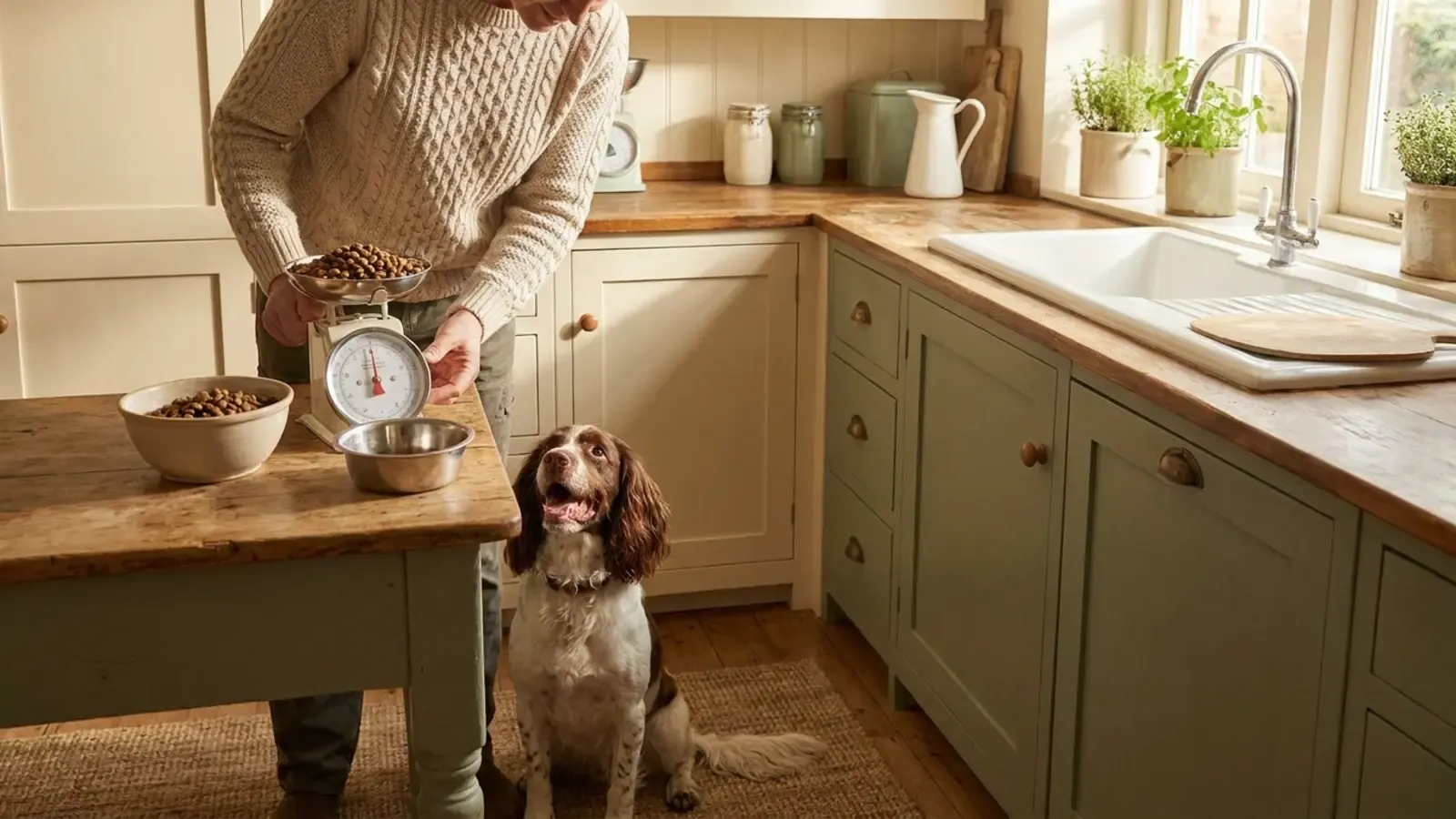
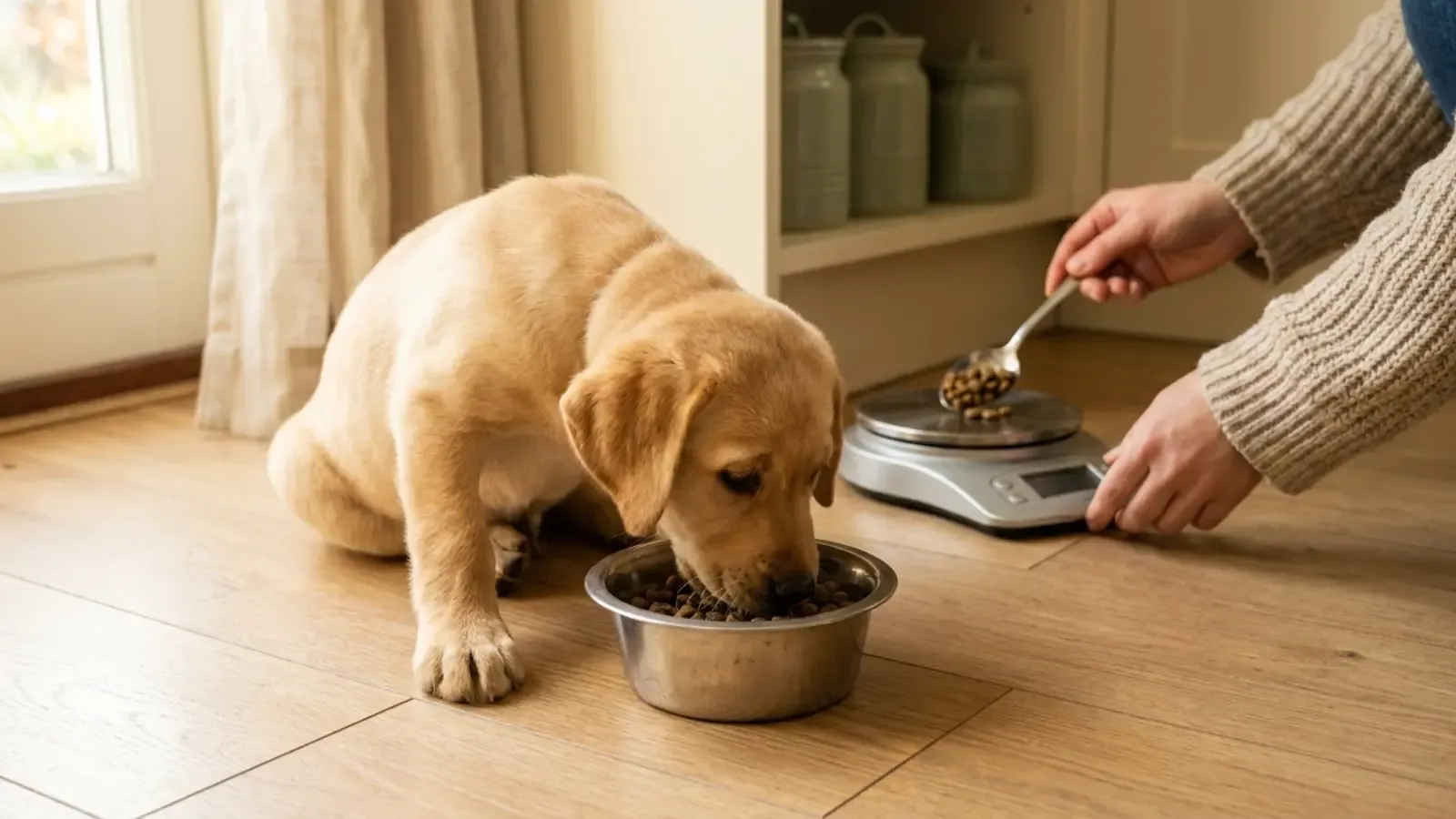
- Weigh it on a kitchen scale. Measuring cups vary widely, and a few extra grams a meal can cancel the plan.
- Split it into two or more meals, so your dog isn’t hungry all day.
- Make meals last longer with a puzzle feeder or a snuffle mat, or by scattering kibble on the grass.
Step 5: deal with treats and extras
This is where most diets quietly fail. Keep all treats, chews and table scraps to no more than 10% of the day’s calories, and take them out of the meal allowance. VCA gives the example of a 1,000 kcal day: 900 kcal from the diet, 100 kcal from treats.
Easy wins:
- Use pieces of the day’s kibble as training treats.
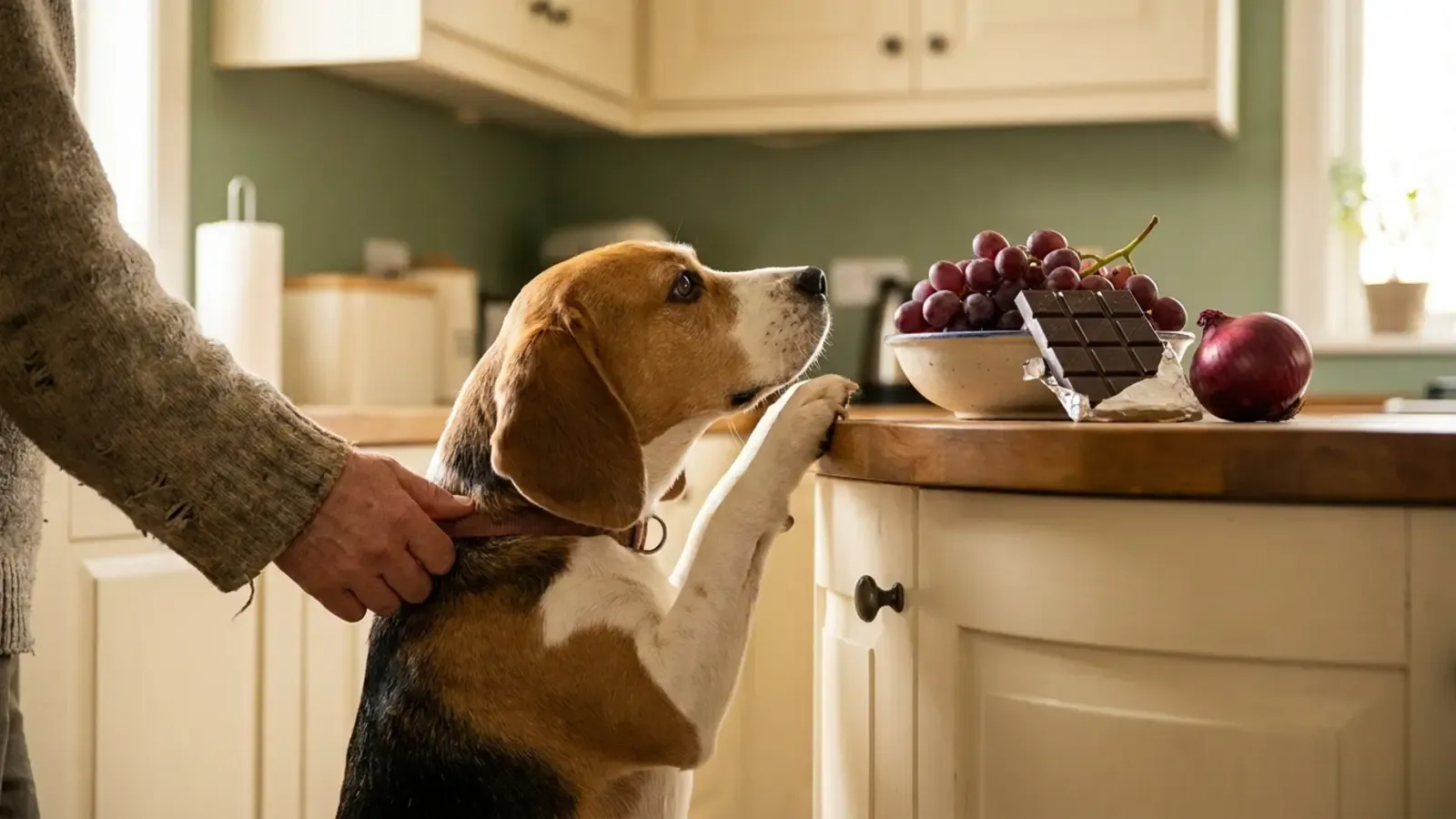
- Swap biscuits for low-calorie extras such as green beans, carrot or cucumber (skip anything on the list of foods toxic to dogs).
- Break treats into tiny pieces. Your dog cares about the number of rewards far more than their size.
- Get the whole household on board. One person sneaking toast crusts undoes the rest. A shared list of who fed what helps.
More ideas, with calorie counts, in how many treats a dog can have.
Step 6: move a bit more
Exercise on its own rarely takes off much weight, but alongside fewer calories it protects muscle, helps stiff joints and makes the new weight easier to keep.
- Build up slowly. Add five to ten minutes to walks, or an extra short walk, rather than a sudden long hike.
- Low-impact options such as swimming or hydrotherapy suit heavy or arthritic dogs. Ask your vet first.
- Play counts: fetch, scent games and tug all burn energy.
- Watch for overdoing it: heavy panting, lagging behind, limping or stiffness the next day mean ease off. Be careful in hot weather; overweight dogs overheat more easily.
How much exercise your dog needs depends on breed and age. See how much exercise a dog needs for a guide.
Step 7: weigh in and adjust
Weigh your dog every two to four weeks, on the same scale, at about the same time of day. Small dogs can be weighed by holding them on the bathroom scale and subtracting your own weight; for bigger dogs, ask your vet practice whether you can drop in and use their scale.
| What you see | What to do |
|---|---|
| Losing 1–2% a week | Keep going |
| Losing less than 1% a week for two weigh-ins | Check for hidden extras, then cut the daily calories by about 10% |
| Losing more than 2% a week | Increase the calories slightly; too fast is not better |
| Seems hungry, low on energy, or unwell | Talk to your vet |
Tracking the weigh-ins on a graph makes plateaus obvious. In PetTrackr you can set a goal weight: the app plans the daily calories around it, places each weigh-in on the healthy range for your dog’s breed, age and sex, and tells you whether the pace is on track, too fast or stalled.
Step 8: once you reach the goal
Don’t go straight back to the old portions; that is how the weight returns. Increase the daily calories gradually, by about 10% at a time, and keep weighing every few weeks until the weight holds steady. Then keep a monthly weigh-in going, and a body condition check at the same time.
When to call your vet during a diet
- Your dog refuses food for more than a day or seems unusually tired.
- They lose weight much faster than planned.
- There is vomiting, diarrhoea, or a change in drinking or peeing.
- They aren’t losing weight even when everything is counted and weighed.
PetTrackr helps you keep track. It is not veterinary advice: if your pet seems unwell, call your vet.
 Foods toxic to dogs
 How many calories does my dog need?
 How much to feed a puppy