How many treats can a dog have?
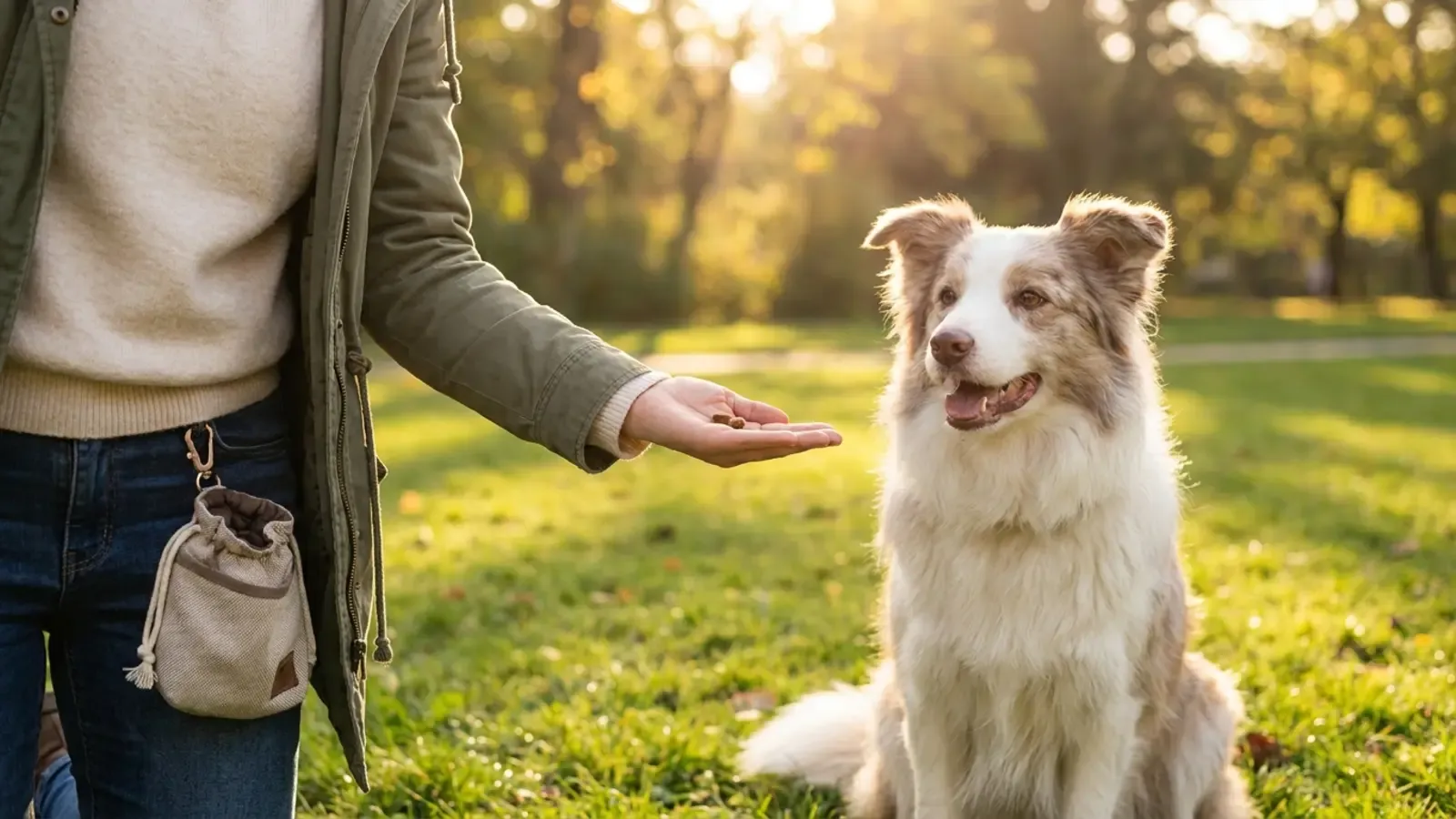
A dog can have treats worth up to about 10% of their daily calories. The other 90% should come from their complete, balanced food. For an average 20 kg (44 lb) dog that is roughly 100 kcal of treats a day; for a 5 kg (11 lb) dog, under 40 kcal. That is the rule vets and veterinary nutrition guidelines use, and it is smaller than most people expect.
The 10% rule
Treats are anything that isn’t your dog’s main food: biscuits, chews, training treats, table scraps, a lick of peanut butter, the crust of your toast. VCA gives a simple example: if a dog needs 1,000 kcal a day, 900 kcal should come from the diet and 100 kcal from treats.
Why 10%? Two reasons:
- Balance. A complete dog food is designed to supply everything your dog needs. Fill up a large share of the day with treats and the diet stops being balanced, even if the calories are right.
- Weight. Treats are the most common reason a dog’s calories creep up without anyone noticing.
Your dog’s treat allowance, by size
These figures use about 1.6 × the resting energy requirement, a typical figure for a normally active neutered adult. Less active dogs, older dogs and dogs on a diet get less; very active dogs a little more. The dog calorie calculator gives a figure for your own dog.
| Dog’s weight | Roughly needs a day | Treat allowance (10%) |
|---|---|---|
| 2 kg (4.4 lb) | about 190 kcal | about 20 kcal |
| 5 kg (11 lb) | about 375 kcal | about 35–40 kcal |
| 10 kg (22 lb) | about 630 kcal | about 60 kcal |
| 15 kg (33 lb) | about 850 kcal | about 85 kcal |
| 20 kg (44 lb) | about 1,060 kcal | about 105 kcal |
| 30 kg (66 lb) | about 1,440 kcal | about 145 kcal |
| 40 kg (88 lb) | about 1,780 kcal | about 180 kcal |
For a dog on a weight-loss plan, work out 10% of the diet calories, not the old amount. See how to help your dog lose weight.
What 10% looks like
Packaged treats print their calories per treat (or per 100 g) on the pack, and they vary enormously, so always check yours. For everyday foods, here are approximate values from USDA food data:
| Treat | Approximate calories |
|---|---|
| 1 baby carrot | 4 kcal |
| 1 medium carrot | 25 kcal |
| 10 green beans | about 15 kcal |
| 5 cucumber slices | about 5 kcal |
| 10 blueberries | about 8 kcal |
| 1 thin apple slice (no core or seeds) | about 10 kcal |
| 1 tablespoon plain canned pumpkin | about 5 kcal |
| 1 cup plain air-popped popcorn (no salt or butter) | about 30 kcal |
| 1 oz (28 g) plain cooked chicken breast | about 45 kcal |
| 1 tablespoon peanut butter (xylitol-free) | about 95 kcal |
| 1 oz (28 g) cheddar cheese | about 115 kcal |
So a tablespoon of peanut butter is more than a 10 kg dog’s entire daily treat allowance, while the same dog could have a dozen green beans and several carrot sticks and stay well inside it. A matchbox-sized piece of cheese can be two or three times a small dog’s daily treat allowance.
Chews add up fastest. Dental chews, bully sticks, rawhide alternatives and filled bones can carry a lot of calories each. If your dog has one a day, it may use up most of their allowance on its own, so read the label and count it.
Low-calorie treat ideas
- Vegetables: green beans, carrot sticks, cucumber, courgette (zucchini), a little broccoli. Raw or plain cooked, no butter, salt or seasoning.
- Fruit, in moderation: blueberries, apple slices without the core and seeds, a little watermelon without seeds or rind, banana in small pieces. Fruit is higher in sugar than vegetables. More in what fruits can dogs eat.
- Their own kibble. Take a portion out of the daily ration in the morning and use it through the day. Zero extra calories.
- Tiny pieces. Break a biscuit into eight. Your dog cares about how many rewards they get, not how big each one is.
- Food toys. Put part of a meal in a puzzle feeder or snuffle mat. The treat is the time spent working it out.
- Non-food rewards. Play, a game of tug, a sniff on a walk, a belly rub. For many dogs these are worth as much as food.
Never offer anything on the list of foods toxic to dogs: grapes, raisins, chocolate, onions, garlic, macadamia nuts, and anything containing xylitol. Check peanut butter labels for xylitol (sometimes listed as birch sugar).
Training days and puppies
Training uses a lot of rewards, and that is fine: food is a great motivator. Keep it in balance by:
- Using pea-sized pieces of a soft training treat, or kibble.
- Choosing treats with a low calorie count per piece for long sessions.
- Trimming the next meal by about the calories the treats added on heavy training days.
Puppies are trained the most and are also growing, so it matters that their main food stays the bulk of what they eat. The same 10% rule applies: see how much to feed a puppy.
Signs the treats are too much
- Your dog’s ribs are getting harder to feel, or the waist is disappearing. See is my dog overweight?.
- They are leaving meals but never refuse a treat.
- Loose stools or stomach upsets after a new treat or chew.
- Several people in the house are each giving “just one”.
That last one is the most common. A simple house rule helps: treats come out of one jar with a set daily number, or out of the day’s kibble, and everyone knows who has already given them.
PetTrackr helps you keep track. It is not veterinary advice: if your pet seems unwell, call your vet.
 How many calories does my dog need?
 How much to feed a puppy
 Is my dog overweight?