
What fruits can dogs eat?
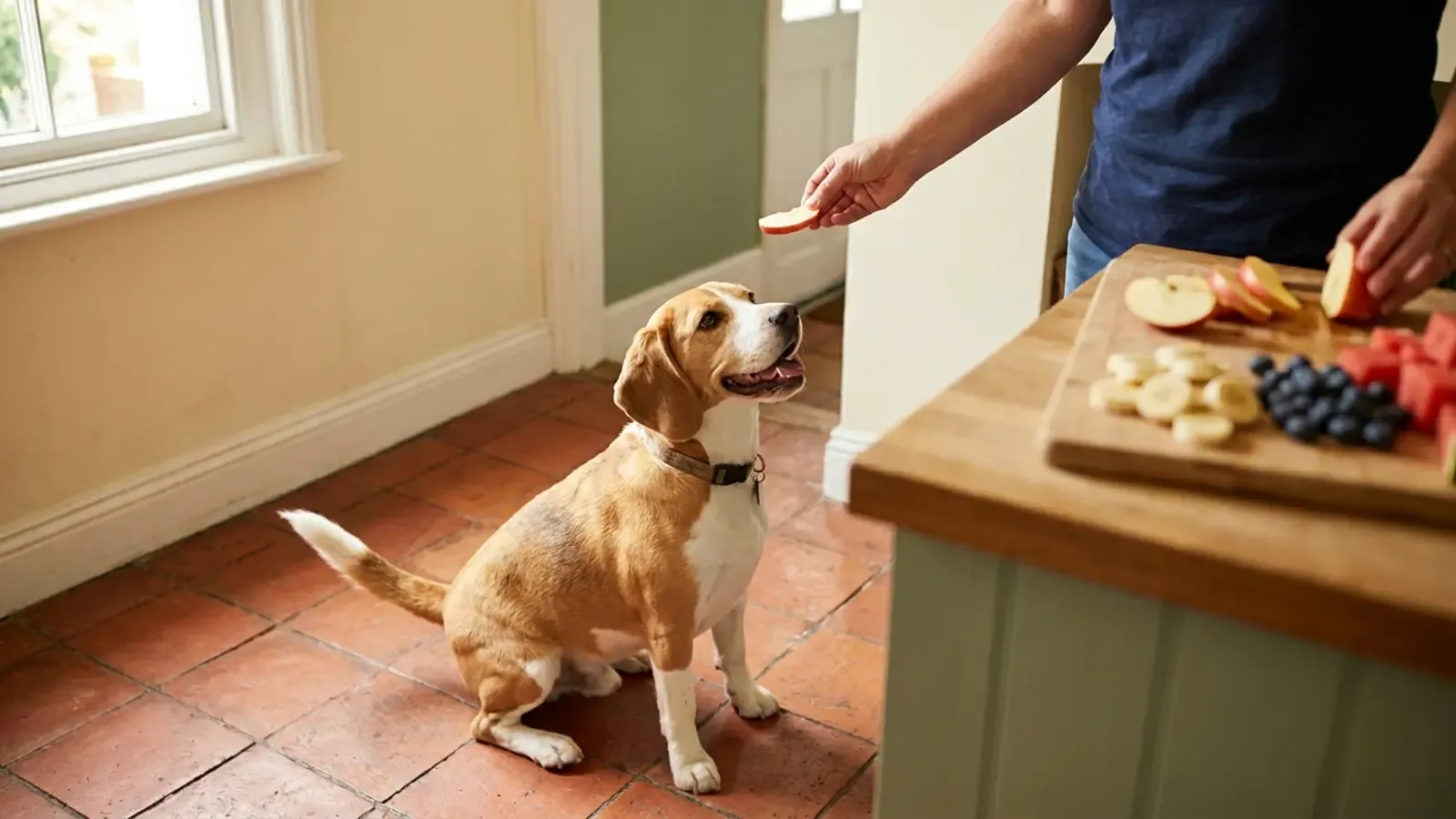
Dogs can eat many fruits as an occasional treat, including apples, bananas, blueberries, strawberries, raspberries, watermelon, cantaloupe melon, mango, pineapple, pears, peaches and oranges, as long as you remove seeds, pits, cores, rinds and peel. Grapes, raisins, currants and sultanas are never safe: they can cause sudden kidney failure. Avocado, cherries and unripe tomatoes are best avoided too.
Keep fruit to small pieces and small amounts. Together with any other treats, it should make up no more than about 10% of your dog’s daily calories.
Safe and unsafe fruits for dogs
| Fruit | Safe? | How to give it |
|---|---|---|
| Apples | Yes | Slices without the core and seeds |
| Bananas | Yes, in moderation | A few slices; high in sugar. No peel |
| Blueberries | Yes | Whole, fresh or frozen; a handful at most |
| Strawberries | Yes, in moderation | Washed, cut up for small dogs; no added sugar |
| Raspberries | Yes, in small amounts | A few at a time; they contain small natural amounts of xylitol |
| Blackberries | Yes, in small amounts | Washed, a few at a time |
| Watermelon | Yes | Flesh only: no rind, no seeds |
| Cantaloupe melon | Yes, in moderation | Flesh only, no rind or seeds; high in sugar |
| Mango | Yes, in moderation | Flesh only; remove the stone and skin |
| Pineapple | Yes, in small amounts | Fresh chunks, no skin or crown; not tinned in syrup |
| Pears | Yes | Chunks without the core, stone or seeds; not tinned in syrup |
| Peaches | Yes, in small amounts | Fresh flesh only; remove the stone completely; not tinned |
| Oranges and clementines | Yes, in small amounts | A segment or two of flesh, no peel or pips; many dogs dislike citrus |
| Cranberries | Yes, in small amounts | Fresh or frozen, unsweetened; dried ones are usually sugared |
| Coconut | Small amounts only | Flesh, no shell or husk; it is high in fat |
| Grapes, raisins, currants, sultanas | No, never | Toxic: can cause sudden kidney failure |
| Avocado | No | Pit, skin and leaves contain persin; the flesh is very fatty |
| Cherries | Best avoided | Pits, stems and leaves contain cyanide; pits can cause blockages |
| Tomatoes | Best avoided | Ripe flesh is usually fine, but green tomatoes and the plant contain solanine |
| Plums, apricots, nectarines | Flesh only, with care | Stones contain cyanide compounds and are a choking and blockage risk |
| Lemons and limes | Best avoided | Very sour, and the peel and oils can upset the stomach |
Fruits dogs should never eat
Grapes, raisins, currants and sultanas
These are the fruits that matter most. Grapes and their dried forms can cause acute kidney failure in dogs. ASPCA Animal Poison Control believes tartaric acid is the likely toxic component, and dogs vary hugely in how they react: some become very ill after a small amount, so there is no known safe dose.
Watch out for them hidden in other foods: fruit cake, mince pies, hot cross buns, trail mix, cereal bars, fruit loaf and some granolas.
If your dog has eaten any grapes or raisins, call your vet or a pet poison helpline straight away, even if they seem fine. Early treatment matters, and signs such as vomiting, lethargy and drinking or weeing less may not appear until later. Don’t try to make your dog sick at home: let your vet decide what to do.
Avocado
The pit, skin and leaves contain persin, which can cause vomiting and diarrhoea in dogs, and the flesh is very high in fat, which can upset the stomach or contribute to pancreatitis. The large stone is also a serious choking and blockage risk.
Cherries
The fleshy fruit isn’t the problem. The pits, stems and leaves contain cyanide, and a swallowed pit can block the gut. Signs of cyanide poisoning, such as dilated pupils, difficulty breathing and bright red gums, are an emergency.
For a fuller list beyond fruit, including chocolate, onions, xylitol and macadamia nuts, see our guide to foods toxic to dogs.
The trouble with seeds, pits, cores and rinds
Even with safe fruits, the inedible parts cause most of the problems:
- Stones and pits (peaches, plums, apricots, nectarines, mangoes, cherries) can cause choking or a blockage in the intestines, and many contain compounds that release cyanide when chewed.
- Apple and pear seeds contain small amounts of the same compounds. A few swallowed seeds are unlikely to harm a dog, but core and deseed the fruit anyway.
- Rinds and peels (watermelon, melon, citrus, banana) are hard to digest and can cause stomach upset or blockages.
- Leaves, stems and plants of tomatoes, cherries and avocados are more toxic than the fruit.
If your dog swallows a whole stone and then vomits repeatedly, strains, stops eating or seems to have tummy pain, see your vet urgently: these can be signs of a blockage.
How much fruit can a dog have?
Fruit is a treat, not a meal. The widely used rule is that treats should be no more than about 10% of your dog’s daily calories, and that 10% includes fruit, chews, training treats and anything from the table. The rest should come from a complete dog food.
As a rough guide to portions:
| Dog size | A sensible fruit treat |
|---|---|
| Toy (under 5 kg) | One or two blueberries, or a thin slice of apple |
| Small (5–10 kg) | A few blueberries, or a couple of small apple or banana pieces |
| Medium (10–25 kg) | A small handful of blueberries, or a few chunks of apple or melon |
| Large (25 kg and up) | A handful of berries, or several chunks of apple, melon or banana |
To work out your own dog’s daily calories, try our dog calorie calculator, and see how many treats a dog can have for the full 10% rule with examples.
A few more tips:
- Introduce one new fruit at a time, in a small amount, and watch for loose stools or vomiting.
- Cut fruit into bite-sized pieces for your dog’s size to avoid choking. Even a whole blueberry can be a mouthful for a tiny dog.
- Fresh or frozen is best. Avoid tinned fruit in syrup, dried fruit (concentrated sugar, and dried grapes are toxic), fruit yoghurts and anything sweetened, especially with xylitol.
- Go easy if your dog is overweight or diabetic. Sweet fruits such as bananas, mango and melon add up quickly. Lower-sugar options such as a few blueberries are better, and ask your vet first for a diabetic dog.
- Frozen fruit makes a good summer treat: frozen blueberries, or banana mashed into a food toy and frozen.
If you are using fruit to help a dog cut back on richer treats, keeping an eye on the scales shows whether it is working. PetTrackr tracks your dog’s weight against the healthy range for their breed, age and sex, along with a daily calorie target.
PetTrackr helps you keep track. It is not veterinary advice: if your pet seems unwell, call your vet.
 How many calories does my dog need?
 How much to feed a puppy
 How to help your dog lose weight