
Signs of an ear infection in dogs
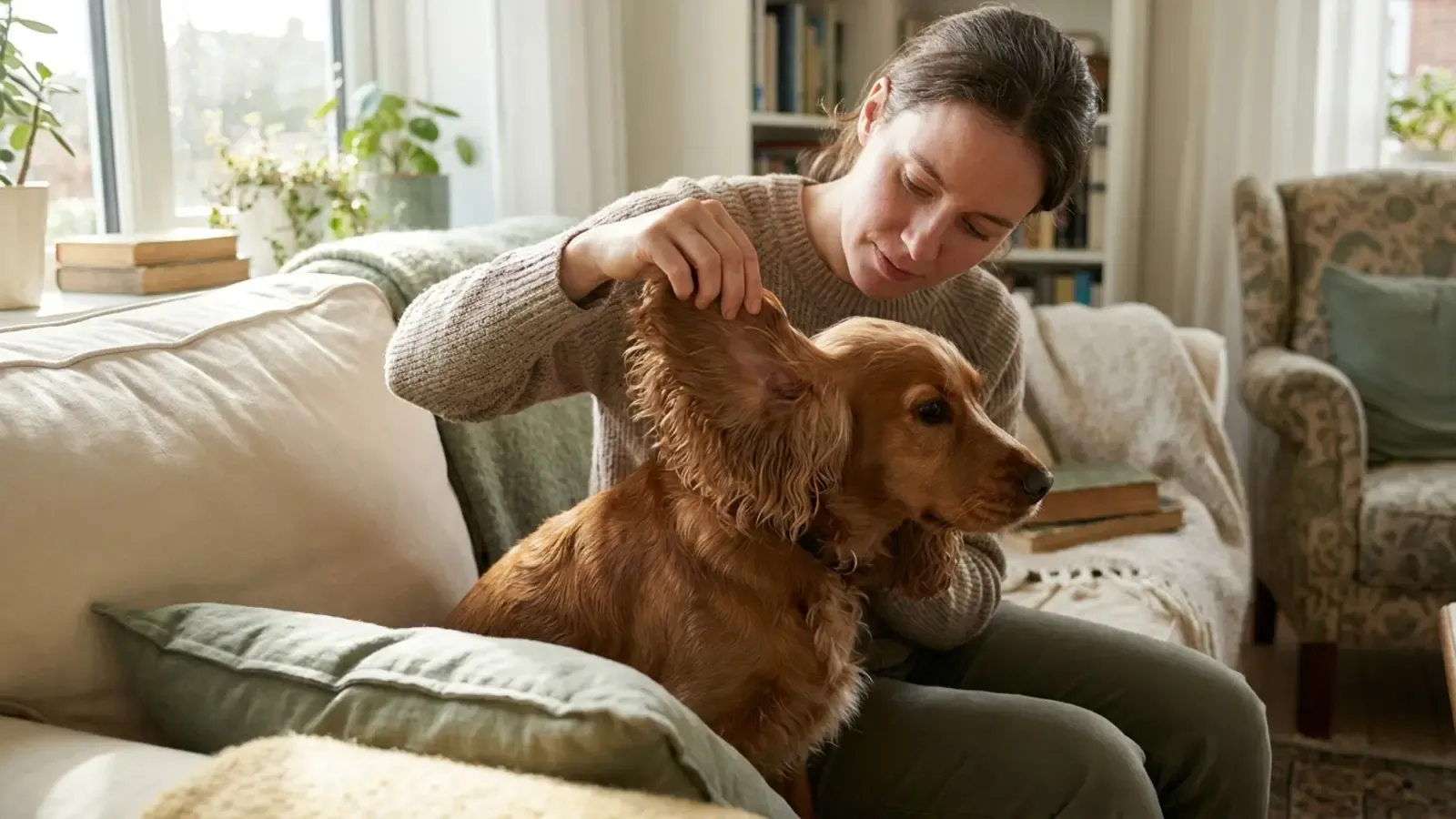
The main signs of an ear infection in dogs are head shaking, scratching or rubbing at one ear, a bad smell, dark or yellow discharge, and a red, swollen or sore ear canal. Your dog may yelp or pull away when you touch the ear. Most ear infections aren’t emergencies, but they won’t clear up properly without the right medicine, so book a vet visit within a day or two, and don’t put anything into the ear first.
Signs of an ear infection
| Sign | What you might notice |
|---|---|
| Head shaking | Frequent, hard shakes, often with ears flapping |
| Scratching or rubbing | Pawing at one ear, rubbing the head on the floor or furniture |
| Smell | A yeasty, sour or rotten smell from the ear |
| Discharge | Brown, black, yellow or green waxy or runny material |
| Redness and swelling | Red skin inside the ear flap and canal, narrowed opening |
| Pain | Flinching, yelping or growling when the ear or head is touched; reluctant to chew |
| Crusts or thickening | Scaly, crusty skin around the ear; thick, hard ear canal in long-standing cases |
| Hearing or balance changes | Not responding as usual, head tilt, stumbling, walking in circles |
One ear or both can be affected. Many owners first notice the smell.
When to see a vet the same day
- A head tilt, loss of balance, circling, or flicking eyes: the infection may have reached the middle or inner ear
- A suddenly swollen, puffy ear flap (an aural haematoma, from a burst blood vessel caused by shaking), which usually needs treatment
- Severe pain, or your dog seems unwell or off their food
- Sudden, frantic head shaking after a walk through long grass, which can mean a grass seed is stuck in the canal
What causes ear infections in dogs?
A dog’s ear canal is long and L-shaped, so it traps warmth, moisture and debris more easily than ours. Bacteria and yeast that normally live on the skin can then overgrow. Usually something sets that off:
- Allergies. The most common underlying cause. VCA notes allergies are involved in as many as 43% of ear infection cases, and ear infections occur in 65% to 80% of dogs with food allergies. Environmental allergies (pollen, dust mites) are a big cause too. If your dog also licks their paws or itches elsewhere, see dog itching and scratching.
- Moisture. Swimming, bathing and humid weather leave the canal damp.
- Ear mites. More common in puppies, and easily caught from cats or other young animals.
- Foreign bodies. Grass seeds especially, in summer.
- Hormonal disease. An underactive thyroid can cause repeated infections.
- Growths. Polyps or tumours in the canal, more often in older dogs.
- Too much cleaning, or cleaning with the wrong thing, which irritates the canal.
Breeds prone to ear infections
Any dog can get an ear infection, but some are more at risk:
- Floppy, heavy or hairy ears, which trap warmth and moisture: cocker spaniels, basset hounds, poodles, Old English sheepdogs and many retrievers and spaniels
- Breeds prone to skin allergies, such as retrievers, terriers, French bulldogs and West Highland white terriers
- Narrow ear canals, as in shar-peis and some bulldogs
- Dogs who swim a lot
If your dog is one of these, ask your vet whether regular checks or a gentle cleaning routine would help.
Why not to put anything in your dog’s ear
It is tempting to have a look with a cotton bud or reach for a home remedy. Please don’t:
- Cotton buds and anything pointed push wax and debris deeper down the canal, pack it against the eardrum and can injure it. The AKC advises against using them in the ear canal at all.
- Hydrogen peroxide, vinegar, alcohol and oils can sting and irritate an already inflamed ear, and some are harmful if the eardrum is damaged.
- Leftover drops, or drops from another pet, may be the wrong medicine for this infection, and some ear medicines can damage hearing if the eardrum is torn.
- Cleaning before the vet visit removes the very material your vet needs to examine.
Only your vet can see whether the eardrum is intact, which is why they look first and treat second.
What happens at the vet
- Examination with an otoscope to look down the canal, check the eardrum and spot anything stuck inside. A very painful or blocked ear may need sedation.
- Ear cytology: a swab of the discharge looked at under the microscope to see whether bacteria, yeast or both are involved. VCA calls this essential for choosing the right medicine.
- Culture in severe or repeated cases, to find which antibiotic will work.
- Treatment: usually a thorough clean, then ear drops or a gel containing an antibiotic, antifungal and anti-inflammatory. Painful or deep infections may need tablets as well.
- A recheck to make sure the infection has cleared, not just improved. Stopping too soon is a common reason infections come back.
Give the medicine for the full course, exactly as prescribed, even if the ear looks better after a few days. If remembering daily drops is the tricky part, PetTrackr can remind you at each dose until the course is done.
For dogs who keep getting ear infections, your vet will look for the underlying cause, most often an allergy, because treating only the infection means it comes back.
Preventing ear infections
- Check your dog’s ears weekly. A healthy ear is pale pink, clean or with a little light wax, and doesn’t smell.
- Dry the ears after swimming and baths with a soft towel or cotton wool around the outer ear.
- Clean only if your vet recommends it, with a vet ear cleaner, wiping only the parts you can see.
- Manage allergies with your vet, and keep up flea prevention.
- Check ears after walks in long grass during summer.
Most ear infections clear up well with prompt treatment. The sooner your vet sees the ear, the simpler it usually is.
PetTrackr helps you keep track. It is not veterinary advice: if your pet seems unwell, call your vet.
 Dog diarrhoea – what to do
 Dog vomiting – when to worry
 How much should a dog sleep?