
How to brush a dog’s teeth
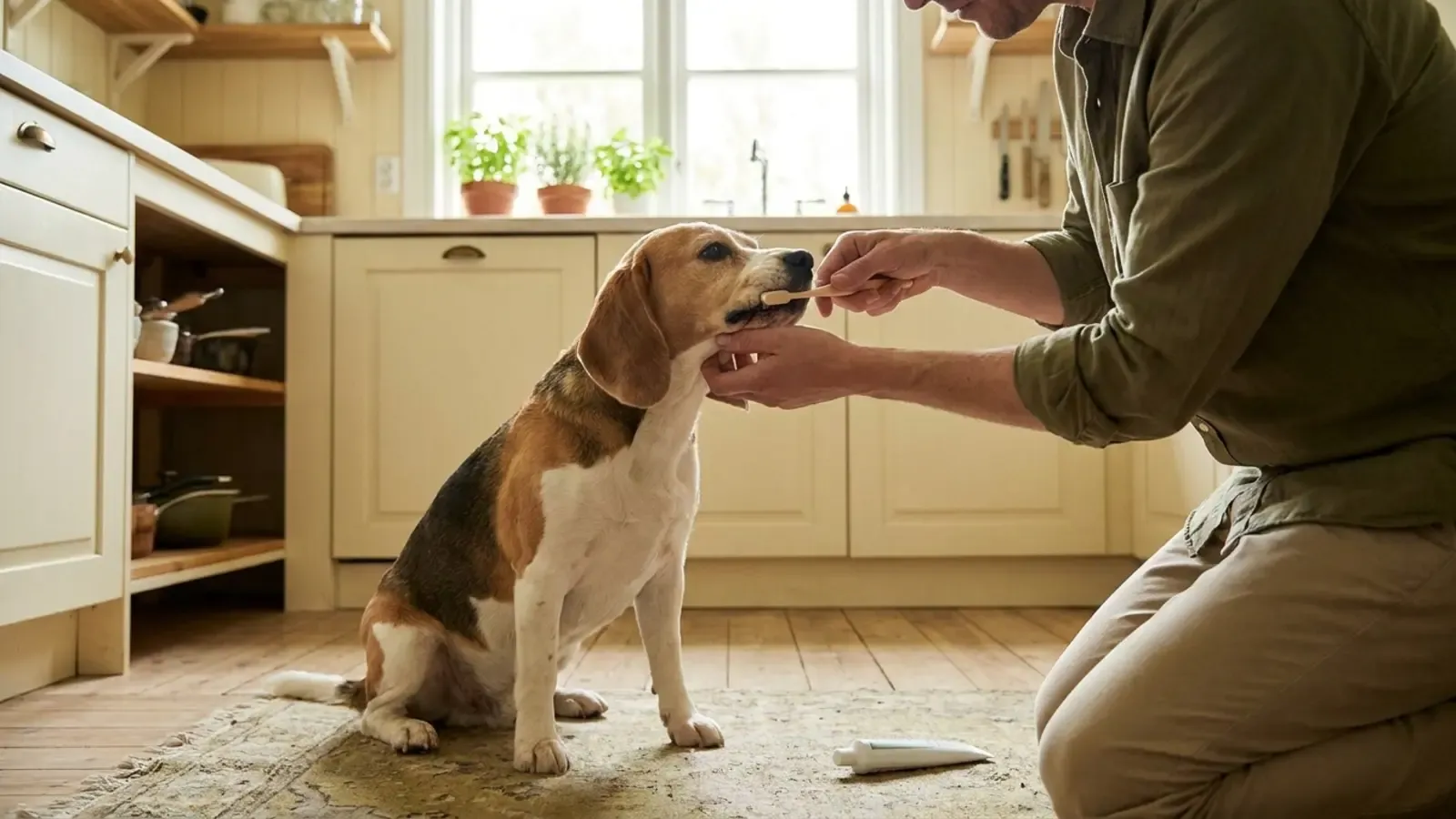
To brush your dog’s teeth, use a soft dog toothbrush or finger brush and a toothpaste made for pets (never human toothpaste), lift the lip, and brush the outside surfaces of the teeth along the gum line in small circles, especially the big back teeth. Aim for every day: the Veterinary Oral Health Council calls daily brushing the standard, and any regular brushing is better than none. Introduce it gradually over a week or two so your dog learns to enjoy it.
Brushing is the most effective thing you can do at home for your dog’s teeth. The University of Illinois vet school calls it the gold standard of at-home dental care. Here is how to start, even with a dog who has never had a toothbrush near them.
Why brushing matters
Plaque, a soft film of bacteria, builds up on teeth every day. Left alone, it hardens into tartar within days and inflames the gums. Over time that can lead to painful gum disease, loose teeth and infection. Dental disease is one of the most common problems vets see in adult dogs, and because dogs hide pain well, many owners don’t notice until it is advanced.
Brushing removes plaque before it hardens. It can’t remove tartar that is already there; only a professional cleaning by your vet can.
How often to brush
| How often | What to expect |
|---|---|
| Every day | Ideal. Recommended by the VOHC and most vets |
| Every other day | Still very helpful; the University of Illinois vets suggest daily or every other day |
| A few times a week | Better than nothing, but plaque has time to harden in between |
| Occasionally | Little lasting benefit; build up to more often |
The upper back teeth, on the cheek side, build up plaque fastest, according to the VOHC. If you only have time for a quick brush, focus there.
What you need
- Pet toothpaste. It is made to be swallowed and comes in flavours dogs like, such as poultry or beef. Look for products carrying the VOHC seal, which means they have been tested for plaque or tartar control.
- A toothbrush: a soft dog toothbrush, a double-headed brush, a finger brush, or a soft child’s toothbrush.
- Treats or praise for afterwards.
Never use human toothpaste
Human toothpaste is made to be spat out, and dogs swallow it. The University of Illinois vets warn that it may contain fluoride and xylitol, which are toxic to animals. Xylitol, a sweetener also found in some sugar-free gum and sweets, can be dangerous to dogs even in small amounts. If your dog swallows a product containing xylitol, call your vet or an animal poison helpline straight away.
Don’t use baking soda or salt either.
How to introduce brushing, step by step
Go slowly, keep sessions short and end on a good note. Starting young is ideal, but be extra gentle while a puppy is teething. Spend a few days on each step, or longer if your dog needs it.
- Get them used to mouth handling. With your dog relaxed beside you, gently touch their muzzle and lift their lip for a second. Praise and treat. Build up over a few days.
- Taste the toothpaste. Let your dog lick a little pet toothpaste off your finger. Most dogs love it, which makes it a reward in itself.
- Rub a finger along the teeth. Put toothpaste on your finger, lift the lip, and rub along the outside of a few teeth and the gum line.
- Introduce the brush. Let your dog lick toothpaste off the brush. Then touch the brush to a front tooth for a second.
- Brush a few teeth. Lift the lip and brush a few teeth with gentle circles, then stop and praise.
- Build up to the whole mouth, adding a few teeth each session, until you can brush all the outside surfaces in about a minute or two.
If your dog pulls away, you have moved too fast. Go back a step.
How to brush: the technique
- Position: sit or kneel beside your dog rather than facing them head-on. Small dogs may be easier on your lap.
- Lift the lip with one hand and brush with the other.
- Angle the bristles towards the gum line, where plaque collects, and use small circles.
- Concentrate on the outside surfaces (the cheek side). Dogs’ tongues help clean the inner surfaces, and most dogs won’t tolerate brushing there anyway.
- Don’t forget the back teeth: the large upper cheek teeth collect the most plaque.
- Don’t open their mouth wide. Brushing with the mouth closed and the lip lifted is easier for most dogs.
- Finish with a reward: praise, a game or a walk.
If your dog won’t let you brush
- Try a finger brush or dental wipe instead of a toothbrush.
- Try a different toothpaste flavour.
- Go back to an easier step and progress more slowly.
- Use helpers alongside: VOHC-accepted dental chews, diets and water additives can help, though the University of Illinois vets note water additives aren’t as effective as brushing. Always leave plain water available too.
If brushing seems painful, stop and see your vet. A sore mouth makes brushing miserable, and it is a sign something needs attention.
Remembering to do it every day is often the hardest part. In PetTrackr, teeth brushing can sit on your dog’s daily plan with a reminder, alongside walks and meals.
Signs of dental problems
See your vet if you notice:
- Bad breath that is more than mild doggy breath
- Red, swollen or bleeding gums
- Yellow or brown tartar on the teeth
- Loose, broken or discoloured teeth
- Pawing at the mouth, drooling or frequently licking lips
- Chewing on one side, dropping food, or reluctance to eat hard food or play with chew toys
- Swelling on the face or under an eye
Your vet will check your dog’s teeth at their regular check-up, and dental problems become more common with age (see senior dog care). Many dogs need a professional dental cleaning under anaesthetic at some point, which removes tartar above and below the gum line and lets the vet examine every tooth. Brushing doesn’t replace those checks, but it can make the time between cleanings much longer.
PetTrackr helps you keep track. It is not veterinary advice: if your pet seems unwell, call your vet.
 How much exercise does a dog need?
 How often to bathe a dog
 How to remove a tick from a dog