How to give a dog a pill
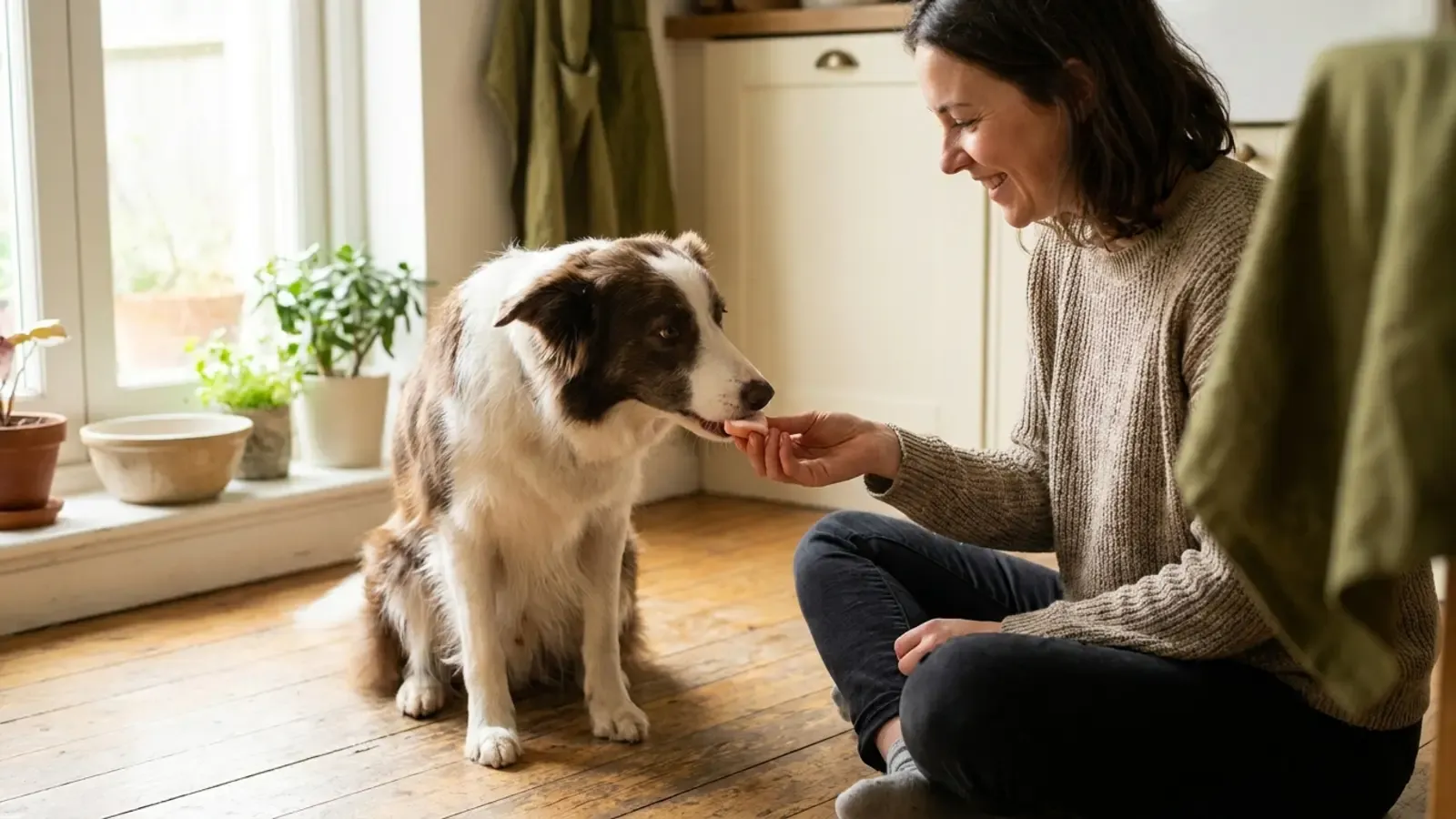
The easiest way to give a dog a pill is to hide it in a small piece of soft food they love, like a pill pocket treat, a little wet food or a piece of cheese, and offer it by hand, ideally with a plain treat before and after so they don’t notice. If your dog finds it every time, you can place the pill at the back of the tongue by hand, which is quick once you know how. Always read the label first: some medicines must be given with food, some on an empty stomach, and some should never be crushed.
Before you start
- Read the label and your vet’s instructions. Note the dose, how often, and whether it goes with food or on an empty stomach.
- Ask before crushing, splitting or opening capsules. Many tablets have a coating that protects the stomach, hides a bitter taste, or releases the medicine slowly over the day. Crushing can stop them working properly, and a crushed bitter tablet often makes a dog refuse the whole meal. If a tablet needs splitting, ask whether it is scored for it, and use a pill splitter.
- Pick the right moment. When your dog is calm and a bit hungry, not mid-meal, mid-play or asleep.
- Have everything ready. Pill out of the packet, treats in reach, before you call your dog over.
- Stay relaxed. Dogs pick up on nerves. Make it a quick, cheerful moment.
Method 1: hide it in food
This works for most dogs and is the least stressful for both of you.
Good wraps (a small amount, just enough to cover the pill):
- Pill pocket treats, made with a hole for the tablet
- A spoonful of wet dog food, rolled into a ball
- A small cube of cheese or cream cheese, if your dog tolerates dairy and the medicine allows it
- Plain cooked chicken or a slice of meat wrapped around it
- Peanut butter, only if the label shows no xylitol, which is highly toxic to dogs
- Plain cooked sweet potato or a little plain pumpkin purée
Avoid: anything toxic to dogs (grapes, raisins, chocolate, onion, garlic, xylitol; see foods toxic to dogs), fatty foods for dogs prone to pancreatitis, and dairy with medicines whose label says not to.
The three-treat trick
Dogs that eat fast rarely inspect the third treat in a row.
- Give a plain treat, no pill. Praise.
- Give the treat with the pill inside, straight away.
- Have the third treat visible in your hand, so they gulp the second to get to it.
- Give the third treat. Praise.
Handle all the treats the same way so the pill one doesn’t smell of the tablet; touching the pill and then the wrap transfers its smell. Some owners wear a glove or handle the pill last.
Don’t stir a pill into a full bowl of food. Your dog may eat around it, leave it for later, or a second pet may eat it, and you can’t be sure of the dose. Check the floor and the bowl afterwards for a spat-out pill.
Method 2: give it by hand
If your dog finds every hidden pill, placing it directly is often quicker. Practise when you don’t need to give a pill, with a small treat, so it is no big deal on the day.
- Get set. Have your dog sit, ideally in a corner so they can’t back away. With a small dog, kneel beside them or have a helper hold them gently.
- Hold the pill between the thumb and index finger of your dominant hand. Coating it in a little soft food or butter helps it slide.
- Hold the top of the muzzle with your other hand: thumb on one side behind the canine tooth, fingers on the other.
- Tilt the head back gently so the nose points up. The lower jaw tends to drop open a little.
- Open the mouth wider by pressing gently on the lower front teeth with the ring and little fingers of the hand holding the pill.
- Drop or push the pill well back over the hump of the tongue, in the middle. Don’t put your fingers too far back; that makes dogs gag.
- Close the mouth and hold it gently closed, with the head level rather than tipped up.
- Encourage swallowing by gently stroking the throat or blowing lightly on the nose. A lick of the nose usually means it has gone down.
- Reward straight away with a treat, praise or a game.
Following the pill with a little water or a bit of food helps it go all the way down rather than sitting in the food pipe. You can offer a treat, or gently squirt a few millilitres of water into the side of the mouth with a needle-free syringe.
Pill givers
A pill giver (pill gun or pill popper) is a plastic plunger that holds the pill at the tip and pushes it onto the back of the tongue, keeping your fingers out of the mouth. Your vet clinic can show you how to use one safely. Be gentle: pushing it too far or too hard can injure the throat.
If it’s not working
- Ask about other forms. Many medicines come as liquids or chewable tablets. A compounding pharmacy may be able to make a medicine into a flavoured liquid or chew. Your vet will know if that is safe for the drug.
- Ask your vet clinic to show you. A nurse or technician can demonstrate, and it’s far easier after seeing it once.
- Don’t turn it into a wrestling match. If your dog is getting stressed, stop, reset, and try again later or try another method. Forcing it makes the next dose harder.
- Never hold your dog’s head back and pour liquid or water into the mouth; tip the head only slightly and give liquids slowly into the cheek pouch so they can swallow, not inhale.
If a dose goes wrong
- Your dog spat it out: give it again if you find it intact.
- You’re not sure they swallowed it, or they vomited soon after: don’t give another dose without checking. Call your vet.
- You missed a dose: check the label or call your vet. For many medicines you give it when you remember, unless the next dose is nearly due, but don’t double up without advice.
- Two people gave it by mistake: call your vet, or an animal poison control line if the medicine is one that could be dangerous in a double dose.
Keeping track of a course
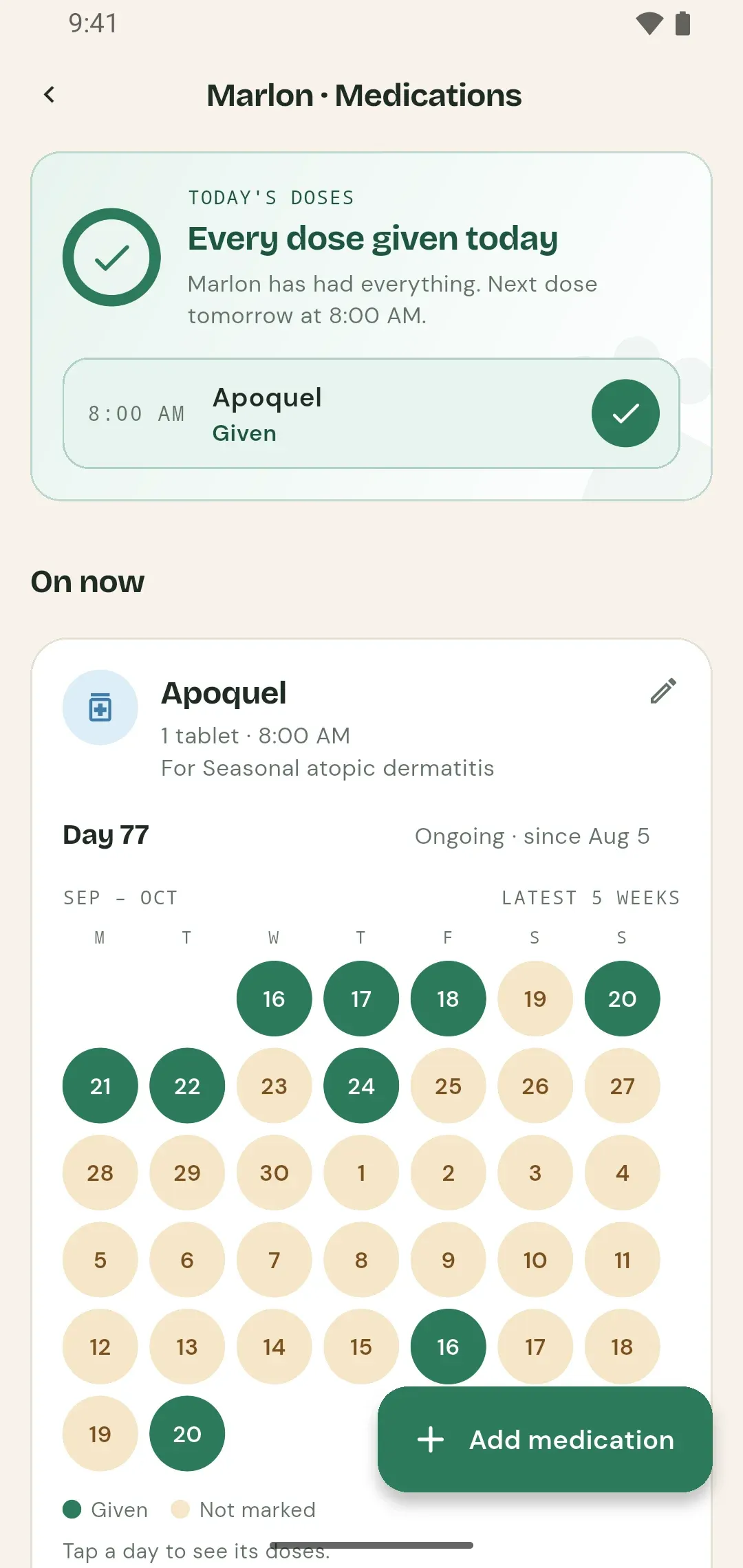
The hardest part of a long course is often remembering, especially when several people in the family give doses. A note on the fridge or a tick chart helps. PetTrackr reminds you when each dose is due, lets you mark it given straight from the notification, and warns you if two people log the same dose, or before the pack runs out.
Always finish the course your vet prescribed, even if your dog seems better, unless your vet tells you to stop.
PetTrackr helps you keep track. It is not veterinary advice: if your pet seems unwell, call your vet.
 Dog diarrhoea – what to do
 Dog itching and scratching
 Dog vomiting – when to worry