
Senior dog care
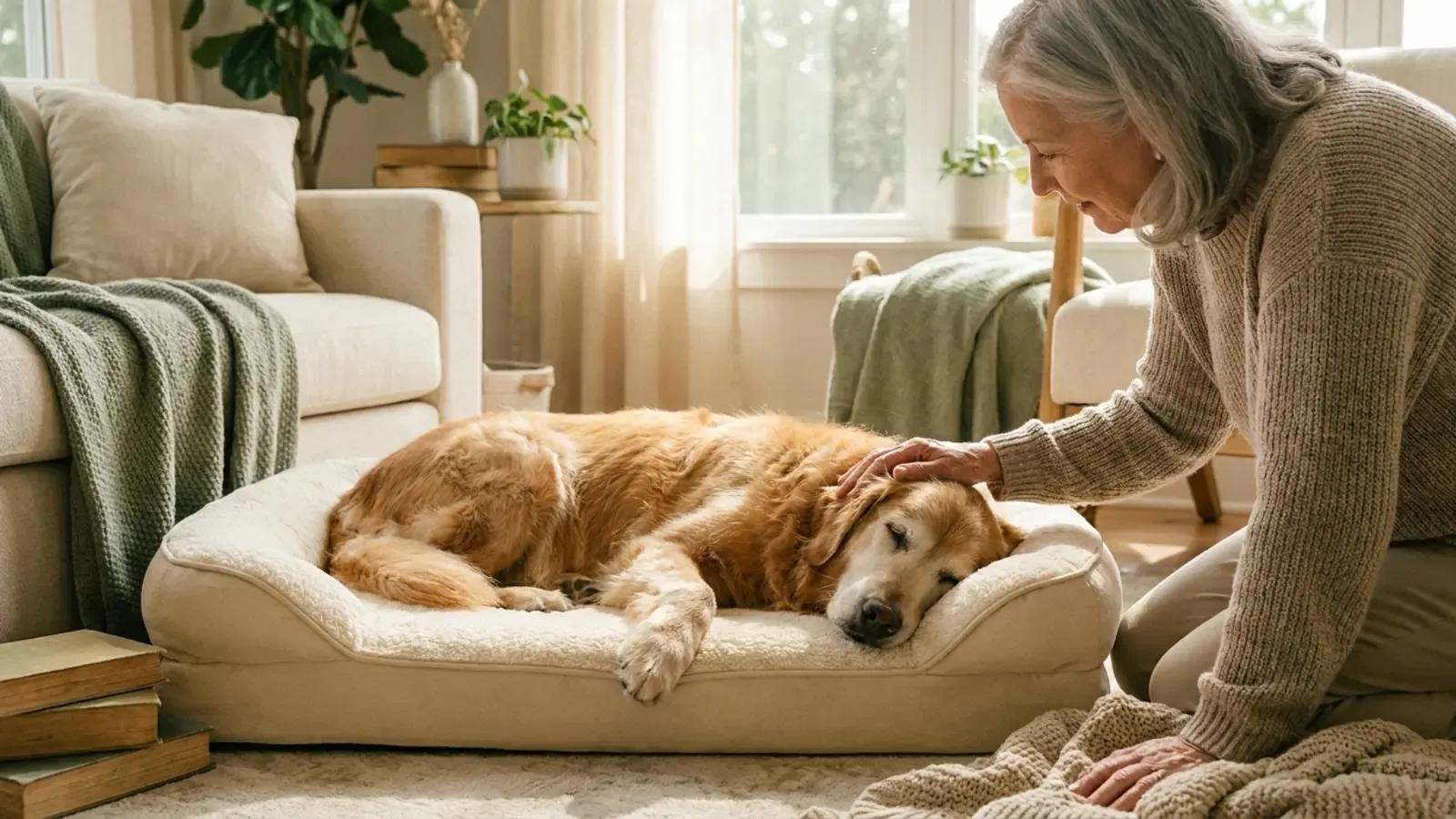
A dog is usually considered senior in the last quarter of its expected lifespan, which for most dogs means somewhere between 6 and 11 years old, earlier for big breeds. Good senior dog care comes down to five things: vet checks twice a year, a diet that keeps them lean, gentle daily exercise, help with sore joints, and a home that is easier to get around.
Age is not a disease. Plenty of changes people put down to “just getting old” are pain, illness or confusion that can be treated, which is why the vet visits matter more now than ever.
When is a dog a senior?
There is no single age, because small dogs live much longer than giant ones. The AAHA defines senior as the last 25% of a dog’s estimated lifespan. The AVMA translates that into rough ages by size:
| Size | Typical adult weight | Senior from about |
|---|---|---|
| Small and toy breeds | under 20 lb (9 kg) | 8–11 years |
| Medium breeds | 20–50 lb (9–23 kg) | 8–10 years |
| Large breeds | 50–90 lb (23–41 kg) | 8–9 years |
| Giant breeds | over 90 lb (41 kg) | 6–7 years |
A Chihuahua at 9 may still be in mid-life; a Great Dane at 7 is an old dog. If you want to put your dog’s age into human terms, see dog years to human years or try the dog age calculator.
Vet checks: twice a year
The AVMA recommends that senior pets see a vet twice a year or more. A senior check-up is like a younger dog’s, but more thorough. Expect your vet to:
- Weigh your dog and score their body and muscle condition
- Feel for lumps and look closely at the mouth, eyes and paws
- Check joints and how your dog walks
- Ask about drinking, appetite, sleep, toileting and behaviour
- Suggest blood and urine tests every 6 to 12 months, as the AAHA guidelines recommend, plus blood pressure where needed
Before each visit, jot down anything you have noticed: drinking more, a new lump, slowing on walks, accidents indoors. A short video of your dog getting up or climbing stairs is very useful to your vet.
Signs that should not wait for the next check-up
The AVMA lists these as possible warning signs in older pets. Book a visit if you notice:
- Weight loss or a drop in appetite
- Drinking or urinating much more than usual
- Lumps, bumps or sores that don’t heal
- Persistent vomiting or diarrhoea
- Difficulty eating, swallowing or breathing
- Bleeding from the mouth, nose or elsewhere
- A swollen belly, or unexplained swelling, heat or lameness
Collapse, trouble breathing, a swollen hard belly with retching, or a seizure are emergencies: call your vet or an emergency clinic straight away.
Diet and weight
Most older dogs need fewer calories than they did, because they are less active, but they also tend to lose muscle and gain fat. The AAHA guidelines suggest a senior diet with slightly lower calorie density, more fibre, and mildly more good-quality protein to protect muscle.
There is no official standard for what counts as a “senior” dog food, so the label alone tells you little. Ask your vet what suits your dog, especially if they have kidney, heart or dental problems.
Keeping your dog lean is one of the most useful things you can do. Extra weight puts more strain on stiff joints, and the AAHA notes that calorie restriction has been shown to lengthen dogs’ lives, with an ideal body condition score of about 4.5 to 5 out of 9. Our guide is my dog overweight? shows how to check, and the dog calorie calculator gives you a starting point for daily calories.
Weigh your dog every month or so. Gradual weight loss in an older dog is easy to miss by eye and can be an early sign of illness.
Exercise: shorter, gentler, every day
Older dogs still need daily exercise. It keeps joints moving, muscles strong, weight down and minds busy. What changes is the shape of it:
- Two or three shorter walks instead of one long one
- Even ground and a pace your dog sets
- Gentle play instead of high jumps, sharp turns or long ball sessions
- Swimming or hydrotherapy, if your vet agrees, for dogs with sore joints
- Sniffing walks, which tire the brain without tiring the legs
If your dog lags behind, sits down on walks, or is stiff the next morning, the walk was too much, or they may be in pain. Tell your vet.
Joints and mobility
Arthritis is very common in older dogs, and it often looks like “slowing down” rather than limping. The AVMA lists these signs:
- Favouring a leg or walking stiffly
- Difficulty sitting down or standing up
- Avoiding stairs, jumping into the car or onto the sofa
- Sleeping more and playing less
- Not wanting to be touched, or grumpiness with people or other pets
Arthritis can’t be cured, but it can be managed well with a mix of weight control, the right exercise, pain relief from your vet, and rehabilitation such as physiotherapy or hydrotherapy. Never give your dog human painkillers: several are toxic to dogs. If your dog is limping, our guide why is my dog limping? explains what to check.
Cognitive dysfunction: dementia in dogs
Canine cognitive dysfunction is an age-related decline in brain function, similar to dementia in people. It is common: in one well-known study of dogs aged 11 to 16, owners reported signs in 28% of 11 to 12 year olds and 68% of 15 to 16 year olds.
Vets remember the signs with the acronym DISHAA:
| Letter | What you might see |
|---|---|
| Disorientation | Getting stuck in corners or behind furniture, staring at walls, getting lost in familiar places |
| Interactions | Less interest in people or other pets, or new irritability |
| Sleep-wake changes | Sleeping in the day, restless or pacing at night |
| House soiling | Accidents indoors in a dog that was reliably house-trained, forgetting learned cues |
| Activity | Less play, or aimless wandering and repetitive pacing |
| Anxiety | New fears, clinginess, or distress when left alone |
Many of these signs can also come from pain, poor sight or hearing, or other illness, so your vet will want to rule those out first. Treatment works best when started early and can include medication, special diets and enrichment. Keep routines predictable, offer short training games and food puzzles, and add a night light if your dog wakes confused.
Eyes and ears
Most older dogs develop a bluish haze in the middle of the eye, called lenticular (or nuclear) sclerosis. VCA notes that it affects about half of dogs over 9 and nearly all dogs over 13, and it does not seem to affect vision much. A white, opaque look is different: that may be a cataract, which does block sight, and is worth showing your vet.
Hearing fades too. A dog who no longer comes when called may simply not hear you. Use hand signals, approach from the front so you don’t startle them, and avoid moving furniture around for a dog whose sight is failing.
Teeth
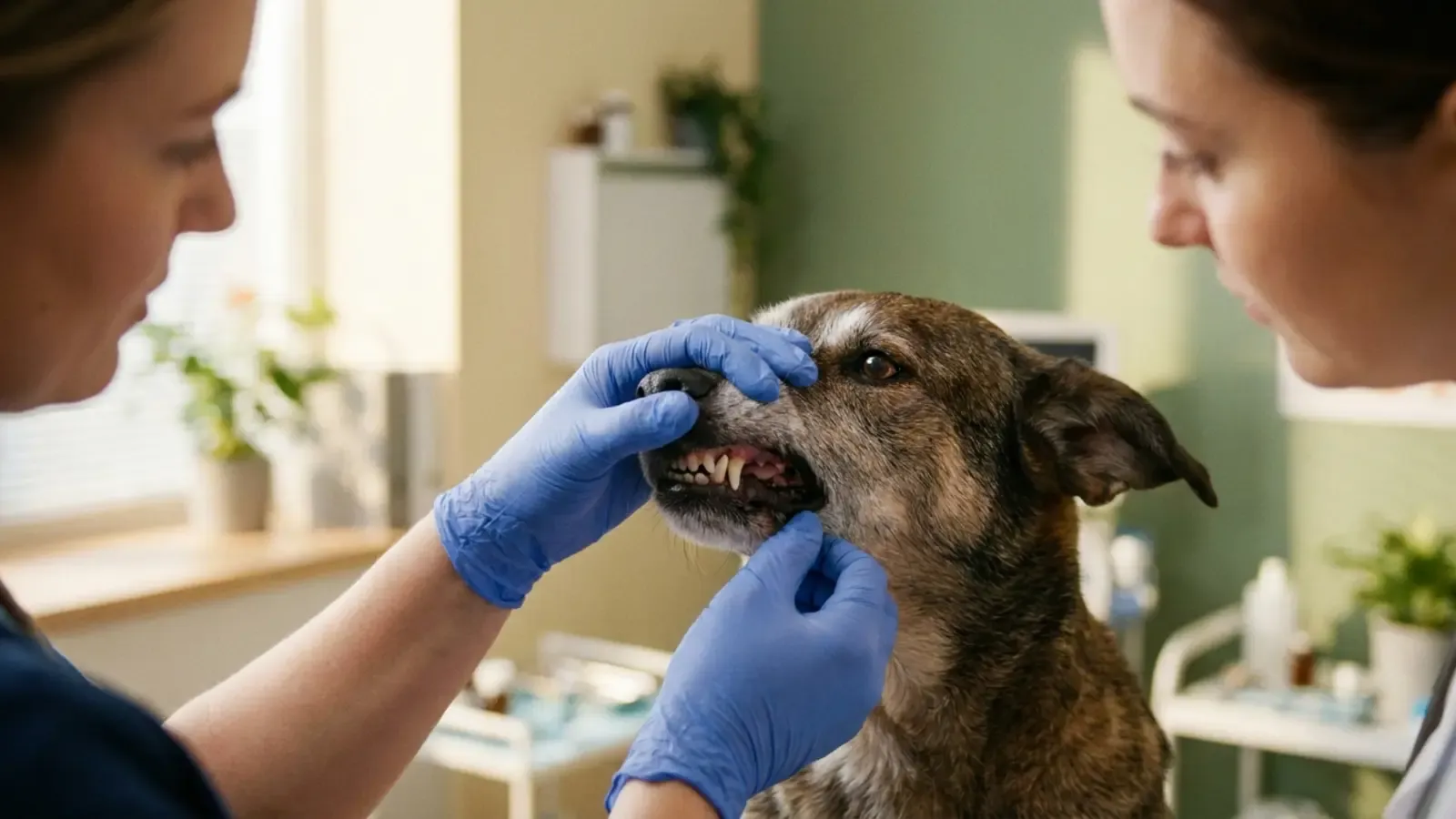
Dental disease and mouth tumours are more common in older dogs. A senior check-up should include a look in the mouth, and your vet may suggest a dental under anaesthetic with X-rays. Bad breath, dropping food, chewing on one side or pawing at the mouth are all reasons to book in. Daily brushing still helps at any age: see how to brush a dog’s teeth.
Make your home easier
Small changes make a big difference to a stiff or wobbly dog. The AAHA and AVMA suggest:
- Rugs, runners or yoga mats on slippery floors for grip
- A thick, supportive orthopaedic bed in a warm, draught-free spot
- Ramps or pet steps for the car, the sofa or a step at the door
- Raised food and water bowls for dogs who find bending hard
- Baby gates across stairs and around pools for dogs with poor sight or balance
- A support harness to help lift a big dog in and out of the car
- Moving your dog’s bed and favourite resting place downstairs and closer to the door for easier toilet trips
- Gentle grooming and nail trims more often, since less active dogs wear their nails down less
Keeping track of a senior dog
Old age changes things slowly, which makes it hard to see. Was the limp better or worse last month? When did they start drinking more? Writing it down, or keeping it in an app, gives your vet facts instead of guesses. In PetTrackr, you can log your dog’s weight against the healthy range for their breed and age, record symptoms and see whether they are easing or getting worse, and keep medicines and twice-yearly vet visits on one timeline with reminders.
PetTrackr helps you keep track. It is not veterinary advice: if your pet seems unwell, call your vet.
 How to tell a dog’s age