
Why is my dog limping?
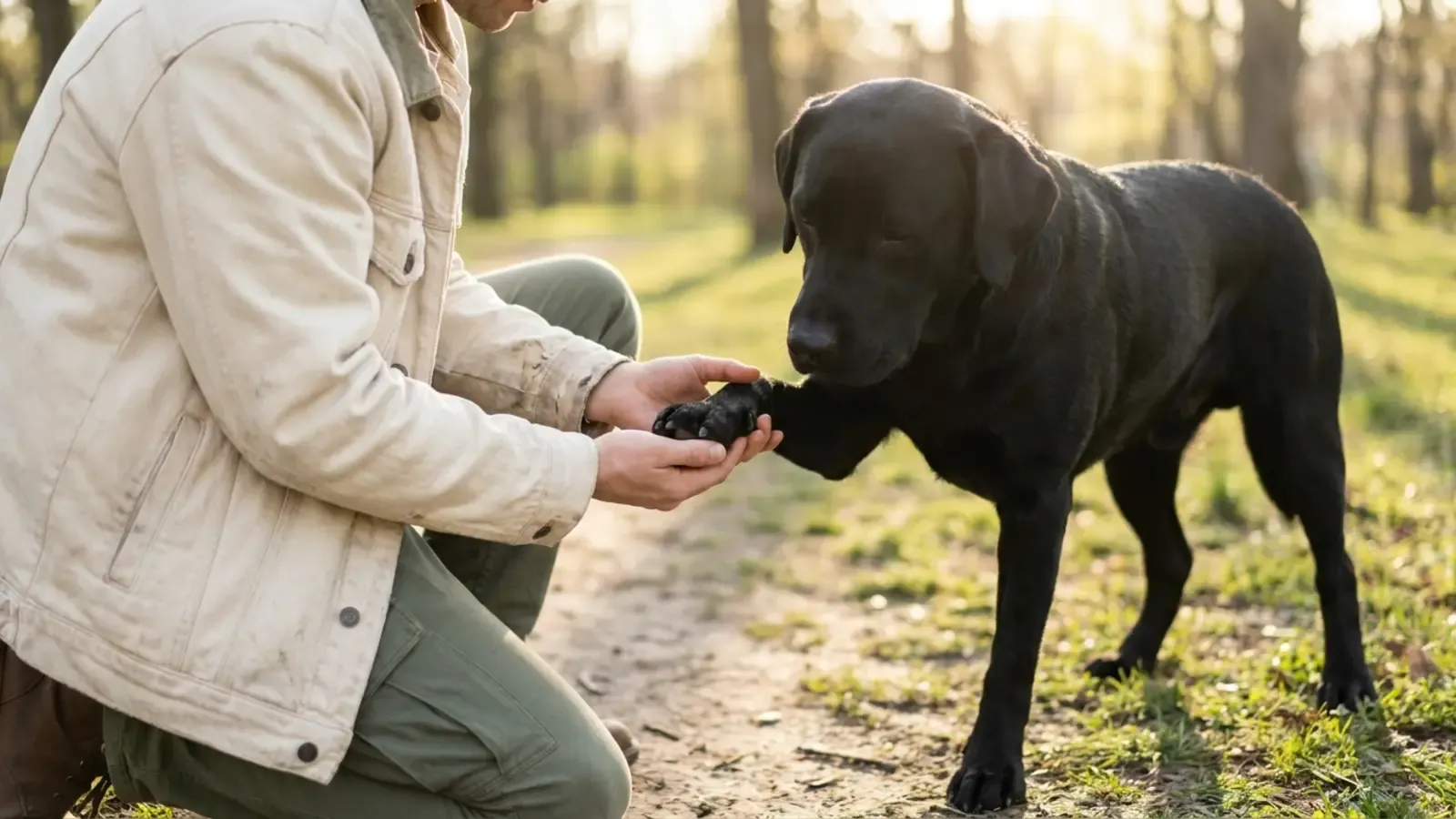
Most dogs limp because of something minor, like a sore pad, a torn nail, a thorn or a mild sprain, and many of these settle with rest in a day or two. But a limp can also come from a broken bone, a torn ligament or arthritis. Go to a vet straight away if your dog won’t put any weight on the leg, the leg hangs at an odd angle, there is heavy swelling, a wound or bleeding, or they are clearly in pain. A mild limp that isn’t better within 24 to 48 hours should be checked too.
Go to the vet now if…
- Your dog won’t put the leg down at all, or holds it up constantly
- The leg is at an unusual angle, dangling, or you can see or feel a break
- There is significant swelling, the leg feels hot, or there is a deep wound or bleeding
- They cry out or snap when the leg is touched, or are panting and restless with pain
- It followed a fall, a road accident, or a fight
- They are dragging a leg, knuckling over onto the top of the paw, wobbly, or weak in both back legs. This can be a spinal or nerve problem, not a leg one
- They have a limp plus a fever, lethargy or loss of appetite
- A young large-breed puppy is suddenly very lame or reluctant to move
If you need to move a dog in pain, be careful: even the gentlest dog can bite when hurt. Support their body rather than the sore leg, and use a blanket as a stretcher for a big dog.
Sudden limp or gradual limp?
How the limp started is one of the best clues to the cause, and the first thing your vet will ask.
| Sudden (acute) limp | Gradual or on-and-off (chronic) limp | |
|---|---|---|
| How it starts | Out of nowhere, often during or after exercise or an accident | Builds over weeks or months, or comes and goes |
| Typical pattern | Often worse straight away, may improve with rest | Stiff after rest or in the morning, better once warmed up; worse after a long walk |
| Common causes | Paw injuries (thorns, cuts, torn pads), broken or torn nails, stings, sprains and strains, torn cruciate ligament, fractures, dislocations | Arthritis, hip or elbow dysplasia, slipping kneecap (patellar luxation), growing-pain conditions in young dogs, bone cancer in older large dogs |
Common causes in more detail
- Paw problems. The most common reason for a sudden limp: a grass seed, thorn or glass between the toes, a cut or burnt pad, a sting, or an overgrown, split or torn nail. Constant licking of one paw is a strong clue. Keeping nails a healthy length helps; see how to trim your dog’s nails.
- Sprains and strains. After a sudden twist while running or jumping. Mild ones usually improve over a few days with strict rest.
- Cruciate ligament injury. Similar to a torn ACL in people. Often a sudden hind-leg limp after exercise, sometimes in a dog that had been subtly stiff before. Common in medium and large breeds, and in overweight dogs.
- Slipping kneecap (patellar luxation). Common in small breeds: the dog skips for a few steps holding a back leg up, then carries on normally.
- Hip and elbow dysplasia. Inherited joint problems, often in larger breeds, that can show from puppyhood.
- Arthritis. Very common in older dogs, and in younger dogs with joint problems or extra weight. Stiffness getting up, slowing on walks, and reluctance to jump into the car or climb stairs are typical.
- Growing pains in young dogs. Conditions such as panosteitis can cause a limp that shifts from leg to leg in growing large-breed puppies.
- Bone cancer. Less common, but a persistent limp in a middle-aged or older large or giant-breed dog should always be checked promptly.
- Tick-borne disease. In some areas, infections such as Lyme disease can cause lameness that moves between legs, often with fever and tiredness.
What you can safely check at home
If your dog is calm and lets you, a gentle look can find simple causes. Stop if they show pain, and never force a joint to bend.
- Watch them walk. On a lead on a flat surface, watch from behind and from the side. Dogs dip their head up when the sore front leg lands, and take shorter steps with a sore back leg. Film it on your phone; limps often disappear at the clinic.
- Check the paw. Spread the toes and look between them and at each pad for thorns, grass seeds, cuts, swelling or redness.
- Check the nails. Look for a nail that is cracked, torn, bleeding or overgrown into the pad.
- Feel along the leg. Run your hands gently down both legs at once and compare: is one side warmer, swollen, or tender?
- Look for stings, bites or ticks, especially after a walk in long grass.
If you find a small, easily removed thorn, take it out gently and clean the area with clean water. Anything embedded, a deep cut, or a grass seed that has disappeared into the skin needs a vet.
Looking after a mildly limping dog
If the limp is mild, your dog is still putting weight on the leg, and is otherwise bright, eating and comfortable:
- Rest strictly for 24 to 48 hours. Lead walks for the toilet only. No running, jumping, stairs or rough play. A crate or a small room helps keep them quiet.
- Watch for change. It should be steadily improving. If it isn’t clearly better within a day or two, gets worse, or returns once they are active again, see your vet.
- Don’t give human painkillers. Ibuprofen, naproxen, paracetamol (acetaminophen) and aspirin can cause stomach ulcers, kidney failure or liver damage in dogs, and some interact badly with medicines your vet may prescribe. If your dog needs pain relief, your vet can prescribe one made for dogs.
What to tell your vet
- When the limp started, and whether it was sudden or gradual
- Whether something happened: a fall, a twist while running, a fight, a long hike
- Which leg, and whether it changes leg
- Whether it is worse after rest or after exercise
- Whether it is getting better, worse or staying the same
- A short video of your dog walking and trotting
Your vet will examine the leg and may suggest X-rays, pain relief, rest, or referral for surgery for injuries like a torn cruciate ligament.
Preventing limps
- Keep your dog lean. Extra weight puts more strain on joints and ligaments. Is my dog overweight? shows how to check. PetTrackr tracks weight against the healthy range for your dog’s breed, age and sex, so creeping gain gets noticed early.
- Build fitness gradually. Regular moderate exercise beats a sedentary week and a long weekend hike.
- Keep nails trimmed and check paws after walks.
- For older dogs, provide rugs on slippery floors, a ramp into the car and a supportive bed. See senior dog care.
- Don’t over-exercise growing large-breed puppies, and avoid lots of jumping from heights while they grow.
PetTrackr helps you keep track. It is not veterinary advice: if your pet seems unwell, call your vet.
 Dog diarrhoea – what to do
 Dog itching and scratching
 Dog vomiting – when to worry