
Do indoor cats need vaccines?
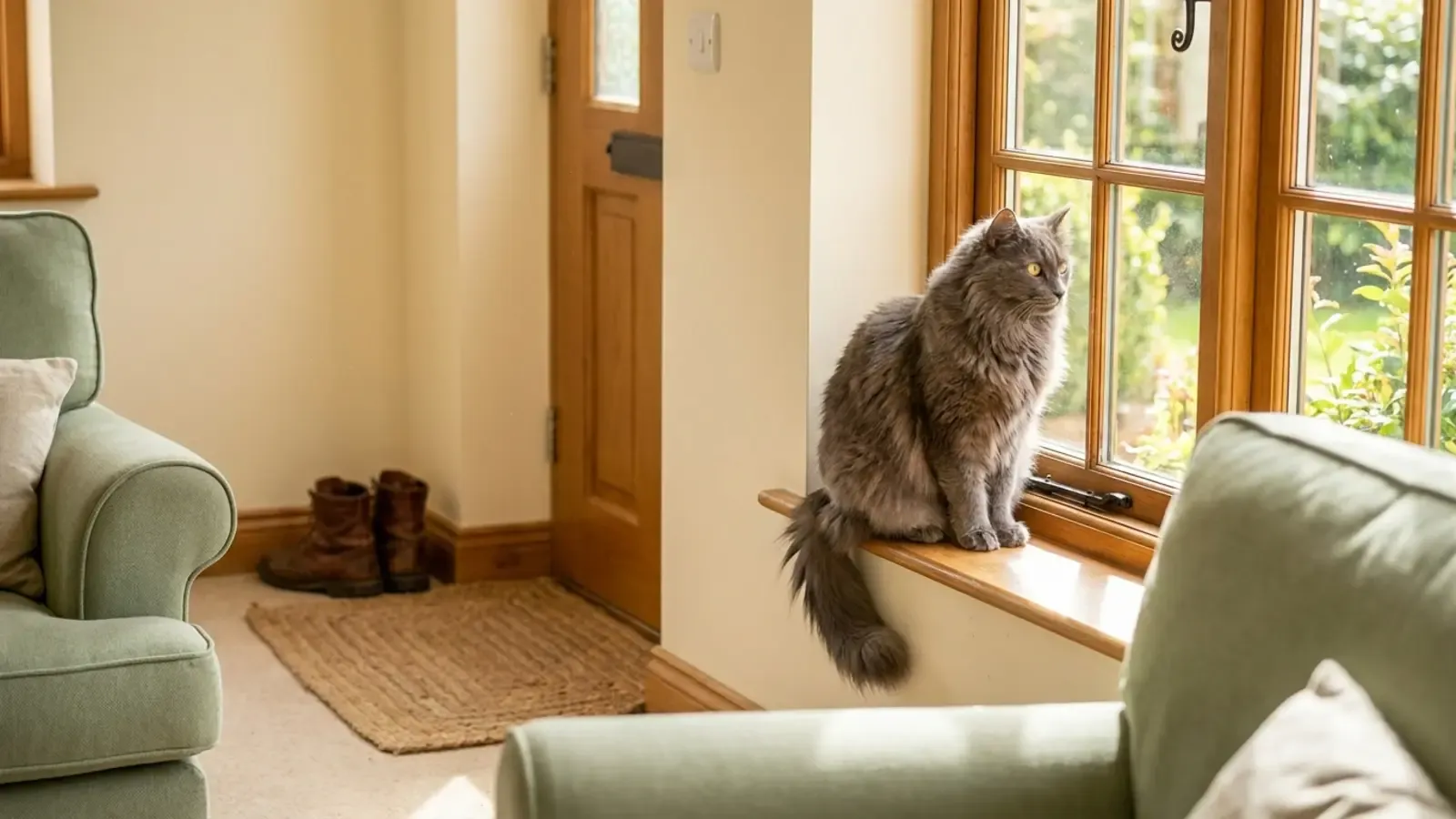
Yes, indoor cats need vaccines. The core vaccines (FVRCP, which covers panleukopenia, herpesvirus and calicivirus, plus rabies where rabies exists) are recommended for every cat, including cats that never go outside. What an indoor cat can usually skip is adult FeLV boosters, and a low-risk indoor cat needs its core boosters only every 3 years.
Cornell’s Feline Health Center puts it plainly: household cats kept indoors at all times should still receive the panleukopenia, herpesvirus, calicivirus and rabies vaccines. Here is why, and what “indoor” changes about the schedule.
Why staying indoors isn’t enough
Panleukopenia comes in on your shoes
Feline panleukopenia (feline parvovirus) is one of the most dangerous viruses a cat can catch, and often fatal in kittens. It is also one of the toughest. The Merck Veterinary Manual notes that cats can be infected through objects carrying the virus, not only other cats, and that without proper disinfection the virus can stay alive in the environment for up to a year.
That means it can arrive on the soles of your shoes, your clothes, a second-hand cat bed or a carrier, without your cat ever meeting another cat. An unvaccinated indoor cat has no protection when it does.
Cat flu viruses travel too
Herpesvirus and calicivirus, the two main causes of cat flu, spread most easily between cats, but they can also be passed on via hands, clothes, bowls and bedding after contact with an infected cat. If you foster, volunteer at a shelter, or stroke the neighbour’s cats, you can bring them home.
Rabies finds a way in
Rabies is the reason many people are surprised:
- Bats get into houses. In North America, bats are among the most common wild carriers of rabies, and an indoor cat is exactly the animal that will chase one that flies in.
- Indoor cats escape. An open door, a torn screen, a house move. A cat out for one night can meet wildlife.
- The law may not care where your cat lives. Many US states and towns require rabies vaccination for all cats, indoor or not.
- A bite changes everything. If an unvaccinated cat is exposed to rabies, or bites someone, CDC guidance means long observation or strict quarantine, and for an unvaccinated pet exposed to rabies, euthanasia is advised. A current rabies certificate turns that into a booster and a period of watching at home.
In countries without rabies, such as the UK, indoor cats don’t need the rabies vaccine unless they travel.
Indoor cats don’t stay indoors forever
Life changes. Cats go to the cattery when you travel, to the vet hospital for surgery, to a friend’s house when you move. Most catteries won’t take a cat without up-to-date vaccines, and a stay among other cats is exactly when cat flu spreads. Vaccinating on schedule means you aren’t scrambling at the last minute.
What an indoor cat needs, and what it can skip
| Vaccine | Indoor-only cat | Why |
|---|---|---|
| FVRCP (panleukopenia, herpesvirus, calicivirus) | Yes, every 3 years after the kitten series and first booster | Core for all cats; the viruses can be carried indoors |
| Rabies | Yes where rabies is present or required by law; every 1 or 3 years | Bats, escapes and the law |
| FeLV as a kitten | Yes | Nobody knows yet whether a kitten will stay indoors for life |
| FeLV as an adult | Usually not, if the cat lives alone indoors with no contact with cats that go outside | FeLV spreads through close contact between cats |
| Chlamydia, Bordetella | Usually not | Non-core, for some multi-cat or shelter situations |
The World Small Animal Veterinary Association (WSAVA) describes a single indoor cat that doesn’t go to catteries as low risk, and recommends core boosters every 3 years or longer for those cats. That is about as light as a vaccine schedule gets.
When your indoor cat isn’t “low risk”
Talk to your vet about more frequent boosters if:
- Your cat boards at a cattery. A cat flu booster 1 to 2 weeks before the stay is often recommended.
- Another cat in the house goes outside. Your indoor cat then shares that cat’s risk, including FeLV.
- You bring home new cats or kittens, foster, or work with cats.
- Your cat has outdoor access on a balcony, a harness walk or a garden enclosure where other cats can reach it.
Our adult cat vaccination schedule has the full table for low- and higher-risk cats.
Indoor kittens
Every kitten needs the full kitten series, whatever its future lifestyle, with the last dose at 16 weeks or older and a booster at 6 months or 1 year. FeLV is included for kittens because young cats are the most vulnerable and plans change. The kitten vaccination schedule and new kitten checklist cover the first months.
Are the risks of vaccinating an indoor cat worth it?
Most cats have no reaction to vaccines, or a sore spot and a sleepy day. Rarely, a lump at an injection site can become a tumour, which is why vets inject low on a leg and why you should have a vet check any vaccine lump that lasts 3 months, grows past 2 cm, or is still growing after a month.
That small risk is the reason guidelines give low-risk cats boosters less often, not the reason to skip them. Panleukopenia and rabies are both diseases where a vaccine is far easier than the alternative.
The short answer
Keep your indoor cat on its core vaccines, on the lighter low-risk timetable, and ask your vet each year whether anything about your cat’s life has changed. Because the boosters are spaced so far apart, the hard part is remembering them: note the next due date on the certificate, or let an app like PetTrackr keep it and remind you.
PetTrackr helps you keep track. It is not veterinary advice: if your pet seems unwell, call your vet.
 Deworming schedule for puppies and kittens