
Rabies vaccine for dogs
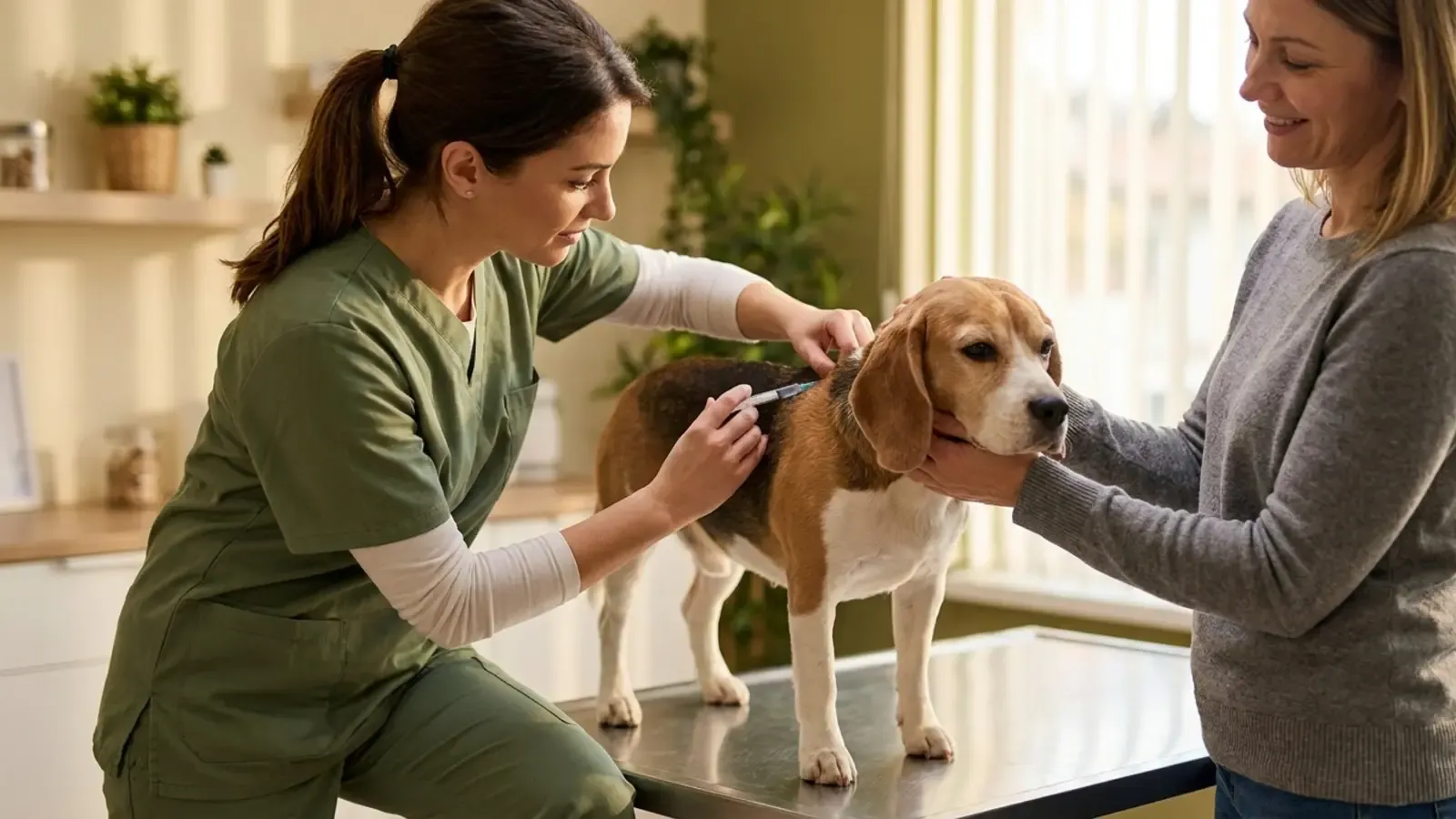
Dogs get their first rabies shot at 12 weeks old or later, a booster one year after that, and then a booster every 1 or 3 years, depending on the vaccine your vet uses and what your local law requires. A dog having its first-ever rabies vaccine counts as protected 28 days after the shot.
Rabies is the one vaccine with the law, public health and travel rules all wrapped around it, so the details matter more than for any other shot.
Why rabies vaccination matters
Rabies is a virus that attacks the brain and spinal cord. Once signs appear, it is almost always fatal, in dogs and in people. It spreads through the saliva of an infected animal, usually in a bite. In North America it lives mainly in wildlife such as raccoons, skunks, foxes and bats; worldwide, the World Health Organization says dogs are the source of the vast majority of human rabies cases.
Vaccinating dogs protects your own dog, and it is the reason dog-to-human rabies has become rare in countries that vaccinate widely. That is why the World Small Animal Veterinary Association (WSAVA) calls the rabies vaccine core wherever rabies exists, even where no law requires it.
The rabies vaccine schedule for dogs
| When | What | Notes |
|---|---|---|
| 12 weeks (3 months) or older | First rabies vaccine | Not earlier: young puppies respond less well. Exact age can be set by local law |
| 28 days later | Considered immunised | Applies to the first-ever dose only |
| 1 year after the first dose | First booster | Needed whatever age the first dose was given |
| After that | Booster every 1 or 3 years | Set by the vaccine’s licence and local law. Where they differ, the law wins |
Rabies vaccines are inactivated (killed), but unusually for a killed vaccine, a single dose immunises. That is why a puppy needs only one rabies shot to start, not a series.
1-year vs 3-year rabies vaccines
Rabies vaccines are licensed for either 1 year or 3 years of protection. A few points clear up most of the confusion:
- The first shot always counts for one year, even if it is a 3-year vaccine. Every dog gets the one-year booster.
- After that booster, a dog given a 3-year licensed vaccine can wait three years, as long as local law accepts it.
- The law can be stricter than the label. Some places require boosters more often than the vaccine’s licence. WSAVA’s advice to vets is simple: follow the law.
- The certificate says which one your dog had. It lists the product, the date given and the date it expires. That expiry date is the one that counts for licensing, boarding and travel.
What the law says
Rules vary a lot by place, so check yours:
- United States: most states require dogs to be vaccinated against rabies, and many towns and counties require a dog licence that depends on it. Some states allow a vet-signed medical exemption for a dog with a serious health reason, but exempt dogs are usually treated as unvaccinated after a bite or exposure.
- United Kingdom: rabies is not present, so dogs living there don’t need the vaccine unless they travel abroad.
- Travel: most countries that require rabies vaccination for entry set a minimum age and a waiting period. For travel from Great Britain to the EU, for example, the dog must be at least 12 weeks old at vaccination and you must wait at least 21 days after the first dose before travelling. Boosters given on time keep the cover unbroken; a lapse means starting the wait again. Our guide to travel documents for pets covers the paperwork.
If your dog is bitten, or bites
If your dog may have been exposed to rabies (bitten by wildlife, a bat found in the house, a fight with an unknown animal), call your vet the same day. CDC guidance for a vaccinated dog is an immediate booster and 45 days of observation at home. An overdue dog is assessed case by case, usually a booster and observation as well. A dog that has never been vaccinated is advised to be euthanised, or, if the owner declines, held in strict quarantine for 4 months. Few things show the value of an up-to-date rabies certificate more clearly.
If your dog bites a person, public health rules usually call for a 10-day observation period, even for vaccinated dogs, because vaccine failure, though rare, can happen.
Rabies vaccine side effects in dogs
Most dogs have no reaction at all. When there is one, it is usually mild. WSAVA lists these as the common ones, for any vaccine:
- A sore or slightly swollen spot where the injection went in
- Tiredness for a day or so
- A smaller appetite or a mild temperature
- A small, firm lump under the skin at the site, which usually shrinks over a few weeks
Ask your vet to check a lump that is growing, painful, or still there after a few weeks.
When it’s an emergency
Serious allergic reactions are uncommon, and they tend to start fast: in one large study cited by WSAVA, most vaccine reactions showed up within 12 hours, and every case of anaphylaxis began within an hour of vaccination. Call your vet or an emergency clinic straight away if your dog has:
- Swelling of the face, muzzle or around the eyes
- Hives or sudden itchy bumps
- Repeated vomiting or diarrhoea
- Weakness, pale gums or collapse
- Difficulty breathing
Some small breeds are more prone to reactions, especially when they get several vaccines at one visit; WSAVA names Dachshunds, Boston terriers, miniature pinschers, French bulldogs and Havanese. If your dog has reacted before, tell your vet. They may spread vaccines over separate visits or take other precautions; a past reaction is rarely a reason to skip rabies vaccination where it is legally required.
Keeping the date
The rabies due date is the one you can least afford to miss: it decides whether your dog counts as vaccinated after a bite, at the kennel and at the border. Keep the certificate somewhere safe and note the expiry date, not just the date it was given. PetTrackr stores the certificate with your dog’s vaccines and reminds you before the rabies booster is due.
For the rest of your dog’s boosters, see the adult dog vaccination schedule. If you have already missed the date, our guide on missed boosters explains what to do.
PetTrackr helps you keep track. It is not veterinary advice: if your pet seems unwell, call your vet.
 Deworming schedule for puppies and kittens
 Flea and tick prevention for dogs
 Heartworm prevention for dogs